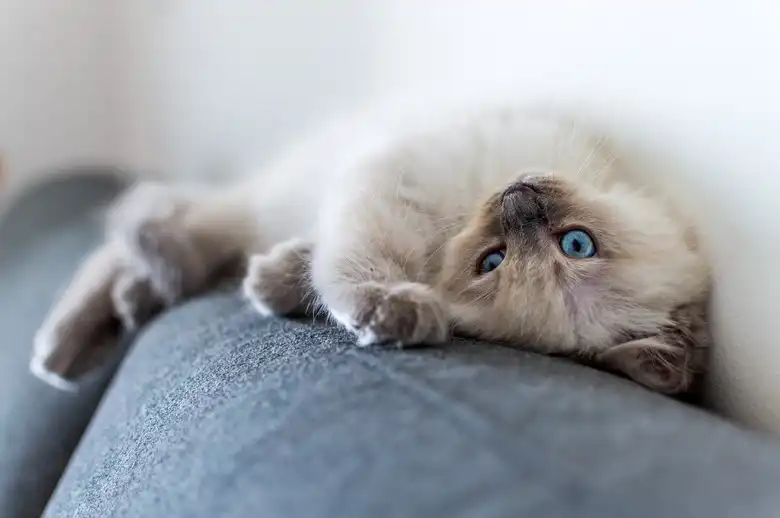
What Is The Ragdoll Cat Price? Here's How Much Ragdoll Cats Cost
CatsCat BreedsWhat Is The Ragdoll Cat Price? Here's How Much Ragdoll Cats CostByPaige CerulliUpdated Mar 16, 2023Lachy_Bartholomew/iStock/GettyImages #pf7ae87813110f6c510cf0b727cd0f34e, #pf7ae87813110f6c510cf0b727cd0f34e img { aspect-ratio: 6016/4000; height: auto; }If you're looking for a loving, laid-back, beautiful cat to add to your home, the Ragdoll cat might be an ideal choice. Not only are these cats striking to look at, but they have many temperament traits that make them desirable as a family pet. But because Ragdolls are a highly desired yet specialized breed, buying one will cost more than you'd pay for some other purebred cats.The cost of Ragdoll catsThe cost of Ragdoll catsRagdolls certainly aren't the cheapest breed of cat to buy. Ragdoll kittens can cost $400 each, while show-quality cats may be priced at $2,000 or more. Prices will vary according to the breeder and the quality, age, and show record, if any, of the cat that you're considering.The high cost of these cats is due to a number of factors, including the demand for these unique cats and the costs associated with maintaining a breeding program. Breeders who have show-quality cats can also charge higher costs for their kittens and cats. Ragdolls are prone to a heart condition called hypertrophic cardiomyopathy, so a reputable breeder should perform DNA tests on her breeding stock to make sure that the trait isn't passed down to kittens.Adopting a Ragdoll catAdopting a Ragdoll catWhile the cost of purchasing Ragdoll kittens or cats can be prohibitive, you may be able to adopt a Ragdoll for a fraction of the price that you would pay when buying one from a breeder. Shelters and animal rescues do occasionally have Ragdoll cats, and you can adopt a cat for between $75 and $100. You may also come across Ragdoll mixes in shelters, or you could potentially find cats who are now retired from breeding and who need new homes.Adopting a cat offers additional benefits over buying. When adopting an adult Ragdoll, you'll already have a sense of that cat's personality. If you buy a kitten, you won't really know what that cat's personality will be like until he's an adult. An adopted cat will also already likely be spayed or neutered, saving you additional veterinary expenses.Finding your new catFinding your new catIf you'd like to add a Ragdoll to your family, you'll have a few different options. If you would like to try to give a cat in need a new home, check your local shelters to see if they have any Ragdolls available. You may need to check repeatedly over a period of months or even years, but Ragdolls do come through shelters on occasion, and this can save you significant money over buying a kitten from a breeder.You can also look for reputable breeders in your area and contact them to find out about buying a kitten or potentially buying a retired breeding cat. While you'll get to spend more of your years with a cat that you get as a kitten, breeders may be willing to retire their breeding cats to a good home for a minimal cost.While buying a Ragdoll can be expensive, many cat owners feel that these cats' friendly, laid-back personalities make them well worth the investment. You'll need to consider your budget and what you're looking for in a cat to decide whether the Ragdoll is right for you.ReferencesCertaPet: Ragdoll Cats: The Elegant and Loyal Furry BreedAdopt a Pet: Ragdoll Kittens and Cats
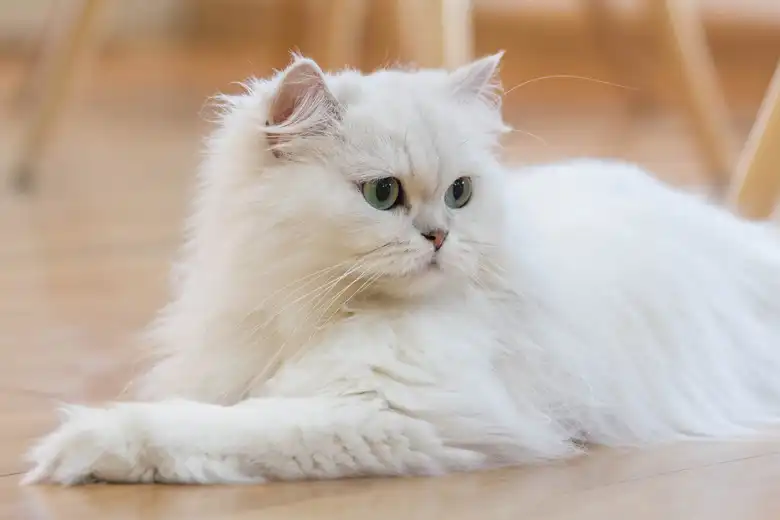
How To Identify A Persian Cat
CatsCat BreedsHow To Identify A Persian CatByCatherine TroianoUpdated Apr 15, 2022rukawajung/iStock/GettyImages #p43b063cd9db04ecb96c5d68b7af3a536, #p43b063cd9db04ecb96c5d68b7af3a536 img { aspect-ratio: 5184/3456; height: auto; }One of the most easily recognized breeds in the feline world is the glamorous pure breed Persian cat, noted for her glorious long coat. The earliest evidence of a long-haired cat's existence appeared on ancient hieroglyphics. During the 1500s, Phoenician caravans moved toward Europe from Persia with long-haired cats in tow. By the 1800s, the Persian was named and exhibited in a cat show that took place at the Crystal Palace in London. Also during the 1800s, Persian cats had arrived in America, where they quickly soared in popularity.The Cat Fanciers Association officially recognized the Persian in 1871. Today, the Persian is the most popular cat registered by the Cat Fanciers Association.Snub nose Persian cat appearanceSnub nose Persian cat appearanceThe Persian is a medium- to large-sized cat with heavily boned, short legs, a plumed tail, a ruff around the neck, a round head, and small ears. The facial features include rounded cheeks, a short, snub nose, and large, round, expressive eyes. The Persian is clad in a long, silky coat that comes in a vast array of color and pattern choices. A Persian who is cast into the spotlight of Cat Fanciers Association show competitions is classified into one of seven color groups.The seven color groups include:Solid.Silver and golden.Shaded and smoke.Tabby.Parti-color.Bicolor.Himalayan.One of the most popular color choices is the Himalayan, with her jewel-toned blue eyes and rich color points that adorn her mask, ears, tail, and legs. The silver Persian is a perpetual favorite. Prospective owners of Persian cats must expect to engage in a daily grooming ritual to prevent the long locks from tangling and forming painful mats.Sweet and dignified temperamentalexey_ds/iStock/GettyImages #pfc710fce609a410facdee1055b2b719f, #pfc710fce609a410facdee1055b2b719f img { aspect-ratio: 5760/3840; height: auto; }Sweet and dignified temperamentThe Persian's expression accurately conveys her temperament. While breed is not a reliable indicator of temperament, the Persian tends to be quiet and gentle. Her regal and dignified appearance is exemplified as she adorns a sunny windowsill or the back of a sofa for hours. Persians emit a delicate meow, but they are not as vocal as some other cats.Their heavily boned and squat physiques influence their preference to remain grounded. They are not likely to soar and explore high places in the home. Persians are sweet, playful and affectionate. Although they are not demanding of attention, they are loving companions. Their intelligence and their charms delight their owners. Persians thrive best in calm households.Health and longevityHealth and longevityOne of the primary health concerns to which the Persian is prone is brachycephalic airway syndrome. This condition results from the snub nose Persian cat face. Brachycephalic airway syndrome places the Persian at a higher risk for upper respiratory infection and heatstroke.FluxFactory/iStock/GettyImages #ea6a935ee786895b69c443ddd27ecafef, #ea6a935ee786895b69c443ddd27ecafef img { display: block; aspect-ratio: 1.5Another health concern that afflicts Persian cats is polycystic kidney disease, a genetic condition in which one or both kidneys become infiltrated with cyst formations, ultimately resulting in kidney failure. Other health problems that have been noted in Persians include:A degenerative eye disease called progressive retinal atrophy.Bladder infections and bladder stones.Liver shunts.A heart condition called hypertrophic cardiomyopathy.Dental malocclusion.Blocked tear ducts.Reputable breeders screen their cats to prevent passing some of these conditions down their breeding lines. Barring any of these health problems, Persian cats who are kept indoors and receive regular veterinary checkups can live lengthy life spans of 15 to 20 years or more.ReferencesCat Fanciers Association: About the PersianVCA Animal Hospitals: Brachycephalic Airway Syndrome in Cats
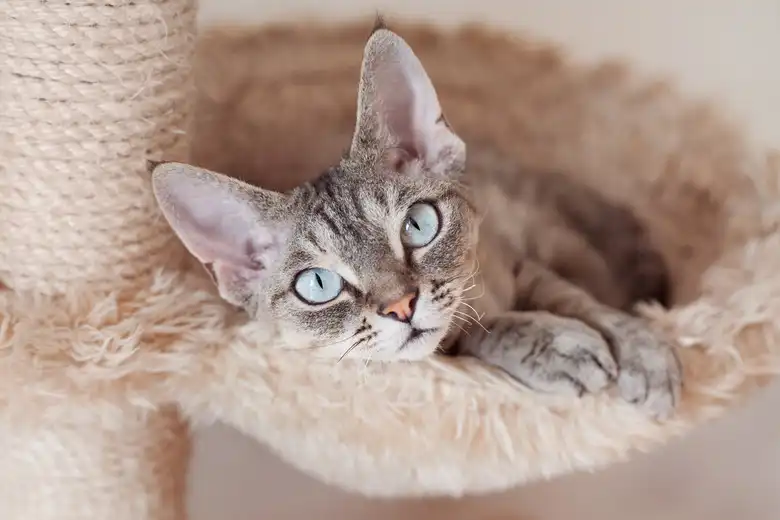
Devon Rex Cat Breed Characteristics
CatsCat BreedsDevon Rex Cat Breed CharacteristicsByKatherine MaloneDec 7, 2022 12:03 pm ESTinsonnia/iStock/GettyImages #pd2fd4dc495f161e16f10e5a498db4990, #pd2fd4dc495f161e16f10e5a498db4990 img { aspect-ratio: 3189/2126; height: auto; } In This ArticleDevon rex quick factsDevon rex cat historyDevon rex cat personalityDevon rex cat lifespan & health issuesDevon rex cat grooming & careWelcoming a new catDevon rex quick factsDevon rex quick factsLength: 12 – 16 inchesWeight: Females: 5 – 7 pounds, males 7 – 9 poundsLifespan: 14 – 17 years or moreCoat length: ShortColoring: All coat colorsMore Like ThisCatsExotic Cat Breed CharacteristicsCatsCornish Rex Cat Breed CharacteristicsCatsBurmilla Cat Breed CharacteristicsGrooming needs: LowFriendliness: Breed alone is not an accurate predictor of individual cats' personalities. However, Devon rex cats are generally regarded as active and playful.The Devon rex, or pixie cat, is a unique breed. If you are looking for a medium-sized cat that will stick to you like glue — this may be the cat for you. They have very short, curly hair and they rarely shed, and can be a good choice if you have a family member that suffers from allergies. However, the breed isn't completely hypoallergenic. The breed has large ears that give them an elfin or pixie-like appearance, although many affectionately claim they look like Gremlins or Yoda. Consider the cat's personality and care needs carefully before bringing a Devon rex kitten into your home.Maria Korneeva/Moment/GettyImages #eac320ecac37c67fb47acb5908fbf9408, #eac320ecac37c67fb47acb5908fbf9408 img { display: block; aspect-ratio: 1.5Devon rex cat historyDevon rex cat historyThe Devon rex can be traced back to a feral cat in Buckfastleigh, Devon, England. The male cat had short curly hair. He went on to breed a female tortoiseshell and white cat owned by Beryl Cox in the late 1950s.One of the kittens also had a curly coat from this breeding. That kitten was named Kirlee and he was used to continuing to develop the Devon rex breed. Unfortunately, he died in 1970, when he was hit by a car.It was discovered that the gene causing the unique coat was different than the one that creates the curly or wavy coat of the Cornish rex cat breed. Unlike the Cornish rex, the Devon rex cat breed has stubby whiskers or no whiskers at all, large eyes and ears, high cheekbones, and a short nose.Devon rex cat personalityDevon rex cat personalityThe Devon rex breed of cat is active, playful, and incredibly social. They are intelligent and curious cats and they will explore every nook and cranny. The cats tend to be quite relaxed and enjoy having children and other pets around in the home as playmates.They are also quite dog-like in some ways, most notably, in their sense of loyalty. This means they will likely be following you as you move around the home. They may enjoy cuddling in your lap when you are still. Or even perching on your shoulder when they are allowed. The cats can also be quite vocal and may trill, coo, and chirp.insonnia/iStock/GettyImages #ed7c77469b6c2d8972dd554509e0bb8d6, #ed7c77469b6c2d8972dd554509e0bb8d6 img { display: block; aspect-ratio: 1.5Devon rex cat lifespan and health issuesDevon rex cat lifespan and health issuesThe Devon rex can live to be up to 17 years old or more — if they are healthy and receive proper care. They are generally a very healthy breed. However, there are a couple of genetic health problems that affect the breed. Responsible breeders will conduct genetic testing on their cats and avoid breeding any cat that may carry a genetic condition.Devon rex myopathy is a genetic condition that affects both the Devon rex and Sphynx cat breeds. Some common symptoms of the disease include:muscle weakness and tremors, especially in the muscles of the neck and headhead bobbing or shaking and carrying the head at a lower level than normalhigh stepping with their front legsprotruding shoulder blades, leading to possible collapsing episodes during exerciselaryngospasms and throat obstruction from food that can lead to deathSymptoms first appear in Devon rex kittens when they are three weeks to six months of age. The symptoms progressively worsen for six to nine months before stabilizing in most cats. The progression of the disease is typically gradual. Though cats may experience worsening symptoms over their lifetime. No treatment or cure is available. Many cats with the condition die from laryngospasms and throat obstruction from food.Another concern is hypertrophic cardiomyopathy. This progressive condition is a genetic heart disease in cats. It causes a thickening of the heart wall. While there is no cure for this disease, its symptoms can be managed.Some cats may also suffer from patellar luxation, a condition that causes the kneecap or patella to be out of place. Your veterinarian can diagnose this condition with a physical examination and x-rays.Devon rex cat grooming and careDevon rex cat grooming and careThe Devon rex is a low-maintenance cat when it comes to grooming. They have short, modified guard hair, and a minimal amount of undercoat. They rarely shed, and in most cases, brushing is not required. However, their skin can get oily at times, so an occasional bath can be beneficial. Make sure you use a gentle shampoo designed for cats.Other regular grooming requirements include:checking and trimming the cat's nails once per weekcleaning their ears regularlybrushing their teeth with toothpaste designed for catsFeed the Devon rex a high-quality commercial cat food in the amount recommended by your veterinarian. In general, feed the cat twice per day. Some cats prefer to have food available at all times so that they can snack. Be sure to monitor your cat's weight and stop free feeding if they start to gain weight as this can be detrimental to their health. Fresh drinking water should be available at all times.Due to the cat's short coat, they may get cold more easily than other breeds. The thin Devon rex coat also leaves them susceptible to sunburn. The Devon rex should be kept as an indoor cat. Make sure they have a warm room and cozy bed to retreat to in case they get cold.insonnia/iStock/GettyImages #ef37b0cff6305d0cc5cd3791d2798a653, #ef37b0cff6305d0cc5cd3791d2798a653 img { display: block; aspect-ratio: 1.4995622993872Welcoming a new cat into your homeWelcoming a new cat into your homeBefore bringing an adorable curly-coated kitten into your home, it is important to cat-proof the house. These curious kittens may get into anything, especially if they are bored from being alone. Make sure there is nothing that the cats can get into that may harm them.When you first bring the cat home, put them in a single room. Make sure hiding spots where the kitten may get stuck are closed off such as under chairs or between heavy furniture. Set up the room with everything the new cat may need including:food and waterlitter boxscratching postcat treetoysSpend plenty of time with your new kitten but allow them to explore on their own and come to you for attention when they are ready. Introduce the new cat to any other household pets through the door at first so that they can get used to each other. Use plenty of positive reinforcement when training and socializing. When the cat is comfortable, you can open the door and allow them access to more of the house.ReferencesInternational Cat Care: Devon Rex MyopathyThe International Cat Association: Devon Rex at a GlanceCat Fanciers' Association: About the Devon RexCornell University College of Veterinary Medicine: Hypertrophic Cardiomyopathy
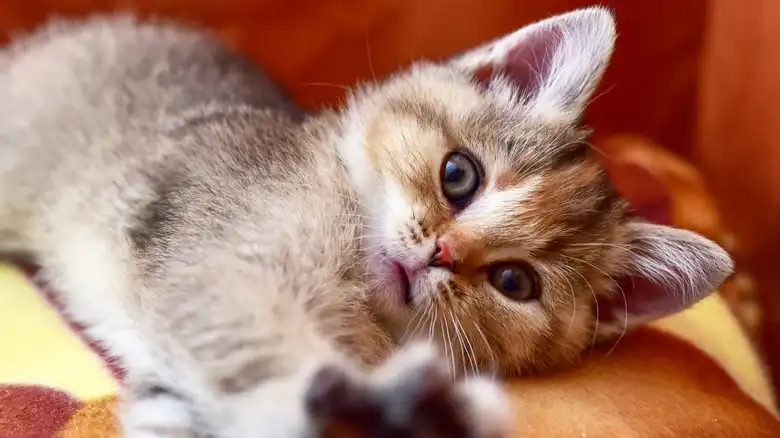
Why Chinchilla Is One Of The Rarest Cat Colors (And The Breeds That Have This Unique Coat)
CatsCat BreedsWhy Chinchilla Is One Of The Rarest Cat Colors (And The Breeds That Have This Unique Coat)BySanaphay RattanavongFeb. 4, 2025 3:25 pm ESTMaksim Safaniuk/ShutterstockLike sunlight dancing on freshly fallen snow, the coats of chinchilla cats mesmerize feline enthusiasts the world over. Their rare coloring, named after the chinchilla rodent, shines with the same silvery elegance as the rodent's fur, as if nature used the same brush to paint both. This dazzling effect is achieved through a combination of specialized genetic traits. The melanin inhibitor gene keeps the base of each hair pure white. The wide-band gene softens tabby patterns, creating a delicate gradient of color at the tips. With each hair thus gradated like the edge of a shadow fading gently into light, we get the signature chinchilla effect. It also gives the fur a sparkle in shades of silver, gold, or black. The chinchilla coat's beauty is further enhanced by other distinctive features of the breeds that have it, such as the Persian and Maine coon. This includes their large, expressive eyes and their rounded faces with soft, gentle expressions.Breeds and breeding challenges of chinchilla catsJitka Kratochvilova/ShutterstockThe chinchilla coat pattern is most famously associated with Persian cats. Their luxurious fur highlights the shimmering silver or golden tips. This breed has a long history of captivating cat enthusiasts, not only for its stunning appearance but also for its distinct flat-faced look, which places them as a brachycephalic cat breed. However, the chinchilla pattern is not exclusive to Persian cat breeds. It is also recognized in British shorthairs, whose dense, plush coats beautifully showcase the sparkling silver effect. Additionally, the Burmilla breed — a hybrid of a Chinchilla Persian and a Burmese — shares a similar genetic heritage and showcases a comparable shimmering effect in its coat, making it a fascinating relative in the world of rare feline coat patterns.The genetic complexity behind this coat pattern is as intricate as trying to create a perfect gradient in a painting. Even small changes can lead to a different effect. The rarity of the coat color stems from the intricate genetics required to achieve it. Both parents must carry specific genes, including the melanin inhibitor gene and wide-band gene, which interact to produce the delicate tipping effect. Even then, not every kitten will inherit the exact pattern. This makes chinchilla cats not only striking to look at, but also a challenge to breed consistently. Smaller litter sizes, particularly in breeds like the Persian, further contribute to the chinchilla's rarity. These breeding challenges make it difficult to maintain the chinchilla pattern across generations. Whether in the luxurious Persian or the sturdy British shorthair, this shimmering pattern remains one of the rarest cat colorings most sought-after and admired among cat lovers.
Ragdoll Cat Breed Characteristics
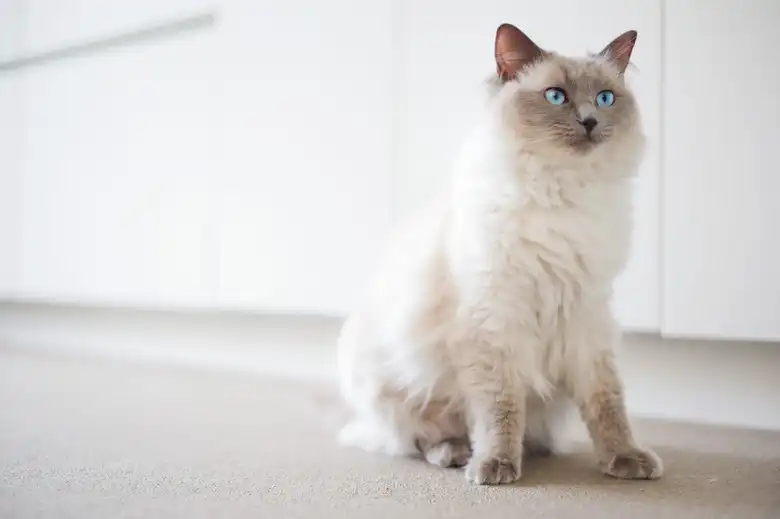
CatsCat BreedsRagdoll Cat Breed CharacteristicsByKatherine MaloneNov 19, 2022 12:03 pm ESTrachel devine/Moment/GettyImages #p5b0cad2e78ca429aba5aa907dc6a55f3, #p5b0cad2e78ca429aba5aa907dc6a55f3 img { aspect-ratio: 4256/2832; height: auto; } In This ArticleRagdoll cat quick factsRagdoll cat historyRagdoll cat personalityRagdoll cat lifespan & health issuesRagdoll cat grooming & careWelcoming a new catRagdoll cat quick factsRagdoll cat quick factsLength: 17 – 21 inchesWeight: Females: 10 – 15 pounds, males: 15 – 20 poundsLifespan: 18 – 20 yearsCoat length: LongColoring: Blue, chocolate, cinnamon, cream, fawn, lilac, red, or seal color with colorpoint, mitted, or bicolor coat pattern, and blue eyesMore Like ThisCatsLaPerm Cat Breed Information & CharacteristicsCatsRagamuffin Cat Breed CharacteristicsCatsTonkinese Cat Breed CharacteristicsGrooming needs: MediumFriendliness: Breed alone is not an accurate predictor of individual cats' personalities. However, ragdolls are generally regarded as sweet, loving cats.If you are looking for an affectionate, cuddly cat that you can carry around the house and snuggle with while watching television, the ragdoll breed may be the breed for you. Not only are they great family cats that are tolerant of children. Consider the personality and activity level of the breed before deciding to bring a ragdoll kitten into your family.These cats also have beautiful longhaired coats that are soft and silky. The ragdoll coat is fairly low maintenance for a longhaired breed. But if you don't want to be bothered with grooming — opt for a shorthair breed instead.Alex Walker/Moment/GettyImages #e17e27003b749a41a9fa0b7a89e3abd40, #e17e27003b749a41a9fa0b7a89e3abd40 img { display: block; aspect-ratio: 1.3333333333333Ragdoll cat historyRagdoll cat historyThe ragdoll cat breed was developed in the 1960s in California by a cat breeder named Ann Baker. Baker believed that her female cat Josephine started the ragdoll breed. Josephine was genetically altered at a medical facility after a car accident — leading to her genes being passed onto the kittens of today.Josephine and the other cats in the breeding program were free-roaming cats and kittens that displayed the desired appearance and personality traits were used to continue to cultivate the breed.Ragdoll cats have championship status in both the International Cat Association (TICA) and the Cat Fanciers' Association (CFA). Josephine's genes are credited with starting the ragdoll breed — giving them their unique personality.Ragdoll cat personalityRagdoll cat personalityWhat really sets ragdolls apart is their personality. They are relaxed, laid-back, and affectionate. One of the most important and recognizable of the breed's characteristics is that they live up to their name and go completely limp when you hold them. When you hold and cuddle a ragdoll, they are so relaxed that their body is floppy — just like the rag doll. Ragdoll cats may also resemble other breeds like the Persian, Burmese, and birman cat breeds.They have also been described as dog-like as they are friendly and intelligent. They make wonderful family cats and they get along with children and other pets. You can even teach your ragdoll cat to play fetch and come when you call them. Unlike many other breeds, ragdoll cats don't tend to climb or jump to the highest points in the room and you may find them resting on the floor or couch instead.If you are looking for an active and playful cat, the ragdoll cat may not be the best choice as adult cats tend to be less active than some other domestic cat breeds. They also tend to be quiet, so you won't have a cat following you around the home and meowing.Mark Liddell/Moment/GettyImages #e9eaa0914ed4e536394e35b28fb5103cf, #e9eaa0914ed4e536394e35b28fb5103cf img { display: block; aspect-ratio: 1.5Ragdoll cat lifespan and health issuesRagdoll cat lifespan and health issuesWell-cared-for and healthy ragdoll cats will generally live into their mid to late teens. The cats are generally very healthy and there are few genetic diseases affecting this cat breed.One potential health concern is hypertrophic cardiomyopathy (HCM). This is a type of heart disease that causes the walls of the heart chamber to thicken which reduces the amount of blood the heart can effectively pump.There is a DNA test available for this condition and a reputable breeder of purebred ragdolls will test all of their cats and stop breeding any cat that carries the genes for this disease.Ragdoll cat grooming and careRagdoll cat grooming and careRagdoll cats have long, silky coat that needs to be brushed at least once per week. Groom your cat more frequently when they are shedding. Use a stainless steel comb to brush out the tangles. This allows you to comb out the undercoat as well.If you don't comb out the coat all the way to the skin, there is a risk of matting. If your cat's coat becomes matted, take them to a professional groomer or your veterinarian to have the mats removed. Don't attempt to remove them on your own. It can be quite a painful experience for a cat and you risk damaging the cat's delicate skin.While not required to maintain a healthy coat, some ragdoll cats enjoy being bathed and having their coat blown dry. You can take your cat to a groomer for bathing. If you opt to do it yourself, make sure to use a shampoo designed for your cat's sensitive skin. Also, make sure the hair dryer isn't too hot.Feed the cat high-quality cat food as recommended by your veterinarian. Make sure there is fresh drinking water available at all times. Ragdoll cats have a tendency to be extremely laidback but exercise is important to keep your cat healthy and maintain a healthy weight. Play fetch and use cat tip toys, feather wands, and other safe and non-frustrating interactive toys to get your cat up and moving.Alex Barlow/Moment/GettyImages #ee97df71f816f61da8198a5e71e698660, #ee97df71f816f61da8198a5e71e698660 img { display: block; aspect-ratio: 1.5002920560748Welcoming a new cat into your homeWelcoming a new cat into your homeBringing a new cat into the family is a fun and exciting experience. Ragdoll cats are laidback and generally adjust well to the new environment. It is still a good idea to make sure the home is set up for your new ragdoll kitten. Cat-proof your home by removing plants or other items that may be harmful to your new cat. Although ragdolls tend to not frequently seek out the high places in the room, it is still a good idea to cat-proof any shelves that they can reach.Set up all of the supplies your new cat will need. Supplies include:food dishhigh-quality kitten or cat foodwater dishlitter boxcat treescratching postcat toysInitially, confine your new cat to a single room so that they can safely explore the new environment and get to know you. Don't make the cat hold still to be petted. Instead, wait for them to come to you and always use positive reinforcement. With a bit of patience, this affectionate cat will be snuggling with you before you know it.This is also a good opportunity to introduce children and any other pets in the household. Once your ragdoll cat is comfortable, you can open the door and give them access to explore. Before you know it, this loving cat will be an integral part of the family.ReferencesThe International Cat Association: The Ragdoll BreedCat Fanciers' Association: About the Ragdoll
Egyptian Mau Cat Breed Characteristics
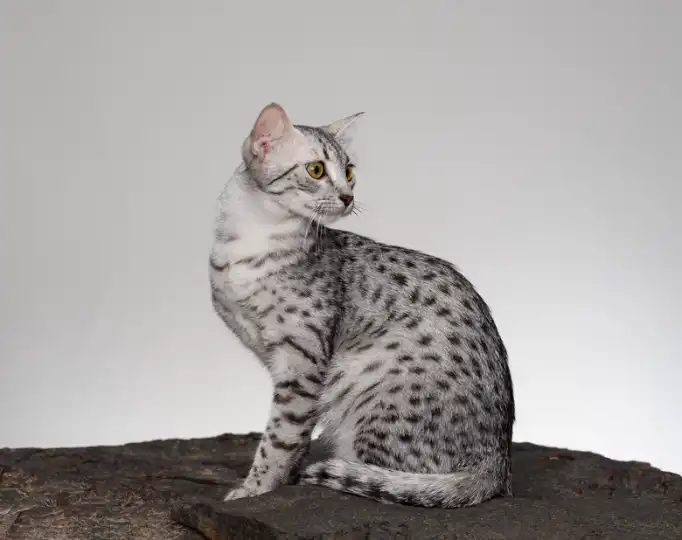
CatsCat BreedsEgyptian Mau Cat Breed CharacteristicsByKatherine MaloneFeb 24, 2023 12:03 pm ESTThomas Leirikh/iStock/GettyImages #pb6a9e490d18f8e6b8bee322fd4c561b7, #pb6a9e490d18f8e6b8bee322fd4c561b7 img { aspect-ratio: 6863/5439; height: auto; } In This ArticleEgyptian mau cat quick factsEgyptian mau cat historyEgyptian mau cat personalityEgyptian mau cat lifespan & health issuesEgyptian mau cat grooming & careWelcoming a new catEgyptian mau cat quick factsEgyptian mau cat quick factsLength: 12 – 16 inchesWeight: Females: 10 – 14 pounds, Males: 6 – 10 poundsLifespan: 10 – 15 yearsCoat length: MediumColoring: Bronze, silver, and smoke with a spotted coat pattern and green eyesMore Like ThisCatsAbyssinian Cat Breed CharacteristicsCatsBengal Cat Breed CharacteristicsCatsBurmilla Cat Breed CharacteristicsGrooming needs: LowFriendliness: Breed alone is not an accurate predictor of individual cats' personalities. However, Egyptian mau cats are generally regarded as loyal and friendly.Mau is the Egyptian word for cat and the Egyptian mau has the exotic, regal appearance that one would expect from the cats that were revered in ancient Egypt. The cats have a marking on their forehead in the shape of an "M" that is referred to as the mark of the scarab. The breed is quite active and athletic but they are equally affectionate with family members. Their enchanting personality makes these house cats excellent companions for anyone looking for a loyal feline friend. The Egyptian mau is a rare breed, so it may be difficult to find a breeder and you may need to wait for a kitten to be available.Milk Photography/iStock/GettyImages #e004b486824a536e0e46f503f972f1334, #e004b486824a536e0e46f503f972f1334 img { display: block; aspect-ratio: 1.5003253090436Egyptian mau cat historyEgyptian mau cat historyThe Egyptian mau originated in Egypt, although much of the breed's history is unknown. Ancient Egyptian art depicts spotted cats with a similar appearance and may be ancestors of these domestic cats. Like many other breeds, the Egyptian mau was at risk of extinction following World War II and many of the breeding records from before the war were lost.In 1956, exiled Russian Princess Nathalie Troubetskoy brought the first Egyptian mau cats into the United States from Italy. While breeders around the world have saved cats from extinction, they are still considered a rare breed.Although the mau has a spotted coat that is more common in wild cats such as cheetahs and African wild cats, the spotted coat on this domestic cat breed is naturally occurring. The Cat Fanciers' Association (CFA) recognizes three colors: bronze, silver, and smoke. The cats do come in other colors, but they aren't eligible for the show ring. Other colors include:blackblueblue silverblue smokeblue spottedCoat color isn't the only distinguishing feature of these beautiful cats. They also have almond-shaped eyes and the only accepted eye color is gooseberry green. Other traits include a rounded, wedge-shaped head, mascara lines on the cheeks, and hind legs that are longer than their front legs which gives them the appearance of a tiptoe stance.Egyptian mau cat personalityEgyptian mau cat personalityEgyptian mau cats have the energy and athleticism to live up to their wild appearance. They don't tend to be hyperactive, but they love to jump and run. They have a flap of skin on their belly that allows them the mobility for their playful antics and they have a gait like a cheetah that makes these cats extremely fast. These cats tend to love water and they may learn to turn on water faucets.The cats are also quite social and enjoy interactive playtime. They expect to be an active part of your life and will likely help you wake up in the morning and may even ride on your shoulder as you move around the house. Despite their high energy levels, the Egyptian mau is also very affectionate and loves to cuddle during their downtime.While the breed is typically very outgoing with their family, this outgoing nature does not typically apply to strangers and your first impression may be that the cat is reserved and shy. In many cases, the Egyptian mau will form a strong bond with one member of the family, which is important to keep in mind when considering an Egyptian mau kitten for your family.The cats have gentle personalities and may be easily startled by loud, unexpected noises. It is important to socialize kittens while they are young so they aren't fearful of strangers. The cats can be talkative and their vocalizations often sound like chortles and trills.nature picture/iStock/GettyImages #e6cf90c14343f9e2d4ccdd232cbfa64dc, #e6cf90c14343f9e2d4ccdd232cbfa64dc img { display: block; aspect-ratio: 1.5Egyptian mau cat lifespan and health issuesEgyptian mau cat lifespan and health issuesHealthy can live 15 years or longer with excellent care and while the Egyptian mau breed is generally healthy, they are at risk for a few health problems. Some potential concerns include:leukodystrophy: a neurological condition in which the cat is unable to produce myelinpyruvate kinase deficiency: a condition that affects the lifespan of red blood cells and can lead to anemiaurolithiasis: a condition that causes stones to build up in the urinary tractResponsible breeders will test for these conditions when possible and avoid breeding any cats known to carry these diseases. When selecting an Egyptian mau kitten, it is important to discuss the breeding cats' health history and test results.Egyptian mau cat grooming and careEgyptian mau cat grooming and careThe Egyptian mau has a medium-length coat that is easy to care for. Smoky cats tend to have fur that is fine and silky while bronze and silver cats have fur that is dense. In most cases, you only need to brush the cat's coat once per week to keep it shiny. Other grooming tasks include:checking and trimming the cat's nailschecking and cleaning the cat's earsbrushing the cat's teeth with a toothpaste that is formulated for catsFeed the cats high-quality, commercial cat food as recommended by your veterinarian. Consider feeding the cat canned food rather than dry food. The added water content can help keep your cat hydrated and reduce kidney and urinary tract issues. Make sure fresh water is available at all times. Take your cat to the veterinarian for regular check-ups and vaccinations.nature picture/iStock/GettyImages #ea9899cd12bebfc00c21869e5d89b2a4f, #ea9899cd12bebfc00c21869e5d89b2a4f img { display: block; aspect-ratio: 1.5Welcoming a new cat into your homeWelcoming a new cat into your homeTake the time to prepare your home for your new kitten's arrival. Cat-proof the home to make sure it is safe for your new cat and set up a single room where you can introduce your cat to their new home. Make sure the room has everything your cat may need including:food and waterlitter boxcat treescratching postcat toysWhen your new cat arrives, allow them to explore the room at their own pace. It is important to spend time with the new kitten, but avoid pressuring them to be held or petted before they are ready. Remember that the Egyptian mau tends to be shy with strangers, so it may take some time for them to get to know you.Offer to play and use plenty of positive reinforcement. Once they are comfortable with you and their new environment, you can open the door and give them access to more of the home. Your patience will pay off and soon your new cat will be an active and loyal member of the family.ReferencesThe International Cat Association: The Egyptian Mau BreedPurina: Egyptian Mau CatCat Fanciers' Association: About the Egyptian Mau
A Maine Coon Cat Famous For Being Bigger Than A 9-Year-Old Child Has A Very Expensive Diet
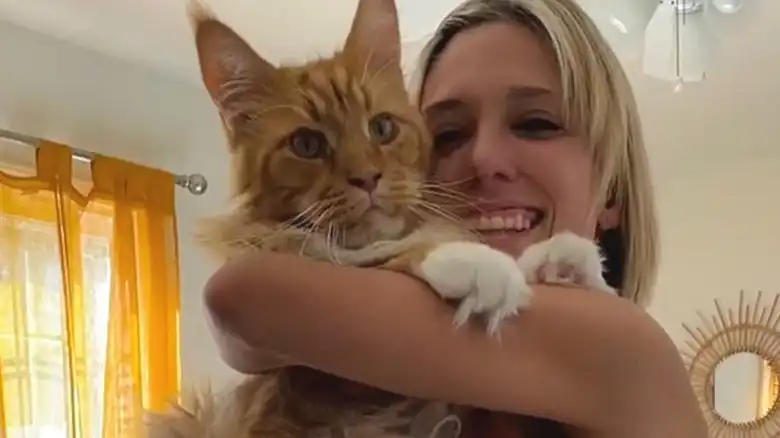
CatsCat BreedsA Maine Coon Cat Famous For Being Bigger Than A 9-Year-Old Child Has A Very Expensive DietByAdam SymchukApril 17, 2025 9:25 am ESTNatalie Bowman / FacebookWhile non-feline enthusiasts may think that pet cats only come in a few (small) sizes, they should know that there can be quite a bit of variation between breeds. For example, the Singapura, the smallest cat breed, stands at only 6 to 8 inches, while the largest, a hybrid species called the Savannah, stands anywhere from 10 to 16.5 inches. Close behind is the easily identifiable Maine coon at 10 to 16 inches. However, there are always outliers, and one remarkable cat with an impressive size and a matching appetite is Finn from San Carlos, California.Finn has a striking stature at 51 inches or 4.2 feet long, making him bigger than most 9-year-old children. Compare that to the average Maine coon length of 19 to 32 inches, and it's clear that Finn towers over most of his breed. With such a big body comes a large appetite. Owner Natalie Bowman confirmed she spends $150 monthly — or $1,800 yearly — to feed her furry companion (via SWNS). Comparatively, most Americans spend between $10 and $40 monthly on cat food, as experts told Newsweek.Finn's impressive size has also led to local celebritydom, with Bowman telling SWNS how the public reacts to him, saying, "It's really funny, they think he's a dog, and then when they get closer they say oh my god it's a cat and they love him." Yet, despite his intimidating size, Bowman adds, "Finn is really docile and curious. He is so funny and affectionate. He loves cuddles and to be spooned." Finn is undoubtedly a wonder when it comes to size, but he is still like many other kitties; he simply wants affection and an extra helping of food when he can.How cats like Finn grow to be so bigGuinness World Records / YouTubeFinn is undoubtedly an impressive specimen, but he isn't alone among giant cats on record. This includes another Maine coon named Mymains Stewart Gilligan (better known as Stewie), the official Guinness Book of World Records holder for the longest domestic cat at 48.5 inches in length. Regarding height, the current living record holder is Fenir, a Savannah, who stands at 18.83 inches tall. For those who think they have a chonky boy or girl cat, Australia's Himmy, a tabby, holds the record at 46.9 pounds before Guinness permanently ended the category in 1998.Finn, Stewie, and Fenir are cats that have experienced remarkable growth, but how does this happen? Several factors can affect a cat's development, including breed, sex (males tend to be bigger), litter size, genetics, and diet. While rarer, issues with the pituitary gland can also affect growth. Notably, feline acromegaly can lead to rapid growth (which is most common in Maine coons), and pituitary dwarfism, which is extremely rare and under-documented, can lead to stunted growth. For instance, look to celebrity pet Lil Bub, an online sensation that had the condition. The reason Finn experienced such impressive growth isn't known, but this cuddly Maine coon with a healthy appetite is undoubtedly deserving of the attention that he gets.Now, for more information about Stewie, read up on the world record holder for the longest domestic cat ever.
The Differences Between Ragdoll & Birman Cats
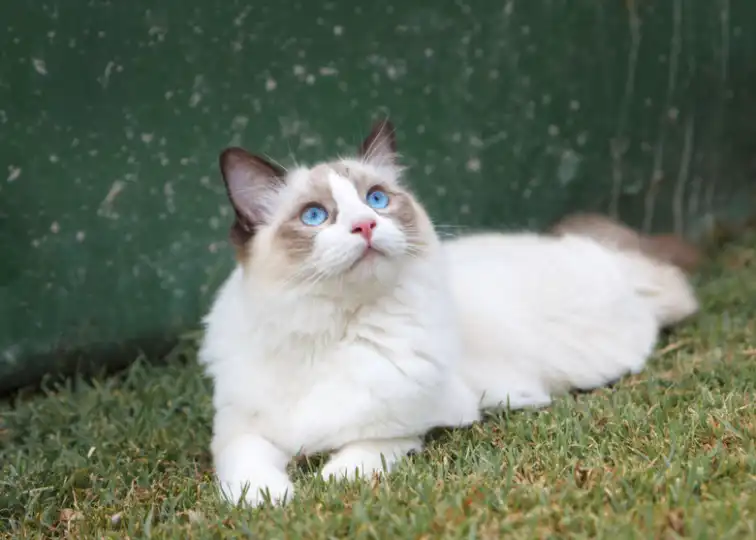
CatsCat BreedsThe Differences Between Ragdoll & Birman CatsByKatherine MaloneUpdated Apr 22, 2022silkenphotography/iStock/Getty Images #pce2e5c15f4475d89a5b8601482e9bb15, #pce2e5c15f4475d89a5b8601482e9bb15 img { aspect-ratio: 2050/1464; height: auto; }The Birman and ragdoll are similar cat breeds that may be difficult to differentiate at first glance. This makes sense since the Birman breed was used in breeding the first ragdoll cats. There are several differences between the two breeds, including differences in the breed standard, history, and health.Ragdoll vs. Birman historyRagdoll vs. Birman historyThe legend of the Birman cat is that they were raised in a temple in Birma by Kittah priests, and when their master died, his soul entered the cat, giving the Birman his beautiful coloring. However, there is no evidence that these cats originated in Birma. The breed can only be definitely traced back to 1920s France, and the cats were brought to the United States in the 1960s.Ragdoll cats were developed in the 1960s by Ann Baker of Riverside, California. As with the Birman breed, there is a bit of mystery as to the origins of the breed. While the foundation cats are believed to be known, Baker alleges that the breed came about after the foundation female cat's genes were altered after an accident.Birman and Ragdoll cat size comparisonLUIS JAVIER GASPAR FRAILE/iStock/Getty Images #p6fb8e600c750c2084e2de81df81177d8, #p6fb8e600c750c2084e2de81df81177d8 img { aspect-ratio: 3456/2304; height: auto; }Birman and Ragdoll cat size comparisonRagdoll cats are larger than Birman cats. Ragdolls are a large breed of cat with females weighing 10 to 15 pounds and males weighing 15 to 20 pounds. Male Birman cats also tend to be larger than female cats, but they are considered a medium-large breed with an average weight of about 12 pounds.Birman vs. ragdoll appearanceBirman vs. ragdoll appearanceWhile initially you may think there is little difference between the Birman and ragdoll cats, there are several differences in appearance that you can look for. Both breeds have blue eyes, long hair, and a pointed coat pattern. This coloring includes a light-colored body with darker coloring on the legs, tail, face, and ears.The Birman cat breed comes in all pointed colors, and they have distinctive white feet. The ragdoll also comes in all the pointed colors, and while some may have white feet, this is not required under the breed standard.Ragdoll cats also come in other colors and patterns, including a bicolor pattern with all white feet and legs and a mitted pattern with white front paws and hind legs and a white stripe from under the chin all the way down the underbelly. In addition, while both cats have silky hair, the ragdoll cat has a minimal undercoat, while the Birman does not have an undercoat.Birman cat vs. ragdoll temperamentBirman cat vs. ragdoll temperamentWhile breed is not a reliable indicator of temperament, there are some differences in personality to consider between the two breeds. Birman cats are described as lap cats who are both loyal and loving. They are laid back and friendly and will bask in any attention you or your guests may offer. They may spend most of their time in the laps of their owners, but that doesn't mean they aren't playful and curious. They love chasing toys when the mood strikes.ChrisRinckes/iStock/Getty Images #eb086827be42eeaee470d5678cc82dfc9, #eb086827be42eeaee470d5678cc82dfc9 img { display: block; aspect-ratio: 1.7780160857909Ragdoll cats are described as loving, social, and sweet. They live up to their name in that they will generally allow their body to go limp when you pick them up. They are quiet and affectionate and are very tolerant of other family members, including children and other pets.Birman and ragdoll healthBirman and ragdoll healthBirman cats are generally a very healthy breed. The International Cat Association does not list any genetic health problems for owners to be concerned about. With proper care, healthy cats can live for nine to 15 years or more.Ragdoll cats should be tested for hypertrophic cardiomyopathy. This is a common type of heart disease that may have a genetic component. The cats have a similar life expectancy as the Birman breed, living into their midteens or longer if they are healthy and receive proper care.ReferencesThe International Cat Association: The Birman BreedThe International Cat Association: The Ragdoll BreedCatster: Cat Colors — Get the Fascinating Facts Behind Cat Coats & PatternsThe International Cat Association: Birman Breed StandardThe International Cat Association: Ragdoll Breed Standard
American Wirehair Cat Breed Characteristics
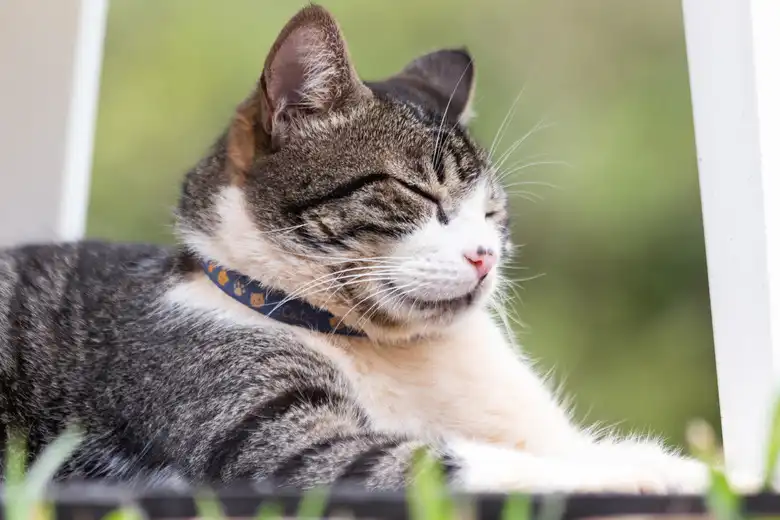
CatsCat BreedsAmerican Wirehair Cat Breed CharacteristicsByKatherine MaloneFeb 12, 2023 12:03 pm ESTFernando Calmon/iStock/GettyImages #p19514649681e5a6c7a85defde8c0cb72, #p19514649681e5a6c7a85defde8c0cb72 img { aspect-ratio: 4801/3201; height: auto; } In This ArticleAmerican wirehair cat quick factsAmerican wirehair cat historyAmerican wirehair cat personalityAmerican wirehair cat lifespan & health issuesAmerican wirehair cat grooming & careWelcoming a new catAmerican wirehair cat quick factsAmerican wirehair cat quick factsLength: 12 – 17 inchesWeight: Females: 8 – 12 pounds, Males: 12 – 15 poundsLifespan: 12 – 18 yearsCoat length: MediumColoring: Tabby is the most common pattern, although most coat colors and patterns are allowed except for lavender, chocolate, and the Himalayan pattern.More Like ThisCatsBurmilla Cat Breed CharacteristicsCatsAmerican Bobtail Cat Breed CharacteristicsCatsSiberian Cat Breed CharacteristicsGrooming needs: LowFriendliness: Breed alone is not an accurate predictor of individual cats' personalities. However, American wirehair cats are generally regarded as friendly and easygoing.The American wirehair is a unique breed that is suitable for anyone looking for a friendly, laid-back, and curious addition to the family. The medium-sized cat boasts a recognizable crimped coat and comes in nearly every color. They are quite low maintenance and require only minimal grooming. They tend to be very social cats and will enjoy both play and cuddle time. Consider the breed's personality and care requirements to decide if an American wirehair cat is a right fit for your family.Fernando Calmon/iStock/GettyImages #e3052fdf729542092ec5cf3bbd812028c, #e3052fdf729542092ec5cf3bbd812028c img { display: block; aspect-ratio: 1.5American wirehair cat historyAmerican wirehair cat historyThe American wirehair cat breed developed in 1966 as a result of a genetic mutation. This spontaneous mutation occurred when two domestic shorthair barn cats in Upstate New York were bred. One of the resulting kittens was born with a unique wiry coat. Cat breeder Joan O'Shea acquired the wirehaired kitten from Nathan Mosher, the owner of the farm.O'Shea named the kitten Council Rock Farm Adam of Hi-Fi and bred him to other female cats. The entire litter of kittens inherited the wiry hair, confirming that the coat is a dominant trait. Samples of hair were analyzed by geneticists who confirmed that the cats were a new breed and not related to the Cornish or Devon rex cats. This natural mutation has not been reported in other countries.The breed was accepted into the Cat Fanciers' Association (CFA) in 1967 and the cats were allowed to enter CFA championship competitions beginning in 1978. The breed shares many characteristics with the American shorthair cat and breeding programs are still permitted to outcross American wirehair cats with American shorthairs. Outcrossing to other breeds is not permitted and coat colors and patterns that may indicate outcrossing are disqualifying traits under the breed standard. Prohibited colors and patterns include:lavenderchocolateHimalayan patternany of the above combinations with whiteThe hard coat of the American wirehair has been compared to steel wool, although the coarseness of the coat can vary from cat to cat. The coat is dense and springy and all of the hairs, including the hair in the ear, should be crimped or bent. Curly whiskers are also desirable. The cat comes in a variety of colors and patterns, with the tabby pattern being the most common. Other patterns you may see include:solid colors (including white, black, blue, and cream)tortoiseshellcalicobicolorcameoFernando Calmon/iStock/GettyImages #e13b135dddc844fae03e3c5775ebb910e, #e13b135dddc844fae03e3c5775ebb910e img { display: block; aspect-ratio: 1.5American wirehair cat personalityAmerican wirehair cat personalityAmerican wirehair cats are social, curious, and laid-back. They enjoy being with people and are adaptable to many different situations. They do well with a single owner, assuming they get plenty of attention, or with a family filled with children and other pets. The cats enjoy cuddling with their people, but they aren't strictly lap cats.They have a moderate activity level and are quite athletic. They will entertain themselves and play with catnip mice or jump, climb, and run around the house. Don't be surprised if their curious nature leads them to explore bookshelves and other nooks and crannies around the home.While the cats can entertain themselves, they prefer to be with their human family and enjoy interactive play. Consider play sessions using a teaser wand. You can also teach these cats to play a game of fetch. The breed can be a bit chatty and many American wirehairs have a loud purr.American wirehair cat lifespan and health issuesAmerican wirehair cat lifespan and health issuesAmerican wirehairs are generally quite healthy and can live well into their teens. There are no known genetic health problems that plague the breed.Regular veterinary check-ups can help keep the cat healthy and identify any potential concerns early. It is also important to keep the cat up-to-date on their recommended vaccinations.American wirehair cat grooming and careAmerican wirehair cat grooming and careThis cat breed is very low maintenance. The medium-length, springy, wirehair coat is easily broken or damaged. Therefore, brushing the cat is not recommended for most of the year. An occasional brushing when the cat is shedding can help to remove the loose, dead fur. Some people may think that the coarse, wiry hair may make the breed hypoallergenic, but this is not the case. American wirehairs shed as much as many other cats.While coat care is rarely necessary, don't neglect other grooming tasks including:checking and trimming the cat's nailschecking and cleaning the cat's earsbrushing the cat's teeth with veterinarian-approved toothpaste.Feed high-quality commercial cat food in the amount recommended by your veterinarian and provide fresh drinking water at all times.Fernando Calmon/iStock/GettyImages #ef231614406f08ec571fcea7411d2ec9c, #ef231614406f08ec571fcea7411d2ec9c img { display: block; aspect-ratio: 1.4998585572843Welcoming a new cat into your homeWelcoming a new cat into your homeOnce you decide to bring an American wirehair kitten into your home, there is plenty to do to prepare for their arrival. Prepare a single room where you can welcome the new cat and they can safely explore to get used to the new scents and surroundings. Set up the room with everything your new cat may need including:food and waterlitter boxcat treescratching postcat toysAlso, make sure you cat-proof both the room and the rest of the house. As a small kitten, your American wirehair may not be able to get to high shelves, but be aware that as they grow, these curious and agile cats may well explore the tops of bookshelves and other areas they can reach. Remove any dangerous items such as poisonous plants and secure any breakable items your new cat may knock off the shelf or table.When your new cat arrives, allow them to explore the room at their own pace. Spend plenty of time with them, but avoid pushing them to explore new areas or to stay still to be petted before they are ready. Let them approach you and use plenty of positive reinforcement.Introduce your new cat to other members of the family, including other pets. Once your American wirehair cat is comfortable, you can open the door and allow them access to more of the home. Before you know it, this social cat will be an active member of the family.ReferencesCat Fanciers' Association: About the American WirehairCat Fanciers' Association: The American Wirehair – Bad Hair Day? Or...Great Wirehair!Cat-World: American Wirehair Breed Profile
Somali Cat Breed Characteristics
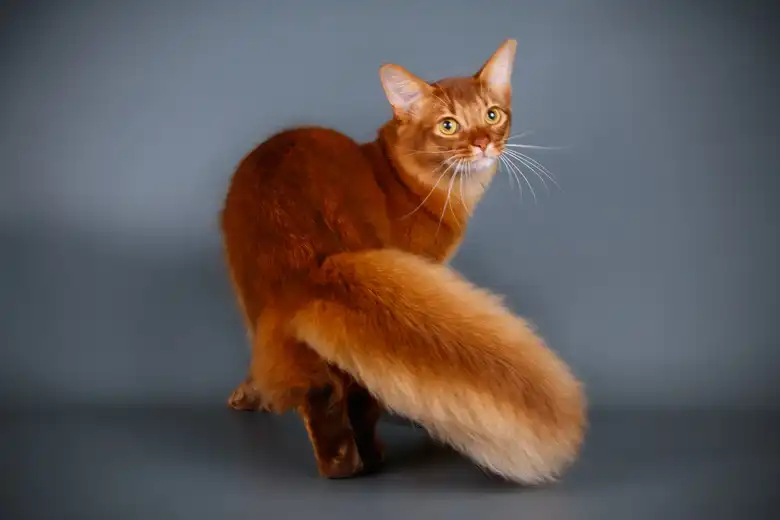
CatsCat BreedsSomali Cat Breed CharacteristicsByKatherine MaloneNov 18, 2022 12:03 pm ESTphoto by Volchanskiy/iStock/GettyImages #p6ced1e69f36bb053ba404975d59a93f5, #p6ced1e69f36bb053ba404975d59a93f5 img { aspect-ratio: 3921/2614; height: auto; } In This ArticleSomali cat quick factsSomali cat historySomali cat personalitySomali cat lifespan & health issuesSomali cat grooming & careWelcoming a new catSomali cat quick factsSomali cat quick factsLength: 11 – 14 inchesWeight: Females: 6 – 8 pounds, males: 8 – 10 poundsLifespan: 10 – 19 yearsCoat length: MediumColoring: Blue, cinnamon, chocolate, fawn, lilac, and ruddy with a ticking coat pattern, and gold or green eyesMore Like ThisCatsSilver Bengal Cat Breed CharacteristicsCatsRagamuffin Cat Breed CharacteristicsCatsLaPerm Cat Breed Information & CharacteristicsGrooming needs: MediumFriendliness: Breed alone is not an accurate predictor of individual cats' personalities. However, Somali cats are generally regarded as playful and social.The Somali cat has earned the nickname "fox cat" for their big, bushy tails. Most of their coat is medium-length, but they have longer hair around the britches, ruff, stomach, and tail. With their stunning, ticked coat, large ears, and alert, almond-shaped eyes, the Somali cat is sure to capture your heart. The breed is active, playful, and affectionate, so make you sure understand the care requirements for a Somali cat before welcoming a new kitten into your home.grase/iStock/GettyImages #eab01e459f21a156508f7d2bc23095908, #eab01e459f21a156508f7d2bc23095908 img { display: block; aspect-ratio: 1.3711376404494Somali cat historySomali cat historyThe Somali cat breed is a long-haired Abyssinian. The Abyssinian, or Aby, is an ancient cat breed whose exact origins are unknown. Some believe the breed descended from the sacred cats of Egypt. Another theory is that the Abyssinian cat originated in Abyssinia, an area that is now known as Ethiopia, and was brought to England by soldiers after the end of the Abyssinian war.A recessive gene in the Abyssinian cat created long-haired cats but breeders are uncertain where the gene came from. The Somali cat was named after Somalia, the neighboring country to Ethiopia. The breed did not originate there but was given the name to show their relation to the Abyssinian breed from Ethiopia. The name was chosen by Somali cat breeder Evelyn Mague who owned and bred Aby cats that carried the long-haired gene.Both the International Cat Association (TICA) and the Cat Fanciers' Association (CFA) recognize the Somali breed.Somali cat personalitySomali cat personalitySomali cats are quite social and enjoy being an active part of the family. They are playful, curious, and intelligent cats and will explore every nook and cranny of your home, including bookshelves and the top of your refrigerator. Fortunately, they don't tend to be destructive in their explorations, so the items on your shelves are usually safe. Be aware that some cats do learn how to open cabinet doors or turn on faucets.The cats may be able to entertain themselves, but they are extremely social and need your love and companionship to live truly happy lives. The cat may often follow you as you move around the home. They are too active to be considered lap cats, but that doesn't mean you won't have a cat on your lap when you sit down to read or watch television.Some cats may need attention and cuddling before food. Somali cats also enjoy the companionship of other feline playmates, especially if the other cat is active and playful and willing to join in on the Somali's antics.grase/iStock/GettyImages #ec4db4541fb2ee05338afe720533fd98a, #ec4db4541fb2ee05338afe720533fd98a img { display: block; aspect-ratio: 1.4297752808989Somali cat lifespan and health issuesSomali cat lifespan and health issuesHealthy and well-cared-for cats can live into their late teens and even twenties. While the breed is generally healthy, there are some genetic cat health problems that may affect them. The Somali breed may suffer from early periodontal disease, so regular dental care is critical. Some other conditions that may affect Somali cats include:patellar luxation is a condition in which the kneecap moves out of its normal position and may cause lameness depending on the severity of the condition.renal amyloidosis is a disease that causes a build-up of amyloid proteins which prevents the kidneys from functioning properly.progressive retinal atrophy is a progressive eye disease that can lead to blindnesspyruvate kinase deficiency is a condition that can cause the death of red blood cells and lead to anemia.DNA testing is available for both progressive retinal atrophy and pyruvate kinase deficiency. Responsible breeders will test their cats and avoid breeding any that carry the genes for these conditions.Somali cat grooming and careSomali cat grooming and careThe Somali's coat is long and luxurious. Though fortunately, this long-haired breed rarely suffers from tangles and mats in their fur. Many cats do well with only occasional brushing but they often appreciate more frequent grooming as they enjoy the process and time with you.Check and clean their ears and trim their nails regularly. Use veterinarian-approved toothpaste to brush their teeth. Have their teeth checked for gingivitis and periodontal disease at their regular veterinarian check-up each year.Feed the cat high-quality commercial cat food twice per day in the amount recommended by your veterinarian. Some Somali cats greatly enjoy food and will overeat if you let them. Others are so active, you may need to provide them with an additional meal. Leave fresh drinking water out for your cat at all times.Esme7/iStock/GettyImages #e173a4807bdb9b97cacf608d73eeb7991, #e173a4807bdb9b97cacf608d73eeb7991 img { display: block; aspect-ratio: 1.504Welcoming a new cat into your homeWelcoming a new cat into your homeBringing a new Somali kitten or cat into your home is an exciting time and these affectionate cats will soon be an integral part of your family. It is important to start off on the right foot, so there are a few things to do to prepare for your new cat. Start by cat-proofing your home. Remove any dangerous plants and put away any items that may be dangerous to your cat. As you are cat-proofing the home, remember that these smart kitties may soon be opening cabinets and drawers.Set up a single room for your Somali cat with the necessary items including:food and waterlitter boxcat treescratching postcat toysLet your Somali cat explore and get comfortable in the room before opening the door and giving them more space to explore. Somali cats are affectionate but don't just grab your new cat to be held or petted before they are ready. Give them time and let them come to you for love and affection. Reward them with positive reinforcement to build trust and a loving relationship.If you have other pets in the household, introduce the animals slowly. Make initial introductions through the door or a baby gate so that both animals are safe and you can ensure a positive experience for both animals. Before you know it, the friendly and sociable Somali cat will be a part of your family.ReferencesSomali Cat Club: Somali InfoCat Fanciers' Association: About the SomaliThe International Cat Association: The Somali Breed
How To Identify A Nebelung Cat
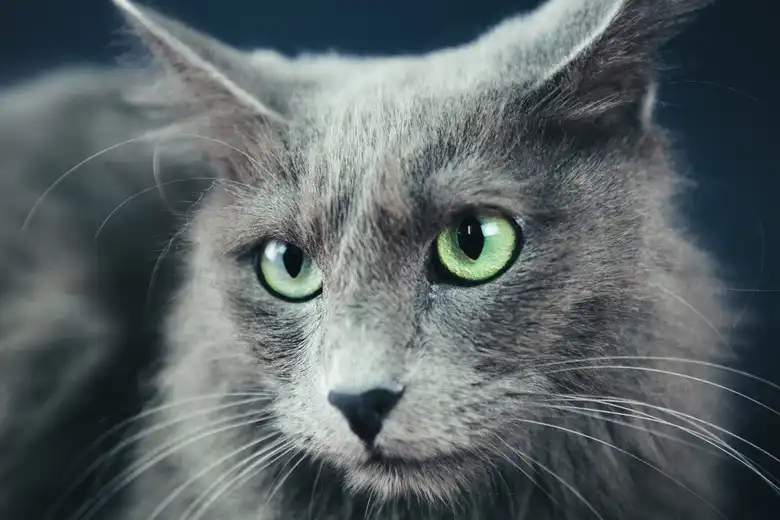
CatsCat BreedsHow To Identify A Nebelung CatByPaige CerulliUpdated Feb 22, 2019urbazon/iStock/GettyImages #p88f3987683eb8daf4aae3e541046e969, #p88f3987683eb8daf4aae3e541046e969 img { aspect-ratio: 5472/3648; height: auto; }One of the great benefits of having cats is that each breed is so distinctly different in terms of appearance, personality, and habits. You can find a cat breed out there to fit your life, whether you're looking for a lap-loving, affectionate cat or a high-energy, regal cat. While they're a lesser-known breed, Nebelung kittens and cats offer a visually striking appearance combined with a highly affectionate personality. These cats aren't yet terribly common, so if you know how to recognize one, you could come across a great cat in a shelter.Nebelung physical traitsNebelung physical traitsPetfinder states that Nebelung cats have well-proportioned, athletic bodies. They have pointed heads with large, pointed ears and slightly oval, medium-sized eyes. Kittens may have eyes that change from yellow to green, but by the time a cat is an adult, he will have striking green eyes.PetMD explains that the term "Nebelung" means "creature of the mist" in German, and it's appropriate for this stunning breed of cat. Though the breed only originated in the 1980s, it has quickly become a popular and well-developed breed.Nebelung coat characteristicsNebelung coat characteristicsAccording to PetMD, Nebelung cats look similar to Russian blue cats, but with a few differences. The Russian blue's coat is short, and the Nebelung looks like a Russian blue with long hair. The Nebelung has a dense undercoat and a bright blue color that's accented by silver-tipped guard hairs. The result is a cat that almost seems to have a glowing halo, and her striking appearance looks a bit ethereal.Nebelung kitten and cat personalitiesNebelung kitten and cat personalitiesAccording to Petfinder, Nebelung kittens and cats have a fabulous personality. These cats are affectionate, loving, and very sweet, so it's easy to form a lifetime bond with a Nebelung. Nebelung cats are extremely devoted, and they'll follow their favorite humans around. They love to sit in your lap and be pampered, and if you treat them right, they'll be loyal to you for their entire lives.Like most cats, Nebelungs will quickly learn your routine, and they don't like changes to the household. For instance, if you've been working from home and go back to working full-time outside of the house, your cat may have trouble with the adjustment. Nebelungs are particular about their environment, and while they're typically pretty quiet, they will become quite vocal if they decide something is wrong. This means that keeping litter boxes clean and cat food dishes full is important, or you'll hear about it from your cat.While Nebelungs will strongly bond with their family, they're often cautious around strangers. This may be due to the breed's intelligence. Individual Nebelungs may have varying reactions to strangers, ranging from watching them carefully from across the room to hiding under the bed whenever someone unfamiliar enters the house.Finding a Nebelung catFinding a Nebelung catIf you would like to add a Nebelung cat to your home, be prepared to spend a bit of time finding one. Nebelung cats are not as common as some other breeds, but you may be able to find a cat available for adoption. Petfinder's Nebelung breed page displays shelters with adoptable Nebelungs, which can help to narrow your search. You should also check with your local shelters and rescues.If you can find a local breeder, they may have Nebelung cats for sale. Be sure that you choose only reputable breeders and that the breeder offers quality, healthy animals for sale. Cattime states that Nebelungs are generally healthy, but you'll definitely want to be sure to purchase a well-bred cat in good health so you start off well.ReferencesCattime: NebelungPetfinder: NebelungpetMD: Nebelung
American Shorthair Cat Breed Characteristics
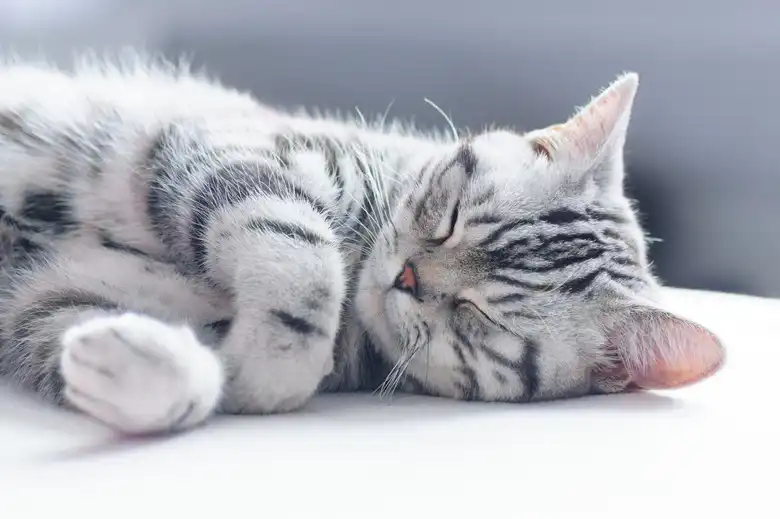
CatsCat BreedsAmerican Shorthair Cat Breed CharacteristicsByKatherine MaloneFeb 7, 2023 12:03 pm ESTThomas Hertwig / EyeEm/EyeEm/GettyImages #ped54ff30c1840a40f3fd11f070dfb29c, #ped54ff30c1840a40f3fd11f070dfb29c img { aspect-ratio: 5069/3379; height: auto; } In This ArticleAmerican shorthair quick factsAmerican shorthair cat historyAmerican shorthair cat personalityAmerican shorthair cat lifespan & health issuesAmerican shorthair cat grooming & careWelcoming a new catAmerican shorthair quick factsAmerican shorthair quick factsLength: 12 – 17 inchesWeight: Females: 6 – 12 pounds, Males: 11 – 15 poundsLifespan: 12 – 17 yearsCoat length: ShortColoring: All coat colors and patterns except for pointedMore Like ThisCatsAmerican Wirehair Cat Breed CharacteristicsCatsBirman Cat Breed CharacteristicsCatsAmerican Bobtail Cat Breed CharacteristicsGrooming needs: LowFriendliness: Breed alone is not an accurate predictor of individual cats' personalities. However, American shorthair cats are generally regarded as friendly and easygoing.The American shorthair has earned their place as one of the most popular cat breeds. They are beautiful animals with a compact and muscular build. They also have a winning personality and the adaptability to fit in with a variety of home situations, including those with children and other pets. The breed tends to be very healthy and long-lived. Consider the breed's personality and care requirements to decide whether the American shorthair is right for you.borchee/iStock/GettyImages #e30f7e1231a8c32368511c65af894f389, #e30f7e1231a8c32368511c65af894f389 img { display: block; aspect-ratio: 1.5American shorthair cat historyAmerican shorthair cat historyThe American shorthair cat breed, historically known as the domestic shorthair, was featured in cat shows in the early 1900s. The breed was of the first five breeds to be recognized by the Cat Fanciers' Association (CFA) in 1906. The breed started as working cats that were brought to North America from Europe. They were brought to the new world on ships, such as the Mayflower, to hunt vermin such as rats.These medium-sized cats have muscular bodies, short, dense coats, and round faces. While the tabby coat pattern is most common, the breed comes in many different colors and patterns. These include:solid colors (including white, black, and blue)tabby patterns (in different colors including brown tabby and silver tabby)tortoiseshellcalicocameoBreeders are not permitted to outcross purebred American shorthair cats to other breeds. Traits that give the appearance of outcrossing, such as the pointed coat pattern seen in Siamese cats, are disqualifying under the American shorthair breed standard.American shorthair cat personalityAmerican shorthair cat personalityThe American shorthair cat is laid-back and friendly and a great addition to any family. They do well with people of all ages, including young children. American shorthair cats also tend to get along with other pets in the household. These sweet-natured cats love to be an active part of the family and enjoy cuddling with their families.They aren't couch potatoes, though. This breed of cat tends to be extremely curious and they love to climb. Therefore, consider adding shelves or a tall cat tree to direct their energy away from your curtains and shelves. The cats are quite trainable and you can teach them to play fetch or perform other tricks. Be sure to use plenty of positive reinforcement when teaching them.Kilito Chan/Moment/GettyImages #ed41a6b4d8f8a60f81fd480bf0f550ec3, #ed41a6b4d8f8a60f81fd480bf0f550ec3 img { display: block; aspect-ratio: 1.4998867497169American shorthair cat lifespan and health issuesAmerican shorthair cat lifespan and health issuesA healthy American shorthair cat receiving proper care can live well into their teens. The breed is known to be healthy and hardy and is not generally affected by any genetic health problems. Some cats may have problems such as:hip dysplasia: a condition in which the ball and socket of the hip joint don't properly fit togetherhypertrophic cardiomyopathy: a type of heart disease that causes the heart wall to thickenobesityIt is important to keep your cat up-to-date with all of the recommended vaccinations. To keep your cat healthy, take them in for an annual check-up with the veterinarian to monitor the cat's weight and catch any potential health concerns early.American shorthair cat grooming and careAmerican shorthair cat grooming and careThe American shorthair cat is a low-maintenance breed. They simply require a weekly brushing or combing to remove any loose fur from their coat. While not strictly necessary, as most cats can groom their own coat enough to keep it soft and healthy, regular grooming can help to reduce the amount of fur on your furniture and floors and reduce hairballs.Other regular grooming tasks include:checking and trimming the cat's nailschecking and cleaning the cat's earsbrushing the cat's teeth with veterinarian-approved toothpasteFeed your cat high-quality commercial cat food in the amount recommended by your veterinarian. Since cats of this breed are prone to becoming overweight, avoid free feeding and limit the number of treats you offer the cat each day. Make sure there is clean, fresh drinking water available at all times.Cats have a natural instinct to scratch, so provide a scratching post. Make a point to engage in regular playtime with your cat. You can use teaser wands or other interactive toys that let your cat embrace their natural hunting instincts. The activity not only helps your cat maintain a healthy weight, but it also helps provide the mental stimulation necessary to keep your cat happy.Mytruestory Photography/Moment/GettyImages #ec980c2f660b9ca9fa0444bf16cf0328e, #ec980c2f660b9ca9fa0444bf16cf0328e img { display: block; aspect-ratio: 1.4980079681275Welcoming a new cat into your homeWelcoming a new cat into your homeBringing home your new American shorthair kitten or cat is an exciting day for the entire family. Before you bring them into the household, ensure the home is safe and ready for their arrival. Cat-proof your home and remove anything that may be dangerous or harmful to your new cat such as poisonous houseplants. Remember that these cats are curious and like to climb and jump to high perches, so it is important to also cat-proof areas like to top of bookshelves and the top of your refrigerator.Set up a single room where your new cat can adjust to their new surroundings in a safe space. Equip the room with everything your cat needs including:food and waterlitter boxscratching postcat treecat toysAmerican shorthairs love people so spend plenty of time in the room with your new cat so they aren't alone for long. However, don't push them to explore before they are ready. Allow the cat to come to you for petting and cuddles when they are ready.If you have children and other pets in the home, this is a good time to make introductions slowly. That way your new cat has a safe place to retreat to if they get overwhelmed. Once your cat is comfortable with the environment and any other pets, you can open the door and allow them access to more of the home. Before you know it, this friendly cat will be an active member of your household.ReferencesCat Fanciers' Association: About the American Shorthair
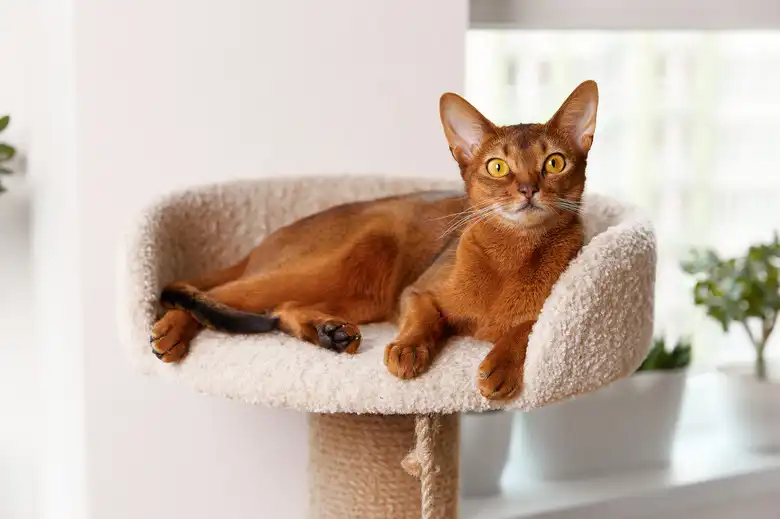
Abyssinian Cat Breed Characteristics
CatsCat BreedsAbyssinian Cat Breed CharacteristicsByKatherine MaloneOct 1, 2022 11:03 am ESTDariia Chernenko/iStock/GettyImages #p27fc1a4d411883ecd9ed254e15af1169, #p27fc1a4d411883ecd9ed254e15af1169 img { aspect-ratio: 5995/3996; height: auto; } In This ArticleAbyssinian quick factsAbyssinian cat historyAbyssinian cat personalityAbyssinian lifespan & healthAbyssinian grooming & careWelcoming a new catAbyssinian quick factsAbyssinian quick factsLength: 12 – 16 inchesWeight: Females: 6 – 9 pounds, males: 7 – 12 poundsLifespan: 14 – 17 years or moreCoat length: shortColoring: Black-silver, chocolate, chocolate-silver, cinnamon, cinnamon-silver, diluted blue, diluted blue-silver, fawn, fawn-silver, lilac, lilac-silver, and ruddyMore Like ThisCatsMaine Coon Cat Breed CharacteristicsCatsBurmilla Cat Breed CharacteristicsCatsTurkish Angora Cat Breed Facts & InformationGrooming needs: lowFriendliness: Breed alone is not an accurate predictor of individual cats' personalities. However, Abyssinian cats are generally regarded as affectionate, energetic, intelligent, and loyal.Abyssinian cat breed, also called Aby, may not be the most popular cat breed but is a wonderful breed to consider for your next cat. They may be domestic cats, but the breed looks like a wildcat. Abyssinians are medium-sized cats. The males are larger and tend to be less active than the females. They come in a variety of coat colors and have a striking ticked coat, large ears, and almond-shaped eyes.Denis Ganenko / 500px/500px/GettyImages #ed9d55e1311eea5909b8622f430f807b6, #ed9d55e1311eea5909b8622f430f807b6 img { display: block; aspect-ratio: 1.5Abyssinian cat historyAbyssinian cat historyThe Abyssinian is an ancient cat breed and much of its history is unknown. The breed closely resembles the cats represented in ancient Egyptian artifacts, but many doubt that the breed originated in Egypt. Another theory is that the cats originated in Abyssinia, a region that is currently recognized as Ethiopia. After the Abyssinian war in 1868, British soldiers were thought to have taken an Abyssinian cat named Zula back to England with them.As genetic studies have advanced, more is known about the potential origins of the breed. Genetic testing does not show that Zula was an ancestor of the Abyssinian breed. Instead, they may have originated in parts of Southeast Asia and the coast of the Indian ocean. A taxidermal exhibit at the Leiden Zoological Museum in Holland features one of the earliest known cats of the breed that was purchased sometime between 1834 and 1836.Regardless of their ancient origins, the breed was further developed in Britain and in the early 1900s was brought to the United States. The Abyssinian cat breed is recognized at cat shows by both the Cat Fancier's Association (CFA) and the International Cat Association (TICA).Josef Timar/Moment/GettyImages #e0ea6122d959260064ce002e9a4ebc1cb, #e0ea6122d959260064ce002e9a4ebc1cb img { display: block; aspect-ratio: 1.5Abyssinian cat personalityAbyssinian cat personalityThe breed is athletic, lithe, and agile. If you are looking for a lap cat, the Aby is not for you. However, if you are interested in a playful, curious cat who loves your company and is extremely loyal, the Aby may be a perfect match.They prefer to spend time on high perches, so make sure to equip your home with tall cat trees, shelves, and bookcases that give your cat a high place to explore and observe. These cats are extremely intelligent. Make sure to keep them entertained and engaged with regular playtime and plenty of toys and elevated perches.Abyssinian cat lifespan and health issuesAbyssinian cat lifespan and health issuesThe Abyssinian tend to be healthy and long-lived with an average lifespan of 14 to 17 years. Some cats have even lived into their 20s. The cat breed does have some health issues that they are more prone to compared to other cats.Be sure to discuss the health and test results of your new cat with the breeder. Reputable breeders avoid breeding cats with known genetic health issues and conduct genetic testing to make sure cats and kittens aren't predisposed to common conditions. Two conditions that breeders can test for include pyruvate kinase deficiency, a type of anemia caused by the abnormal death of red blood cells, and progressive retinal atrophy, a condition that leads to blindness.Renal amyloidosis is another condition these cats are prone to but unfortunately, genetic testing is not available. This condition causes a waxy substance called amyloid that is made primarily of proteins to accumulate in kidney cells and, in some cases, other organs. Another health problem Abyssinian cats are prone to is patellar luxation, a condition that causes the cat's kneecap to slide out of position. A veterinarian can check for this problem with a physical exam.Abyssinian cat grooming and careAbyssinian cat grooming and careThese short-haired cats are low maintenance when it comes to grooming. Dead skin and hair can accumulate on their coat, so brush your cat on occasion and wipe their coat with a damp cloth. These cats also benefit from bathing as needed. It is best to start this practice with your new Abyssinian kitten so that they are used to the water. These cats tend to enjoy physical contact and handling, so if you start slowly and patiently, grooming should be an enjoyable experience rather than a chore.Make sure to brush your cat's teeth regularly to prevent periodontal disease. Use toothpaste formulated for cats. Check and trim your cat's nails every other week. Feed high-quality, commercial cat food as directed by your veterinarian, and make sure your cat has unlimited access to fresh water.anobis/iStock/GettyImages #e1de3f6bed890c0beebf7309f3db07290, #e1de3f6bed890c0beebf7309f3db07290 img { display: block; aspect-ratio: 1.4095576619273Welcoming a new cat into your homeWelcoming a new cat into your homePrep your home before bringing a new Abyssinian cat or kitten into your home. Make sure to set up a litter box, food and water dishes, cat trees, and toys. Make sure the room is safe for your new cat and free of any crevices where they may get stuck or injured. Put away electrical cords and any houseplants that aren't safe for cats.Consider the breed's personality and care requirements before committing to bringing a new Abyssinian kitten into your home. Be patient when your cat arrives as many cats tend to take some time to become comfortable in a new location. Allow them space to relax and explore and allow them to come to you.Don't force them to be petted or put into rooms and situations where they aren't yet comfortable. Never punish your cat when they test your boundaries. Instead, use positive reinforcement. This is not only more effective, but it also helps to build a stronger relationship with your cat.Fortunately, the Abyssinian cat breed is known for being inquisitive and loving people. So with some love and patience, your new cat is sure to be an active part of the family in no time.ReferencesThe International Cat Association: The Abyssinian BreedCat Fancier's Association: About the Abyssinian
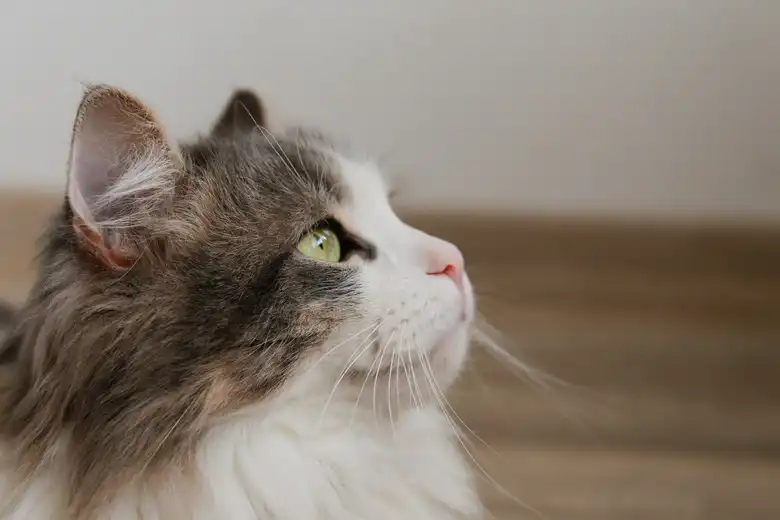
Ragamuffin Cat Breed Characteristics
CatsCat BreedsRagamuffin Cat Breed CharacteristicsByKatherine MaloneDec 13, 2022 12:03 pm ESTEvrymmnt/iStock/GettyImages #p21de1136ecf2f0f0003b33e1301b294a, #p21de1136ecf2f0f0003b33e1301b294a img { aspect-ratio: 5472/3648; height: auto; } In This ArticleRagamuffin quick factsRagamuffin cat historyRagamuffin cat personalityRagamuffin cat lifespan & health issuesRagamuffin cat grooming & careWelcoming a new catRagamuffin quick factsRagamuffin quick factsLength: 12 – 18 inchesWeight: Females: 10 to 15 pounds, Males: 15 to 20 pounds or moreLifespan: 13 – 16 yearsCoat length: Medium to longColoring: All colors and coat patterns except for pointed colorsMore Like ThisCatsRagdoll Cat Breed CharacteristicsCatsSomali Cat Breed CharacteristicsCatsBritish Shorthair Cat Breed CharacteristicsGrooming needs: HighFriendliness: Breed alone is not an accurate predictor of individual cats' personalities. However, ragamuffin cats are generally regarded as affectionate, friendly, and relaxed.Ragamuffin cats have beautiful long hair and walnut-shaped eyes that can capture your heart. The cat breed has a loving personality to match and while they enjoy playing, they also love to cuddle like a teddy bear. Before bringing a ragamuffin kitten into your home, consider their personality and care requirements to make sure the breed is a good fit for your home and lifestyle.Zoonar RF/Zoonar/GettyImages #e16537bf4f38661d74d5678cb18ff0f1b, #e16537bf4f38661d74d5678cb18ff0f1b img { display: block; aspect-ratio: 1.4991341991342Ragamuffin cat historyRagamuffin cat historyThe history of the ragamuffin breed begins with the ragdoll cats. Ragdolls were developed in the 1960s by Ann Baker in California. The breed originated from a domestic longhair cat named Josephine who had some kittens with the unique ragdoll temperament and habit of going limp when they are picked up. By continuing to breed these unique and desired characteristics, she developed the ragdoll breed. Many breeders started to breed ragdoll cats and register them with the registry created by Ann Baker.Eventually, a group of breeders decided to break away from Baker's purebred ragdoll breed registry. They took their ragdoll cats and applied for recognition for the breed from the American Cat Fanciers Association. At that time, the group selected the name ragamuffin for the new breed. The breed is also recognized by the American Association of Cat Enthusiasts and the Cat Fanciers Federation. The Cat Fanciers' Association (CFA) granted the breed championship status in 2011.The ragamuffin cat breed still shares many characteristics with the ragdoll, including their large size and long coat. There have developed differences as well. While ragdoll cats all have a colorpoint coat pattern and blue eyes, the ragamuffin breed standard allows other coat patterns except pointed colors and most eye colors. Some of the accepted colors and patterns for ragamuffin cats include:solid colors including white, black, blue, lilac, and chocolateshaded colors include chinchilla, shaded golden, and tortoiseshell shadedtabby colors and patterns include classic tabby, mackerel tabby, and patched tabby in a variety of colors including brown, blue, fawn, and lilacparti-colored including tortoiseshell, blue cream, lilac cream, and fawn creammink pattern in colors including natural, blue, champagne, platinum, and fawn with aqua eyessepia colors and patterns including sable, champaign, blue sepia, and red sepia with yellow-gold to green eyescalico and bicolor pattern in all coat colorsRagamuffin cat personalityRagamuffin cat personalityRagamuffin cats may be the ideal lap cat. They are sweet and affectionate and love nothing more than time cuddling with family members. And as the name implies, they will go limp like a rag when you hold them in your arms.The cats are calm and patient and enjoy being a part of family activities. While they love to cuddle, they also enjoy playtime. These personality traits make the breed a great choice for families with children and other pets as the ragamuffin will fit right in. The cats can also be trained to walk on a leash, play fetch, and do tricks.Evrymmnt/iStock/GettyImages #edc0677341a2b701620fd72bf899ba08b, #edc0677341a2b701620fd72bf899ba08b img { display: block; aspect-ratio: 1.5Ragamuffin cat lifespan and health issuesRagamuffin cat lifespan and health issuesA healthy ragamuffin cat typically has a life expectancy of 13 to 16 years. They are generally quite healthy, but there are some health problems to watch out for with this breed. Two common concerns are:polycystic kidney disease (PKD): A genetic health condition that causes cysts in the kidney and can eventually cause kidney failure.hypertrophic cardiomyopathy: A type of heart disease that causes a thickening of the heart muscle.The ragamuffin is a large cat and obesity is a concern as it can cause or worsen other health problems. If your cat is overweight, work with a veterinarian to make adjustments to your cat's diet and exercise programs.Ragamuffin cat grooming and careRagamuffin cat grooming and careRagamuffin cats have medium-long to long long fur and a thick undercoat. Brush the cat each day to keep the coat from matting. Make sure to comb the undercoat as well, not just the smooth surface hairs. Work out knots gently before they have the chance to become more serious mats. Matting can be extremely painful for a cat and the fur may need to be shaved completely to remove the mats.Brush the cat's teeth regularly using toothpaste that is veterinarian-approved for cats. Check their nails each week and trim them as needed.Feed high-quality cat food in the amount recommended by your veterinarian. Avoid free feeding as many ragamuffin cats have a tendency to become overweight.Evrymmnt/iStock/GettyImages #e5d6444473ef264d07c0c29bfa30c12dd, #e5d6444473ef264d07c0c29bfa30c12dd img { display: block; aspect-ratio: 1.5Welcoming a new cat into your homeWelcoming a new cat into your homeBefore you welcome a new ragamuffin kitten into your home, make sure you cat-proof the home to make sure you have a safe environment for the cat. Set up a room where you can allow the cat to get comfortable with their new environment. Make sure you have all the supplies you need including:food and water disheslitter boxcat treescratching posttoysAllow the new cat to explore the room at their own pace. While the ragamuffin cat loves to cuddle, avoid the temptation to grab the cat and hold them to be petted. Allow the cat to come to you when they are ready.Once the new cat starts feeling comfortable, introduce any other pets or children in the home. Talk to your kids to make sure they handle the new cat gently and monitor the interactions between the new ragamuffin cat and other pets to make sure everyone stays safe. Always use positive reinforcement with your cat.When you are confident that the ragamuffin cat and other pets will get along and the ragamuffin is comfortable, you can open up the door and allow them to explore more of the home. Before you know it, your ragamuffin will make themselves an integral part of the family.ReferencesAll About Cats: Ragamuffin CatThe Cat Fanciers' Association: About the RagaMuffin
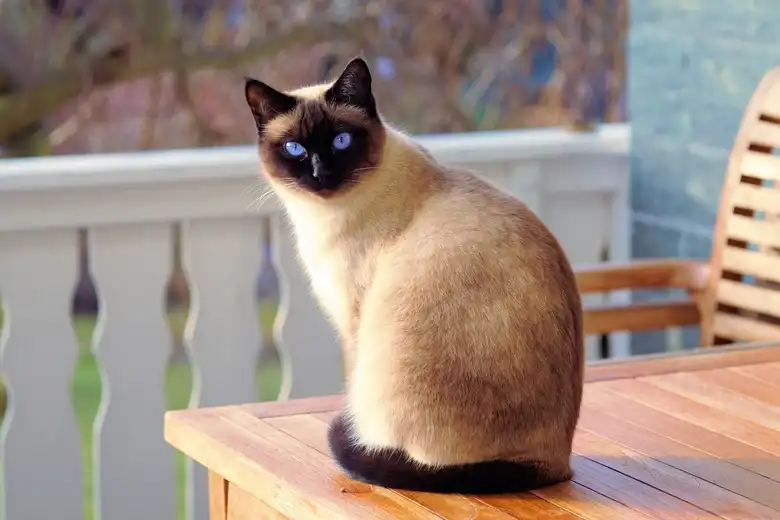
Siamese Cat Breed Characteristics
CatsCat BreedsSiamese Cat Breed CharacteristicsByKatherine MaloneUpdated Nov 11, 2022Ichad Albert / 500px/500px/GettyImages #p3879703329125bd0ea967bc307c103ac, #p3879703329125bd0ea967bc307c103ac img { aspect-ratio: 4156/2771; height: auto; } In This ArticleSiamese cat quick factsSiamese cat historySiamese cat personalitySiamese cat lifespan and health issuesSiamese cat grooming and careWelcoming a new catSiamese cat quick factsSiamese cat quick factsLength: 11 – 14 inchesWeight: Females: 5 – 8 pounds, males: 8 – 12 poundsLifespan: 15 – 20 yearsCoat length: ShortColoring: Seal point, chocolate point, blue point, or lilac point with blue eyesMore Like ThisCatsAbyssinian Cat Breed CharacteristicsCatsBengal Cat Breed CharacteristicsCatsBalinese Cat Breed CharacteristicsGrooming needs: lowFriendliness: Breed alone is not an accurate predictor of individual cats' personalities. However, Siamese cats are generally regarded as social and affectionate.The Siamese cat, sometimes called "Meezer," is one of the most recognizable cat breeds. They have a distinctive colorpoint pattern, a lean and muscular body, large ears, a wedge-shaped head, and almond-shaped, blue eyes.But their appearance isn't the only distinctive thing about these cats. They have unique personality traits and tend to be much more chatty than other cat breeds. They are both active explorers and affectionate lap cats. Therefore, consider their personality and care requirements carefully — before deciding to bring a Siamese kitten into your family.Lysandra Cook/Moment/GettyImages #e1d54ce1da267062f89b109bc60c459bd, #e1d54ce1da267062f89b109bc60c459bd img { display: block; aspect-ratio: 1.5Siamese cat historySiamese cat historyThe traditional Siamese cat originated in Siam, or what is now Thailand. They are believed to be descendants of Siam's sacred temple cats.The first Siamese cat was brought to the United States in 1878 as a gift to President Rutherford B. Hayes and his wife from Bangkok's American Consul. They became one of the original pedigreed cat breeds in the Cat Fanciers' Association (CFA) of the United States. Initially, seal point Siamese cats were recognized by the association. Seal point is the most well-known color for Siamese cats — with a cream-colored body and dark brown points. Though over time, additional color patterns were recognized by the association.The International Cat Association (TICA) has recognized the Siamese cat breed since the founding of the organization in 1979. The international association also includes the Balinese, Oriental shorthair, and Oriental longhair cat breeds in the Siamese breed group.Siamese cats have also made their mark on popular culture. They earned a mention in the 1965 Bob Dylan song, Like a Rolling Stone, and the breed has been shown in many movies. A Siamese cat played a role in "The Wizard of Oz," as well as Disney's "Lady and the Tramp," and "The Aristocats."Siamese cat personalitySiamese cat personalitySiamese cats are both social and talkative. Expect your new cat to meow and talk to you frequently. In addition, this cat breed does not like to be alone for long periods of time. They will often follow you around the home and settle in your lap once you sit down to relax. They will also snuggle up with you at night. If you work long hours or are often away on the weekend, make sure you have a pet sitter, or another pet to keep your Siamese cat company.They are also very active and intelligent cats with many dog-like traits. You can train your Siamese cat to play fetch, walk on a leash, or perform tricks. Siamese cats also enjoy interactive games and puzzle toys.They also enjoy high perches. While they are good jumpers, be sure to provide your Siamese cat with shelves and cat trees — so they can reach higher spaces — and have more room to play.Vital Hil/iStock/GettyImages #e19e1866fa5ff225cb48209fb76a9a6a4, #e19e1866fa5ff225cb48209fb76a9a6a4 img { display: block; aspect-ratio: 1.3912075681692Siamese cat lifespan and health issuesSiamese cat lifespan and health issuesThe Siamese cat breed tends to have a long life. Many cats can live into their 20s if they are healthy and receiving excellent care. In fact, the oldest male Siamese cat, Scooter, died at age 30.They tend not to have health problems, but there are a few conditions to be aware of. This cat breed tends to be more sensitive to anesthesia compared to other cats. Be sure to discuss this with your veterinarian when you take your cat in to be spayed or neutered and in advance of any other surgery.Amyloidosis is also a concern, but unfortunately, there are no tests available for breeders to screen for this disease. This condition causes problems with organ functions, (most often kidney function) due to a buildup of proteins called amyloids. Some other conditions that may affect siamese cats include:hip dysplasiachronic coughingpicaprogressive retinal atrophysome types of cancer.Siamese cat grooming and careSiamese cat grooming and careSiamese cats are a shorthair breed with minimal grooming requirements. Brushing or combing them occasionally to remove loose hair is all they need to maintain a healthy coat. However, many cats enjoy the attention and prefer more frequent grooming. Make sure to check and trim their nails each week. Brush their teeth with pet-safe toothpaste. Clean the cat's eyes and ears each week with a damp cloth.Feed the cat a high-quality commercial cat food, preferably wet food, twice per day. The amount should be recommended by your veterinarian. Make sure clean drinking water is available at all times.Esin Deniz/iStock/GettyImages #e3f149714a6691d3836e76dbd79925781, #e3f149714a6691d3836e76dbd79925781 img { display: block; aspect-ratio: 1.5Welcoming a new cat into your homeWelcoming a new cat into your homeSiamese cats may enjoy being lap cats, but they also have plenty of energy to spare for playtime. They have been known to turn on water faucets, open cabinets, and jump up onto high perches. Therefore, it is critical that you cat-proof your home. Make sure your curious cat doesn't get into anything that will harm them.Introduce your cat to a single room in the home. Set up the room with a litter box, food, water, a scratching post, and some toys. Make sure there are no hiding places where the cat might get stuck or injured. Allow your cat to explore and approach you on their own terms.If you have other pets, allow the animals to meet through the door. That way, both animals are safe and the initial meeting is a positive one. Once they are comfortable, and you are confident they will get along, you can open the door to allow them to explore more of the home.Don't force the cat to be held or petted. Siamese cats are extremely sociable, so don't leave your new Siamese kitten alone for long. Use positive reinforcement at all times with your new cat and be sure to participate in regular playtime to allow your cat to burn energy while building a positive relationship with your cat.ReferencesInternational Cat Care: SiameseThe International Cat Association: The Siamese BreedThe Cat Fanciers' Association: The Siamese
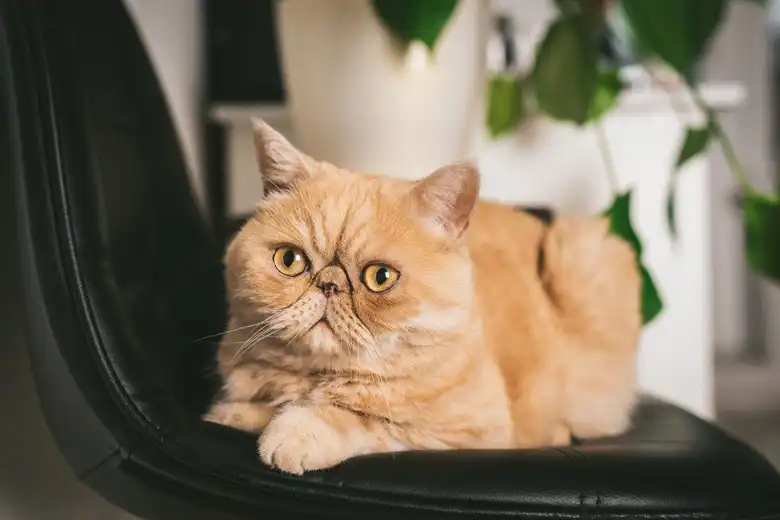
Exotic Cat Breed Characteristics
CatsCat BreedsExotic Cat Breed CharacteristicsByKatherine MaloneJan 4, 2023 12:03 pm ESTArx0nt/iStock/GettyImages #pd8cce402809279b35696b8a89c98db40, #pd8cce402809279b35696b8a89c98db40 img { aspect-ratio: 4850/3237; height: auto; } In This ArticleExotic cat quick factsExotic cat historyExotic cat personalityExotic cat lifespan & health issuesExotic cat grooming & careWelcoming a new catExotic cat quick factsExotic cat quick factsLength: 11 – 16 inchesWeight: Females: 6 to 10 pounds, Males: 7 to 14 poundsLifespan: 12 – 16 yearsCoat length: ShortColoring: All coat colors and patternsMore Like ThisCatsDevon Rex Cat Breed CharacteristicsCatsHimalayan Cat Breed CharacteristicsCatsTonkinese Cat Breed CharacteristicsGrooming needs: MediumFriendliness: Breed alone is not an accurate predictor of individual cats' personalities. However, exotic shorthair cats are generally regarded as quiet and gentle.Developed as a cross between an American shorthair and a Persian cat, the exotic shorthair cat has the stunning looks of a Persian cat but with fewer grooming requirements. The breed has a plush coat that makes cuddling with these affectionate cats a joy. Exotics tend to be very quiet, but you are sure to be drawn in by their large, expressive eyes. If you are looking for a laidback cat to join your family, the exotic cat may be a great choice. Carefully consider the breed's personality, care requirements, and health concerns before bringing a new exotic kitten into your home.© copyright 2011 Sharleen Chao/Moment/GettyImages #ee4787b414deeaeff7867c65c15d5db34, #ee4787b414deeaeff7867c65c15d5db34 img { display: block; aspect-ratio: 1.5Exotic cat historyExotic cat historyThe exotic cat breed is a new breed that was developed in the 1950s when cat breeder, Carolyn Bussey, crossed a Persian cat with an American shorthair. Her goal was to create a brown Persian, and while she didn't achieve that goal, she was pleased with the resulting kittens.American shorthair breeders also crossed an American shorthair with a Persian cat. Their goal was to get bring the silver coloring and green eyes to the American shorthair breed. While the resulting kittens did have the silver color, they had a body type and face that resembled the Persian breed rather than American shorthairs. Breeding programs used outcrosses with Burmese and Russian blue cats to obtain the desired coloring.The breed was originally called Sterling but was later changed to exotic. All coat colors and patterns are accepted, including calico and tabby. The Cat Fanciers' Association (CFA) granted exotics championship status in 1967. With the exception of their short coat, exotics have much the same breed standard as the longhair Persian cats. Some of the breed's most prominent characteristics include:large, round eyesround headflat faceExotic cat personalityExotic cat personalityThe exotic shorthair personality is endearing and affectionate. This breed of cat tends to be quiet and gentle. They vocalize with chirps and a pleasant meow, although they don't speak often. They love cuddles and enjoy being lap cats. This laidback breed gets along well with all members of the family, including other pets and small children.Kittens are very playful and while adult cats tend to be much less active, they still enjoy playing with simple toys. A crumpled ball of paper can provide plenty of entertainment for the cats. You may even find them mesmerized by dripping water.ArnonPT/iStock/GettyImages #e25145bf6e98d14c27270bff47adb4828, #e25145bf6e98d14c27270bff47adb4828 img { display: block; aspect-ratio: 1.5Exotic cat lifespan and health issuesExotic cat lifespan and health issuesA healthy exotic cat can live into their teens. The breed can experience health problems primarily because they are brachycephalic, which means they have a short head or short nose. Since their respiratory tract is shorter than other cat breeds, exotics are more prone to overheating as well as difficulty breathing or other respiratory issues. In addition, the cats have large eyes that protrude slightly. This leaves them susceptible to eye injuries.Exotic cat grooming and careExotic cat grooming and careThe exotic cat has the nickname "lazy man's Persian" for a reason. The cats have a beautiful, plush coat with a thick undercoat that rarely tangles or mats and is very low maintenance. Weekly brushing is recommended to remove loose hair. Brush the cat more frequently in the spring when the cat is shedding.Other grooming tasks include:checking and trimming the cat's nailscleaning the cat's earsbrushing the cat's teeth with a veterinarian-approved pet toothpasteWhile you only need to brush the exotics coat once per week, their eyes and face need daily attention. Use a soft, clean cloth to clean their eyes. This removes the dirt that may irritate the eye and prevents tear stains. Also, wipe any dirt from the folds on the cat's face.Feed the cat a high-quality commercial cat food as recommended by your veterinarian. Some exotics are prone to obesity, so avoid a free-feeding diet. Make sure the cat has fresh drinking water available at all times. For safety, keep your cat indoors. This reduces the risk of injury and keeps the cat out of the heat.JeepFoto/iStock/GettyImages #ebb089e99de31716599754d6eb3abe9ee, #ebb089e99de31716599754d6eb3abe9ee img { display: block; aspect-ratio: 1.5098039215686Welcoming a new cat into your homeWelcoming a new cat into your homePicking out a new exotic kitten to join your household is an exciting event and waiting for them to be ready to come home can be a challenge. But there is plenty to do to make sure your home is ready to welcome the new kitten. Start by cat-proofing your home to make sure it is safe. Remove any poisonous plants and small items like rubber bands that your new kitten may choke on.Prepare a single room where your new cat can get comfortable in their new surroundings. Make sure you close off any small spaces, such as under a rocking chair or gaps between large pieces of furniture like bookshelves, where your new cat may get stuck or injured. Set up the room with all of the supplies your cat may need including:food and waterlitter boxcat treecat toysAllow your new cat to explore the room at their own pace. It is a good idea to sit with your new cat, talk to them, and offer to play. However, you shouldn't hold them and make them be petted. Instead, offer plenty of positive reinforcement and wait for them to come to you for affection — when they are ready.If you have other pets in the household, introduce them slowly. Make sure it is a good experience for both pets. When your new cat is ready, you can open the door and allow them access to the rest of the house. Before you know it, the affectionate exotic cat will be accompanying you around the house. They will enjoy cuddles and affection when you relax at the end of the day.ReferencesThe International Cat Association: Exotic Shorthair Breed
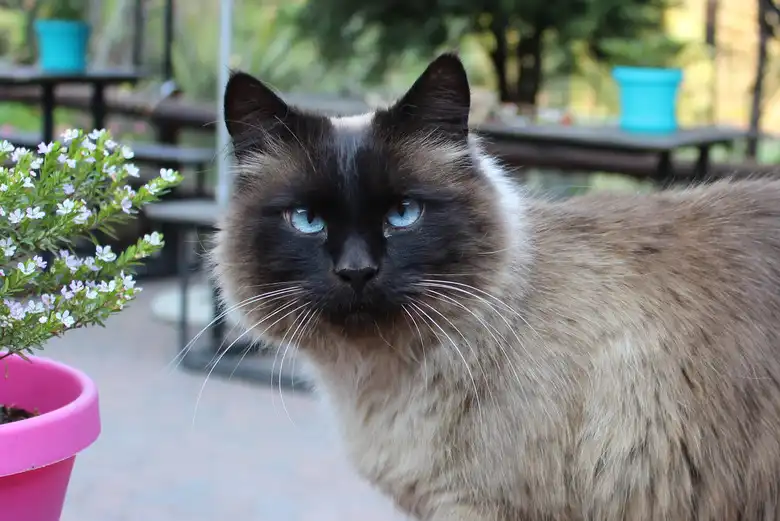
Balinese Cat Breed Characteristics
CatsCat BreedsBalinese Cat Breed CharacteristicsByKatherine MaloneDec 6, 2022 12:03 pm ESTNatalie Herzer/iStock/GettyImages #p11862140fc0103c83b326b63ccc43a03, #p11862140fc0103c83b326b63ccc43a03 img { aspect-ratio: 2958/1979; height: auto; } In This ArticleBalinese cat quick factsBalinese cat historyBalinese cat personalityBalinese cat lifespan & health issuesBalinese cat grooming & careWelcoming a new catBalinese cat quick factsBalinese cat quick factsLength: 12 – 16 inchesWeight: Females: 5 – 8 pounds, Males: 8 – 12 poundsLifespan: 12 – 15 years or moreCoat length: LongColoring: Blue point, chocolate point, lilac point, and seal point with vivid blue eyes.More Like ThisCatsHimalayan Cat Breed CharacteristicsCatsBengal Cat Breed CharacteristicsCatsSnowshoe Cat Breed CharacteristicsGrooming needs: LowFriendliness: Breed alone is not an accurate predictor of individual cats' personalities. However, Balinese are generally regarded as curious, affectionate, and outgoing.The name for the Balinese cat was inspired by the grace of the Balinese dancers, although the breed originated in the United States from long-haired Siamese cats. They have a beautiful pointed coat pattern and a silky, long coat and a plumed tail that rarely tangles or mats. And while the breed isn't completely hypoallergenic, they produce less of the Fel d1 protein, the protein that triggers a reaction in people who are allergic to cats, in their saliva.They are small to medium-sized cats with a combination of personality traits that makes them a joy to have in your home. Consider the breed's personality, energy levels, and care requirements carefully before deciding to bring a new Balinese kitten into your family.aleishaknight/iStock/GettyImages #e480f43773042835985b80c6b65d20302, #e480f43773042835985b80c6b65d20302 img { display: block; aspect-ratio: 1.4998651200432Balinese cat historyBalinese cat historyToday's Balinese cat breed was started in the 1950s by two Siamese breeders, Helen Smith in New York and Marion Dorsey in California, when they found long-haired Siamese kittens in some litters in their breeding programs. Another cat breeder, Sylvia Holland, helped to organize the Balinese breeders so that more crossbreeding could occur between the different lines of Balinese cats.It is interesting to note that the long-haired Siamese cat's history goes back much further. In 1928, a long-haired Siamese was registered with the Cat Fanciers' Association (CFA) and a long-haired Siamese was featured in the 1871 edition of the "Penny Illustrated" newspaper.The Cat Fancier's Association recognized the breed with the same four colorpoint colors as the shorthair Siamese cat including blue point, chocolate point, lilac point, and seal point. The association later merged the Javanese cat breed with the Balinese breed. They also started recognizing additional colors and coat patterns under the Javanese division. This included solid point, lynx point, and parti-color point patterns. Balinese cats also have blue, almond-shaped eyes, wedge-shaped heads, and large ears.Balinese cat personalityBalinese cat personalityBalinese cats are social and outgoing cats. They are sure to be loving with all members of your family and can do well in homes with children and other pets. They don't tend to be lap cats, but they are quite affectionate. They may stick close to help you as you move around the house.Like the Siamese, the Balinese cat is vocal and will often speak to you. They tend to have a softer meow compared to Siamese cats.The breed is also intelligent and inquisitive. These athletic cats need plenty of play and activity to stay happy and out of trouble. Interactive toys and teaser toys are good options for entertaining the Balinese cat.You can also burn off some energy and deepen your relationship with your cat by training them to play fetch, walk on a leash, or participate in sports like agility. Just be sure to use plenty of positive reinforcement during the play and training sessions.BravissimoS/iStock/GettyImages #e210eae66346dcff34c5cd5a79d49b76b, #e210eae66346dcff34c5cd5a79d49b76b img { display: block; aspect-ratio: 1.5001362769147Balinese cat lifespan and health issuesBalinese cat lifespan and health issuesThe purebred Balinese cat breed generally lives into their teens. Some may even live 20 years or more. Balinese are generally a healthy breed with few health problems. These cats can be more sensitive to anesthesia than other breeds, so it is important to discuss this with your veterinarian before any surgical procedure.The cats may suffer from amyloidosis, a condition that causes a build-up of amyloid proteins in the organs, often the kidneys. Unfortunately, there is no genetic test for this condition.As the breed was developed from a Siamese cat, they may also have some of the same health risks and conditions. These include having crossed eyes and kinked tails. These conditions are both considered faults under the breed standard, but they don't generally affect the cat's life expectancy.Balinese cat grooming and careBalinese cat grooming and careBalinese cats have long hair but are surprisingly easy to groom. Unlike many other longhaired cats, they do not have an undercoat which gives them a very sleek appearance. They have a silky coat that rarely sheds. All you need to do to keep your cat's coat healthy is brush or comb it on a weekly basis.Other weekly grooming tasks include:cleaning the earscleaning the eyes with a damp clothtrim the nailsAlso, be sure to brush the cat's teeth regularly. Use a toothpaste that is veterinary-approved for use in pets. Feed high-quality cat food, preferably canned food twice per day in the amount recommended by your veterinarian. Make sure fresh drinking water is available at all times.BravissimoS/iStock/GettyImages #e0abdc8e7e05b1b3adc6b03a7e20c8a40, #e0abdc8e7e05b1b3adc6b03a7e20c8a40 img { display: block; aspect-ratio: 1.5Welcoming a new cat into your homeWelcoming a new cat into your homeBalinese cats are sociable cats, but coming into a new environment with new people and smells can be stressful — even the most relaxed of cats. Make the transition a smooth one by cat-proofing your home before your Balinese kitten's arrival.Set up a room where you can welcome your new cat. Make sure it has everything your new cat will need including:food and waterlitter boxscratching postcat treetoysIn addition, make sure to close off any spaces where a scared cat may hide and get stuck such as gaps between the wall and furniture or appliances. Allow your new cat or kitten to explore the room and get used to the space. Spend plenty of time sitting with your cat and talking to them, but don't force them to be petted or held. With patience and positive reinforcement, your new cat will warm up to you in no time.If you also have other pets or small children in the home, this is a good time for introductions. Having the new cat in a separate room ensures there won't be conflict during the first meeting and the new cat has a safe space to retreat to if they get overwhelmed.The Balinese cat tends to be quite outgoing, so it won't be long before they are ready to leave the room — and become an active member of the family.ReferencesThe International Cat Association: The Balinese BreedCat Fanciers' Association: The Lovely Balinese
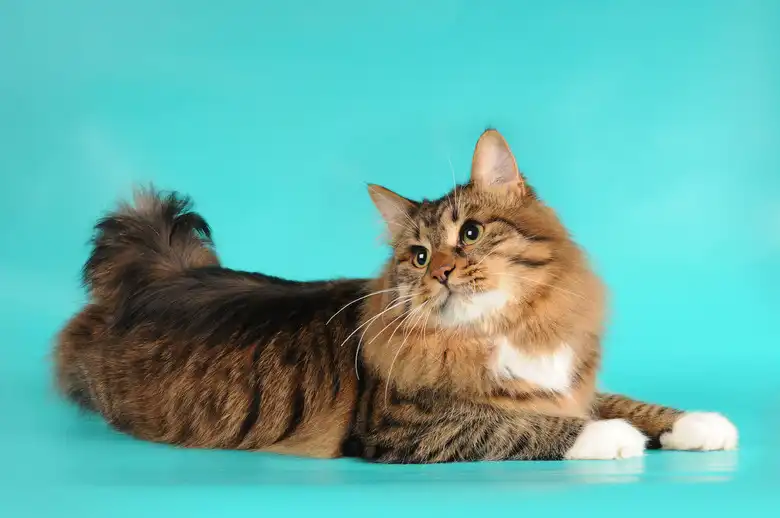
American Bobtail Cat Breed Characteristics
CatsCat BreedsAmerican Bobtail Cat Breed CharacteristicsByKatherine MaloneJan 20, 2023 12:03 pm ESTgrase/iStock/GettyImages #pb6e0ce6ccff621b6da75f214235b8af4, #pb6e0ce6ccff621b6da75f214235b8af4 img { aspect-ratio: 4288/2848; height: auto; } In This ArticleAmerican bobtail cat quick factsAmerican bobtail cat historyAmerican bobtail cat personalityAmerican bobtail cat lifespan & health issuesAmerican bobtail cat grooming & careWelcoming a newAmerican bobtail cat quick factsAmerican bobtail cat quick factsLength: 12 – 20 inchesWeight: Females: 7 – 11 pounds, Males: 12-16 poundsLifespan: 11 – 15 years or moreCoat length: Short or longColoring: All coat colors and patterns and any eye colorMore Like ThisCatsAmerican Wirehair Cat Breed CharacteristicsCatsJapanese Bobtail Cat: Everything You Need to Know About This Playful Cat BreedCatsSnowshoe Cat Breed CharacteristicsGrooming needs: Low to mediumFriendliness: Breed alone is not an accurate predictor of individual cats' personalities. However, American bobtail cats are generally regarded as affectionate and easy-going.The American bobtail cat breed is a domestic cat that shares a similar appearance with wild bobcats. However, there is no relationship between wild bobcats and the domestic breed. The American bobtail has a wonderful and affectionate personality. They are a joy to have in your household. They love to cuddle but will also entertain with their playful antics.The breed tends to be very healthy and has minimal grooming requirements. This makes them a good fit for busy families. Carefully consider the American bobtail cat's personality and care requirements before adding a new kitten to your family.Jane-Khomi/iStock/GettyImages #e0dad992ac258c3fa3c4e1ce79c7f66e1, #e0dad992ac258c3fa3c4e1ce79c7f66e1 img { display: block; aspect-ratio: 1.4982316534041American bobtail cat historyAmerican bobtail cat historyThe American bobtail breed was developed from feral domestic cats. The cats were found to naturally have shortened tails. Although these short-tail cats have been in existence for a long time, the American bobtail is a fairly new breed that only started in the 1960s.While traveling through Arizona, John and Brenda Sanders found a short-tail, brown tabby kitten that they named Yodi. When the family returned to Iowa, he was bred to the couple's color point cat, Mishi. Since the short tail is a dominant trait, the litter had Yodi's short tail. Their friends, Mindy Shultz and Charlotte Bentley liked the young kittens and began outcrossing them to create the American bobtail breed.The breed comes in both longhair and shorthair varieties. You will most often see them with coat colors and patterns that give them a wild appearance. Though all coat and eye colors are accepted under the breed standard.The cats are not completely tailless and the cat's tail can vary in length — usually 1 to 4 inches long. When the cat holds their tail up, it should be visible above the back. Though it should not extend lower than the hocks of the hind legs. Some other physical characteristics include:a rectangular-shaped bodya muscular builda broad, wedge-shaped headlarge, almond-shaped eyesThe breed has been accepted by many registries including the Cat Fanciers' Association (CFA), the International Cat Association (TICA), and the American Cat Fanciers' Association (ACFA).American bobtail cat personalityAmerican bobtail cat personalityThe American bobtail cat is a loving and affectionate pet. They are not solitary animals and prefer the company of the family, including children and other pets. These wonderful personality traits are often compared to those of a golden retriever. The American bobtail cat is also an ideal choice for a therapy pet. They tend to be very adaptable and can be excellent travel companions.Although they prefer company, the cats do not tend to be loud or demanding. In addition to meowing, they also communicate with chirps, trills, and clicks.Playtime is very important to the American bobtail. They love playing games of fetch and hide and seek and showing off their hunting skills on both cat toys and insects that dare invade your home. One of their dog-like traits is that they are very trainable and can be taught to walk on a leash. One quirk of this breed of cat is that they love shiny objects and will take them if given a chance.SerKucher/iStock/GettyImages #e4ec450dd0e0013f7cda7b622215fbcf1, #e4ec450dd0e0013f7cda7b622215fbcf1 img { display: block; aspect-ratio: 1.3466362599772American bobtail cat lifespan and health issuesAmerican bobtail cat lifespan and health issuesA healthy American bobtail cat can live into their mid-teens or longer. The breed tends to be very healthy and they don't have any known breed-specific health problems that breeders and cat owners should be concerned with.With proper care, which includes a good diet and regular veterinarian examinations, cats are likely to stay healthy and maintain a healthy weight. Avoiding obesity is important to a long life as the extra weight can increase the risks of other health conditions.American bobtail cat grooming and careAmerican bobtail cat grooming and careAmerican bobtail cats may have short or long hair and neither variety is prone to matting. Brush the bobtail cat a couple of times per week to remove any loose hair and any tangles that may have developed. More frequent brushing is recommended in the spring months when the cat is shedding.In addition to coat care, other care requirements include:trimming the cat's nails regularlycleaning the cat's earsfeeding high-quality commercial cat foodproviding constant access to fresh clean waterhaving regular veterinary check-ups and vaccinationsjockermax/iStock/GettyImages #e1e30757620683e208323296c56859525, #e1e30757620683e208323296c56859525 img { display: block; aspect-ratio: 1.5Welcoming a new cat into your homeWelcoming a new cat into your homeIt is an exciting day when you get word that your American bobtail kitten is ready to come home. Before that day arrives, take some time to cat-proof your home to make sure it is safe and ready for your cat. This includes removing any toxic plants, keeping the counters free of poisonous foods and cleaning supplies, and hiding those shiny objects and jewelry that your cat is sure to love.Set up a safe room for the cat where they can get to know you and their new environment. Make sure it has everything your new cat will need including:food and waterlitter boxscratching postcat treecat toysAllow your new cat to explore the room at their own pace. Spend plenty of time with your cat as American bobtails do not enjoy being alone. But be patient and allow the cat to come to you when they are ready. Offer to play with your cat and be sure to use plenty of positive reinforcement when you interact with them.If you have other pets in the home, make introductions slowly. Monitor their interactions to make sure that both animals have a positive experience. Once your cat is comfortable with the new environment and the other pets in the household, you can open the door. Then the new cat can begin to explore more of the home. With a bit of patience, American bobtail cats will soon be an active part of the family.ReferencesAll About Cats: American Bobtail CatThe International Cat Association: The American Bobtail Breed
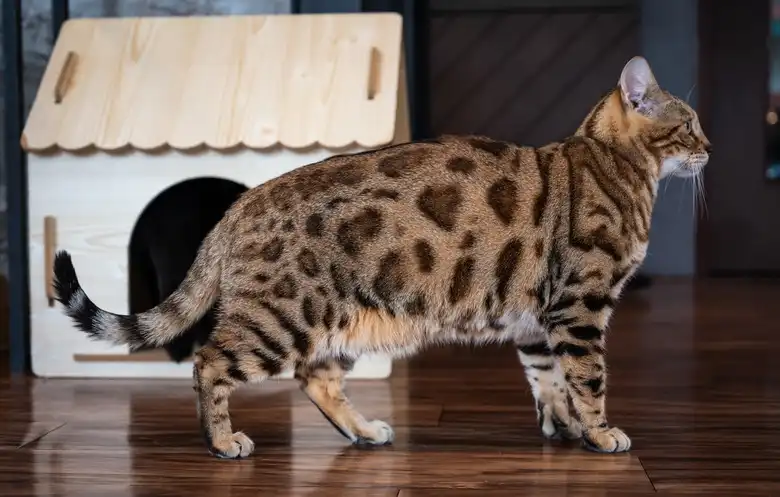
Bengal Cat Breed Characteristics
CatsCat BreedsBengal Cat Breed CharacteristicsByKatherine MaloneOct 10, 2022 11:03 am ESTBoy_Anupong/Moment/GettyImages #p5b3742cbbedf2d91f8bd907f46b0f010, #p5b3742cbbedf2d91f8bd907f46b0f010 img { aspect-ratio: 5811/3706; height: auto; } In This ArticleBengal quick factsBengal cat historyBengal cat personalityBengal cat lifespan & health issuesBengal cat grooming & careWelcoming a new catBengal quick factsBengal quick factsLength: 16 – 22 inchesWeight: Females: 6 – 12 pounds, males: 9 – 15 poundsLifespan: 12 – 20 yearsCoat length: shortColoring: Brown tabby, charcoal marble, charcoal spotted, seal lynx point, seal mink tabby, seal sepia tabby, silver tabby spotted, and marble. Eye colors include green, yellow, and gold (lynx point cats have blue eyes)More Like ThisCatsAbyssinian Cat Breed CharacteristicsCatsSilver Bengal Cat Breed CharacteristicsCatsEgyptian Mau Cat Breed CharacteristicsGrooming needs: LowFriendliness: Breed alone is not an accurate predictor of individual cats' personalities. However, Bengal cats are generally regarded as affectionate, playful, active, and intelligent.The Bengal cat breed has become increasingly popular and is one of the International Cat Association's (TICA) most frequently shown breeds. They are medium to large cats that have a striking leopard-like appearance and affectionate and playful attitude. For those who like the idea of owning a wild cat, bringing a Bengal into your home is an opportunity to enjoy a domestic cat with the appearance of a wildcat. Make sure you are prepared to manage your Bengal's energy levels and care needs before selecting a new Bengal kitten.Jena Ardell/Moment/GettyImages #eed6e4d6f6717aa8b40e84191b4e19c9f, #eed6e4d6f6717aa8b40e84191b4e19c9f img { display: block; aspect-ratio: 1.5001370238421Bengal cat historyBengal cat historyBengal cats are a fairly new domestic cat breed. They were created by the cat breeder Jean S. Mill in 1963 when she crossed a domestic house cat with a wild Asian leopard cat. The Asian leopard cat (Prionailurus bengalensis) is a small, wild cat that weighs about 5 to 12 pounds. Other cat breeders and conservationists also worked with creating hybrids with the Asian leopard cat including Willard Centerwall and Bill Engler. Though it was Mills' hybrid crosses that were used to create the domestic Bengal cat breed that is so popular today.Bengals are no longer bred with wild cats and are a fully domestic breed. They have retained their wild appearance and muscular bodies. While they come in a variety of colors, you will commonly see brown spotted, rosetted, or marbled patterns on their coat.Bengal cat personalityBengal cat personalityBengals are an extremely active breed, so cat owners should be prepared for plenty of play and running. Provide cat toys and a scratching post to help entertain the cat. They enjoy climbing to high places, so make sure to have cat trees and shelves set up.Bengal cats do not enjoy being left alone. Consider pairing the Bengal with another cat or dog in the household, especially if you are out of the house for long hours. Despite their high energy, one of the Bengal's personality traits is affection. When they are sleepy and ready to rest, you may find your Bengal has turned into a lap cat.The breed is also very intelligent and trainable. Many Bengals will play fetch with family members and you can train them to do tricks. Make sure to use positive reinforcement training methods. These cats tend to respond well to clicker training. You can even train a Bengal to walk on a leash.Mark Liddell/Moment/GettyImages #e03c8e1dba134c0ae698ebb624b24d6cd, #e03c8e1dba134c0ae698ebb624b24d6cd img { display: block; aspect-ratio: 1.5056719022688Bengal cat lifespan and health issuesBengal cat lifespan and health issuesThe average lifespan for a Bengal ranges from 12 to 20 years. A healthy cat receiving regular veterinary care and a high-quality diet is likely to have increased longevity. There are some health conditions that are common to Bengal cats. Responsible breeders should test for these health problems and stop breeding any cats that are carriers of the diseases.Hypertrophic cardiomyopathy is a common heart disease that causes the muscles of the heart to thicken which can prevent proper blood flow. Progressive retinal atrophy is an eye condition that eventually causes blindness and pyruvate kinase (PK) deficiency which can cause red blood cells to break down.These cats may have digestion issues that can be misdiagnosed as intestinal bowel disease. In many cases, testing and treating any parasitic infections and ensuring the cat is on a high-quality diet can resolve the issue.Bengal cat grooming and careBengal cat grooming and careAs shorthaired cats, Bengals have only minimal grooming to keep the spots and rosettes on their coat gleaming. Cats do shed their coats as winter transitions into spring, so an occasional brushing can help to remove loose hair. While no cat is truly hypoallergenic, the fact that Bengals rarely shed makes them a good option for cat lovers with allergies. The Cat Fanciers Association (CFA) only recognizes shorthaired Bengals, but the international association does recognize a longhaired Bengal breed. These cats need more frequent grooming to keep their coat free of mats and tangles.Check your cat's nails at least once per month and trim them as needed. Dental care is also important. Chewing on a chew toy or chicken sticks can help your cat keep plaque from accumulating on their teeth.Feed a high-quality commercial cat food that is high in protein as recommended by your veterinarian and make sure cats have constant access to fresh water. Bengals tend to love water and they may enjoy a filtered drinking fountain. Scoop out the litter box daily and change the litter regularly.Welcoming a new cat into your homeWelcoming a new cat into your homeBringing a Bengal cat or kitten into your home is an exciting event. Make sure you set up the home prior to the arrival of your new pet. Set up cat trees and litter boxes in various rooms, and in a quiet and accessible location. Remove any dangerous items such as poisonous houseplants and electrical cords. Further cat-proof the home by removing any breakable items from shelves and tables that a playing cat may knock over.Give your new cat the space to explore their new environment on their own terms. Allow them to come to you and use positive reinforcement and redirection with toys to discourage unwanted behavior. It is a good idea to confine the cat to one room initially until they are comfortable before giving them free rein in the entire house.Jena Ardell/Moment/GettyImages #e11d7cf6b4a3dd832e86b29886b1972e6, #e11d7cf6b4a3dd832e86b29886b1972e6 img { display: block; aspect-ratio: 1.5If you have other pets in the home, introduce them to your new cat slowly so that they can build a positive relationship. Initially, allow them to smell each other through a door or baby gate. This can give you an idea of both animals' reactions and prevent fighting. With a bit of patience, these confident and curious cats typically adapt quickly to their new environment — and will soon be loyal members of the family.ReferencesThe International Cat Association: The Bengal BreedJemstones Bengals: The History of the Bengal Breeding ProgramCat Fanciers Association: 2020 CFA Bengal Breed Standard
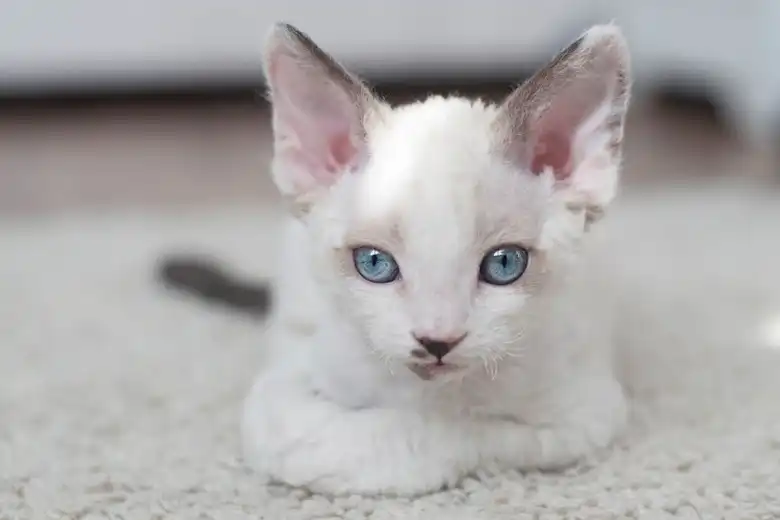
Cat Breeds That Stay Small
CatsCat BreedsCat Breeds That Stay SmallBySierra M. KoesterUpdated Apr 14, 2022#pfff1ec3cef240daf0ffc401f6b1e67a6, #pfff1ec3cef240daf0ffc401f6b1e67a6 img { aspect-ratio: 750/500; height: auto; }An average adult cat is 9 to 10 inches in height and weighs about 10 pounds. The world's smallest cat breed is the Singapura; however, there are several other small cat breeds, including the LaPerm, Japanese bobtail, Munchkin, and Minuet. While each of these breeds may be smaller than an average-size cat, they have big personalities and unique features that set them apart from other cat breeds.Singapura: the world's smallest cat breedSingapura: the world's smallest cat breedThe Singapura is the world's smallest cat breed, typically weighing between 4 and 8 pounds. They have big eyes and ears, a normal-size tail, and small feet. Singapuras don't reach their full size until they are almost 2 years old. The Singapura originated in Singapore and was brought to the United States in the 1970s.More Like ThisCatsJapanese Bobtail Cat: Everything You Need to Know About This Playful Cat BreedCatsBalinese Cat Breed CharacteristicsCatsChartreux Cat Breed CharacteristicsSingapuras are intelligent and inquisitive, and they love to be around people. This breed is active and outgoing. They tend to get along well with other cats. Singapuras love to climb and may even sit on your shoulder as you walk around the house. This breed does best in a home where they get a lot of human interaction.Munchkins have short legsMunchkins have short legsMunchkins look like any other cat except for their short legs. The breed's short legs are a result of a natural genetic mutation. Short-legged cats are not new, but it wasn't until the 1990s that the breed began to be developed. Munchkins are among the small cat breeds, weighing between 5 and 9 pounds when they are fully grown. Munchkins are both short-haired and long-haired. They come in a variety of coat colors and patterns.Munchkins are curious and like to explore their environment. They are social and tend to do well with other cats, dogs, and children. Their short legs do not slow them down; Munchkins love to run and play.LaPerm: a curly coated catoxico/iStock/GettyImages #pe9296f2fb7ffa4432acfafbb94d1788f, #pe9296f2fb7ffa4432acfafbb94d1788f img { aspect-ratio: 8256/5504; height: auto; }LaPerm: a curly coated catThe result of a natural genetic mutation, LaPerms have a distinctive wavy or curly coat. A LaPerm's coat can range in curliness from wavy to ringlet-type curls. Ringlet-type curls can range from tight ringlets to long, corkscrew curls. While some LaPerms are born bald, most kittens have short, straight, or wavy hair at birth. LaPerms are both short-haired and long-haired, and their coat comes in many colors and patterns.LaPerms are gentle, affectionate cats and tend to get along well with other household pets and children. These cats are people-oriented and seek out human contact. It is not uncommon for them to reach a paw out and touch their owner's face. LaPerms are inquisitive and always want to know what is going on. They love being near their people and will follow you around the house or curl up next to you on the couch.Small cat breeds: MinuetSmall cat breeds: MinuetLike Munchkins, Minuets have short legs. Minuets typically have a rounded head; big, rounded eyes; and small, rounded ears. The breed began to be developed in the 1990s by crossing a Persian and a Munchkin cat. Minuets can be both long-haired and short-haired. They are gentle, affectionate, and people-oriented. They are also inquisitive and active.Japanese bobtail: cats that stay smallJapanesebobtail: cats that stay smallJapanese bobtails are a naturally occurring breed that originated in Japan. While the Japanese bobtail has existed in Japan for at least the past 1,000 years, the first Japanese bobtail didn't arrive in the United States until 1968. The cat's most distinguishing feature is a short tail that has at least one angle, kink, or curve. No two tails are the same within this breed. Japanese bobtails can be either short-haired or long-haired, and their coat comes in a variety of colors and patterns.kanzilyou/iStock/GettyImages #e965962e8f5c0ad2e2c6f7c6c8b702284, #e965962e8f5c0ad2e2c6f7c6c8b702284 img { display: block; aspect-ratio: 1.5Japanese bobtails are active cats with a lot of energy. They are inquisitive and like interacting with their people. They will often talk back to you if you talk to them. Japanese bobtails are playful, and many enjoy games of fetch with their people. These cats usually travel well. They tend to get along well with other household pets and children.ReferencesBowPurr: How Tall is the Average Cat? How Big Will Your Cat Grow?The Rescue Vets: How Much Should a Cat Weigh?Cattime: SingapuraThe International Cat Association: Munchkin BreedCat Fanciers' Association: About the LaPermThe International Cat Association: Minuet BreedThe Cat Fanciers' Association: About the Japanese Bobtail
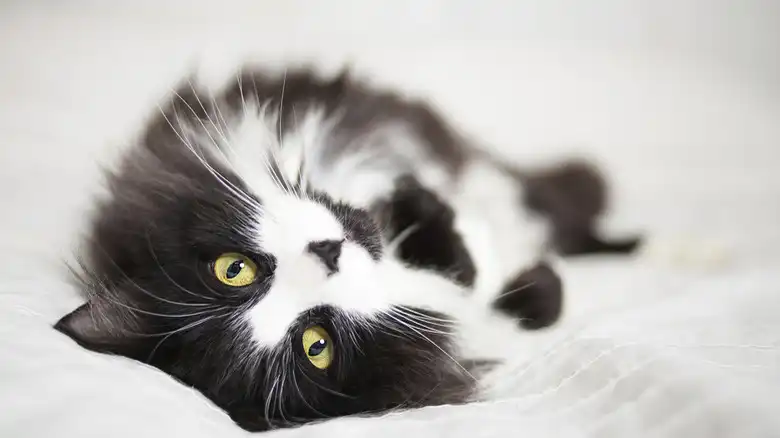
Cat Breeds That Can Be Black And White
CatsCat BreedsCat Breeds That Can Be Black And WhiteBySherri TelenkoUpdated: Dec. 11, 2024 4:09 pm ESTSnowyPhotoStock/iStock/Getty ImagesThere's something about black and white cats that's sentimental. Many people have childhood memories of growing up with the classic tuxedo kitty: a cat whose white chest and black back provide a very formal look. Note that black and white, or piebald, is a reference to a color combination, not a specific breed.Not all black and white cats are purebreds. Some are a mix of different lineages, and bicolored cats, also called magpies, can result from the crossing of almost any feline breed. Interestingly, black and white is the most common bicolored combination among felines, which might explain why so many people have fond memories of snazzy tuxedo cats.The white cat with black markings color combination can appear in several breeds. Interestingly, black and white cats are actually black cats with a white spotting gene. This gene is dominant and switches off color randomly throughout the fur, creating white patches.Long-haired black and white cat breedsTasha_lyubina/Getty ImagesThe Persian cat is not only one of the oldest and most popular cat breeds but it's also one that's most likely to be black and white. The thick, lustrous fur of the Persian (originally from Iran) looks particularly regal in black and white. Purebreds have a flat face, while black and white crosses will likely have regular cat facial features but maintain the characteristic flowing fur. Persians of any color require daily grooming.Likewise, the thick-coated fur of the large Maine coon, sometimes referred to as the gentle giant of the cat world, is also stunning in contrasting black and white. Maine coons, however, can be any of an assortment of colors. They are an independent, outgoing breed that's usually good with all family members, including children and dogs.Short-haired black and white cat breedsWirestock Creators/ShutterstockTwo short-haired cat breeds that commonly appear as bicolored black and white cats are the British shorthair and the classic American shorthair. These are two different breeds, not simply two different geographies, as many first assume. A visual distinction is that the British shorthair eyes are larger, and the head is more rounded than its American counterpart. Either can appear black and white, though they are often tabby-colored.The small-bodied, sleek Oriental shorthair cat is often confused with the Siamese unless they are black and white cats — then, they have a distinct look missing the Siamese sandy markings. The Oriental is particularly striking in black and white thanks to its characteristic green eyes. Similarly, the smallish 6- to 10-pound Cornish rex — a good choice for many allergy sufferers — can also sport short, curly black and white fur in addition to its usual coloring of browns and copper.While the Cornish rex lacks guard hair (the outer layer of fur), the Devon rex's curly coat is made of all three types of fur: guard, awn, and down. The Devon rex is a different breed than the Cornish rex, stemming from an entirely different gene, but the Devon rex can also be born black and white. This bicolor variation is acceptable in the show ring.
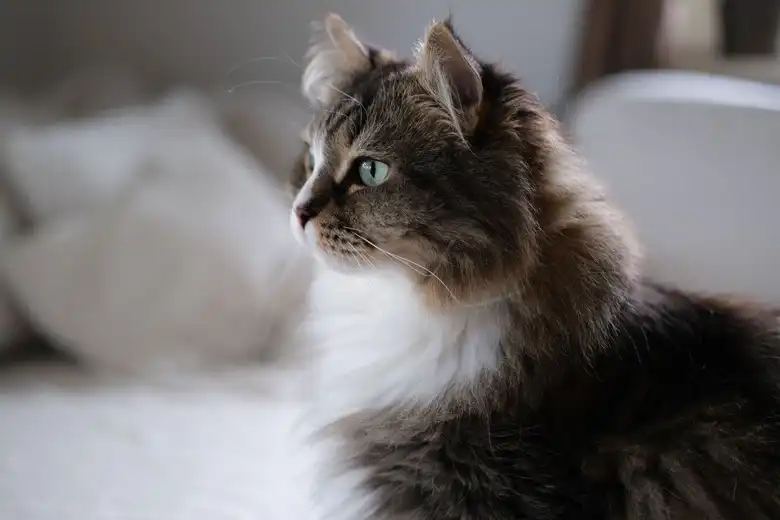
Siberian Cat Breed Characteristics
CatsCat BreedsSiberian Cat Breed CharacteristicsByKatherine MaloneNov 16, 2022 12:03 pm ESTWirestock/iStock/GettyImages #pc904c21ee1479d683f3f676e0f7a6d60, #pc904c21ee1479d683f3f676e0f7a6d60 img { aspect-ratio: 6240/4160; height: auto; } In This ArticleSiberian cat quick factsSiberian cat historySiberian cat personalitySiberian cat lifespan & health issuesSiberian cat grooming & careWelcoming a new catSiberian cat quick factsSiberian cat quick factsLength: 15 – 18 inchesWeight: 17 – 26 pounds, males tend to be larger than femalesLifespan: 11 – 18 years or moreCoat length: LongColoring: All colors and coat patterns including tortoiseshell and colorpointMore Like ThisCatsAmerican Wirehair Cat Breed CharacteristicsCatsBurmilla Cat Breed CharacteristicsCatsBalinese Cat Breed CharacteristicsGrooming needs: MediumFriendliness: Breed alone is not an accurate predictor of individual cats' personalities. However, Siberian cats are generally regarded as playful and affectionate.The Siberian cat is the national cat of Russia. They are medium to large, with long hair. While they have a long coat, the cats may be more hypoallergenic than other cat breeds. This can be beneficial if a family member is an allergy sufferer. Siberians are also known for their playful and affectionate nature. They have a calm demeanor and they don't tend to be overly demanding.Siberian kittens can take up to five years to reach their full size and maturity. Adult cats can be medium-sized but may also get quite large, weighing as much as 26 pounds. The breed standard puts more emphasis on the cat's muscular build and big bones over their exact weight.WITTY AQUARIAN / 500px/500px/GettyImages #e622882a3c4ab4c6589064a47248b857b, #e622882a3c4ab4c6589064a47248b857b img { display: block; aspect-ratio: 1.4774878118727Siberian cat historySiberian cat historyThe Siberian cat also called a Siberian forest cat or Moscow longhair is a Russian cat breed with references to the cats found as early as 1000 AD. They are included in many books including some Russian fairy tales and the 1889 book "Our Cats and All About Them" by Harrison Wier.The cats are native to Siberia in the forests of Russia. Despite the breed's long history, there is minimal documentation. It wasn't until the 1980s that more extensive records were kept in Russia.The Siberian cat breed was accepted into the International Cat Association in 1992 and received championship status in 1996. Siberians were first brought to the United States in 1990 by a cat breeder named Elizabeth Terrell. They were accepted into the Cat Fanciers' Association in 2000 where they later received championship status in the organization's cat shows in 2006.Siberian cat personalitySiberian cat personalitySiberian cats have wonderful personalities that make them a welcome addition to any home. They are affectionate and love to be with the family, including children and other pets. A Siberian cat may even follow you around as you move to different rooms. They love to cuddle when you are relaxing but they are far from being couch potatoes.The breed is very intelligent and playful. Take the time to play with your cat and enjoy the cat's antics as they jump and flip in pursuit of the toy. You should always make the game fun for your cat and let them "win" at chasing the toy. Be sure to avoid laser pointers — these can potentially injure and frustrate cats.You may also find your Siberian kitten or cat climbing bookcases and attempting to jump to high perches. Provide them with a cat tree and shelves to climb. These will give them more room to jump around and play.The Siberian cat breed is also sometimes recommended as a therapy or support animal. These cats tend to be easygoing and undemanding. They are willing to give affection and support when they sense emotional distress. The cats also communicate vocally. They have a soft meow and also often trill, chirp, and purr.Julia Gomina/iStock/GettyImages #eb90bdb97e25db8ee6985c2d5e2061a28, #eb90bdb97e25db8ee6985c2d5e2061a28 img { display: block; aspect-ratio: 1.499652052888Siberian cat lifespan & health issuesSiberian cat lifespan & health issuesHealthy Siberian cats tend to have a long lifespan and can live well into their teen years. As with many other cat breeds, they are at risk for hypertrophic cardiomyopathy (HCM). This is a type of heart disease that causes a thickening of the heart muscle. A veterinarian can check for this condition with echocardiography.Keep the Siberian up to date on all their vaccinations and have regular checkups with your veterinarian so that you can address any potential health problems right away.Siberian cat grooming & careSiberian cat grooming & careSiberian cats have long, thick coats that are water-resistant. They evolved to withstand the harsh winters of the Siberian forests. They have a triple coat with an undercoat, awn hairs, and guard hairs. You will see a ruff around the cat's neck and thick fur on the britches or hind legs. Some cats may have a lynx tipping on their ears.Fortunately, the coat of this long-haired breed doesn't tend to develop tangles and mats. Ideally, you should brush the cat at least once per week, making sure to comb the undercoat as well. When the Siberian cat is shedding their winter coat, they need daily brushing to remove loose fur. You don't need to bathe the cats, but the breed is dog-like in their love of water. Your cat may appreciate an occasional bath.While no cat is truly hypoallergenic, the Siberian cat breed may be less likely to trigger an allergic reaction compared to other cat breeds. This is likely due to the fact that Siberian cats produce less of the FelD1 protein which is an allergen in the cat's saliva and dander that may trigger a reaction in some individuals in some individuals.In addition to regular grooming, make sure to check and trim your cat's nails regularly. Clean the ears and brush their teeth with pet toothpaste. Feed them a high-quality, high-protein diet, preferably using canned food rather than dry food. Cats should also have constant access to fresh drinking water. Clean their litter box daily and change the litter regularly.Julia Gomina/iStock/GettyImages #e8dc37b75a67fda4dc5061d581d245417, #e8dc37b75a67fda4dc5061d581d245417 img { display: block; aspect-ratio: 1.5Welcoming a new cat into your homeWelcoming a new cat into your homeCat-proof your home before welcoming your new Siberian kitten to the family. Set up a single room with everything they need including a litter box, scratching post, cat tree, food, water, and toys. Make sure to close off any small spaces where the kitten may get stuck. Remove any plants or other objects that may be toxic or harmful to your new cat.Spend plenty of time with your new Siberian. Speak to them and offer to play but don't force them to be petted or held. Allow the cat to explore at their own pace and come to you for affection when they are ready. If you have other pets in the house, make the initial introduction through the door or baby gate. This will keep both animals safe and ensure a positive introduction.Always use positive reinforcement when interacting with your cat. As your cat gets comfortable with the room and with you, you can open the door and allow them access to more of the home. Be patient and before you know it, your new Siberian cat will be keeping you company — all around the house.ReferencesCat Fanciers' Association: About the SiberianThe International Cat Association: Siberian at a Glance
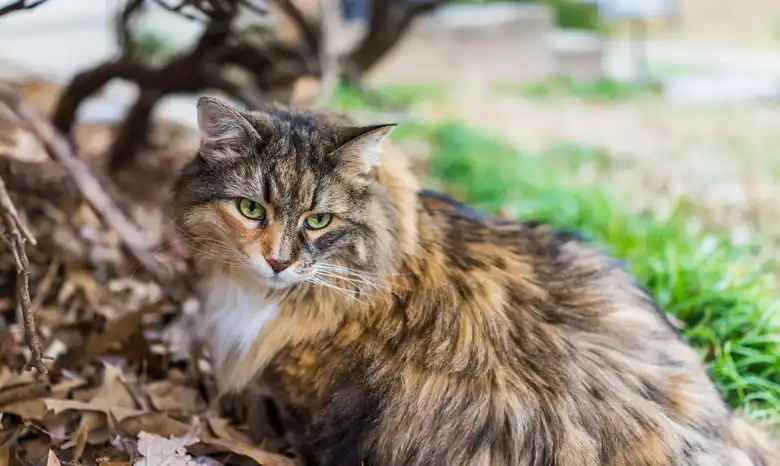
How To Tell The Difference Between A Wegie And A Maine Coon
CatsCat BreedsHow To Tell The Difference Between A Wegie And A Maine CoonByCatherine TroianoNov 14, 2009 8:21 am ESTkrblokhin/iStock/GettyImages #p9572be945a4446ce9f253b82f5f38c20, #p9572be945a4446ce9f253b82f5f38c20 img { aspect-ratio: 6000/3588; height: auto; }At a glance, the Maine Coon and the Norwegian forest cat, affectionately known as the Wegie, appear strikingly similar. While they do share some commonalities in their appearance, temperament and health, there are differences including their background.History and OriginHistory and OriginThe Norwegian forest cat originated in Norway thousands of years ago. These are the cats who likely accompanied the Vikings on their expeditions, controlling the ships' rodent populations. The Norwegian forest cat was not actually presented as a breed until 1938, when he was shown at a cat show that took place in Norway's capital city of Oslo. During the 1970s, King Olaf V declared the Wegie as Norway's official cat. The Norwegian forest cat made his debut in the United States in 1979. The Cat Fanciers' Association recognized the Norwegian forest cat in 1993.There are many myths that surround the origins of the Maine coon, but the breed most likely began when America's domestic shorthair mated with the long-haired cats who were imported by New England seamen as mementos of their travels during the 1800s. The breed developed naturally, evolving to adapt to life in America's northeastern climate. The resulting cat was soon prized by farmers and other local residents for his impressive mousing capabilities. The Maine coon was first recognized as specific breed in the state of Maine, where he is now the state's official cat. The Maine coon was officially recognized by the Cat Fanciers' Association in 1976.Physical AppearancePhysical AppearanceThe Norwegian forest cat and the Maine coon both sport long coats, ruffs around their necks, plumed tails and tufts of fur on their ears and paws. There are subtle differences in their coats. The Norwegian forest cat's smooth coat generally falls in an even length and is more sweeping in nature. The water-resistant double coat is dense to protect the cat against the harsh winter environment of his native homeland, but the undercoat is shed for the summer season. The Maine coon coat is also long, but it is not dense and it has a shaggier appearance. The texture is silky and may be slightly oily. The Norwegian forest cat's coat may be of any color or pattern except for the colorpoint pattern that is seen in the Himalayan or the Siamese. The Maine coon's coat may be any of 75 color combinations and either of two tabby patterns. Like the Norwegian forest cat, colorpoint patterns are not available on the Maine coon coat.Weighing between 9 and 18 pounds, both cats are considered large cats with their big-boned and heavily muscled physiques. The shapes of their heads present some differences. The Norwegian forest cat's head is distinctly triangular, and his profile is straight. The Maine coon's head is squared at the muzzle, and his profile displays a slight depression. The Norwegian forest cat's eyes are almond in shape and may be set at an angle. The Maine coon's eyes are oval. Both of these breeds are slow to mature to their full adult size, which is achieved between 4 and 5 years of age.Some additional cats who can share a somewhat similar appearance to the Maine Coon and the Norwegian forest cat include:Siberian, a large, semi-longhaired feline breed from Russia.Domestic long-hair, a cat with a long coat and a mixed breed background.Ragamuffin, a medium to large cat who is clad in a semi-long coat and was developed in California.Temperament TraitsTemperament TraitsBoth the Norwegian forest cat and the Maine coon are excellent companion choices for families. They are both outgoing and affectionate, getting along with just about everyone they meet. While the Norwegian forest cat is agile and revels in soaring to elevated vantage points to survey his surroundings, he tends to be mellow and is content to lounge. The Maine coon prefers to pursue exploration and adventure at ground level, and he tends to be more playful. Both of these cats are highly intelligent and enjoy the company of their family members, but the Maine coon is said to be doglike in his abilities to engage in a game of fetch, learn to walk on a leash and find his way into every household activity. The Maine coon communicates by emitting soft, chirps and trills.Health ConcernsHealth ConcernsThere are two genetic health problems to which both the Norwegian forest cat and the Maine coon are prone. One of these conditions is hypertrophic cardiomyopathy, a cardiac disease in which the heart muscle is thickened. The other health problem is hip dysplasia, a defect in the hip joint that leads to difficulty with mobility.A genetic health problem that is of concern in the Norwegian forest cat is called glycogen storage disease type IV. This is a condition that cause a deficiency in the enzyme that is required for efficient glycogen metabolism.Spinal muscular atrophy is a genetic health condition that afflicts the Maine coon. As neurons in the spinal cord that are responsible for stimulating the cat's limb muscles die off, the muscles weaken and deteriorate.While the Maine coon and the Norwegian forest cat seem to exhibit more similarities than differences, they are two unique breeds that each present some distinct traits. Whichever breed you choose, either one makes a loving and sociable family companion.
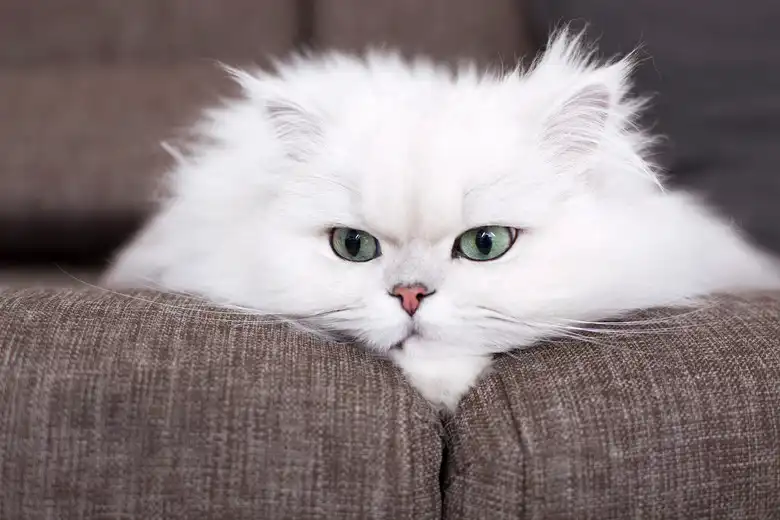
How To Mate A Persian Cat
CatsCat BreedsHow To Mate A Persian CatByJodi "Jato" ThorntonUpdated Aug 12, 2021Your sweet little Persian cat is probably so adorable that you'd love to have several more just like her. With their luxurious coat and adorable flattened face, it's no wonder that Persian cats are one of the most popular cat breeds in the world. Before letting her bring more kittens into the world, get acquainted with Persian cat breeding.Kryssia Campos/Moment/GettyImages #e82b76ac2395095094a88b0fb33ea326f, #e82b76ac2395095094a88b0fb33ea326f img { display: block; aspect-ratio: 1.5Know the breed standardKnow the breed standardBefore you consider breeding your Persian cat, familiarize yourself with the breed standard for Persian cats and make sure your cat is a good example of it. No matter how adorable your pet may be, reproducing poor traits in the breed can result in cats that no one wants to buy, and they could eventually wind up in the animal shelter system.Totally adorable traits, such as crossed eyes or a kinked coat, might make your kitty precious to you, but those are just two of many undesirable breed traits that are major disqualifications in the show ring. Review the breed standard for any disqualifying characteristics your cat might have.If your cat is breeding quality, chances are you paid several thousands of dollars for her from a reputable breeder. Pet-quality Persian cats are sold regularly by breeders but usually for less money than breeding-quality felines.Consider her geneticsSelcuk1/iStock/GettyImages #p7bcbc2b861df5a42797beec606eca5da, #p7bcbc2b861df5a42797beec606eca5da img { aspect-ratio: 5760/3840; height: auto; }Consider her geneticsYou won't find high-quality Persians at pet stores, on Craigslist, or at the local flea market. The best bet for buying a breedable Persian is to look for a registered cattery through the Cat Fanciers' Association's Find a Breeder page.Check the breeder's website to check for genetic health issues for which the breeder tests and health guarantees offered. Check the pedigree of the parents and note whether the last four generations show mostly CH (champion), GC (grand champion), RW (regional winner), or NW (national winner).Keep in mind that a champion designation only means that a cat has been to one show and wasn't disqualified in six rings. Grand champion means that the cat was judged better than at least 200 other cats. Regional winner and national winner titles are even more desirable. Look for more GC, RW, and NW designations than CH in the cat's last four ancestral generations when buying a cat to breed.Finding a mateFinding a mateIf you're looking to start a Persian cattery, you'd want to buy two to three females and one male. However, if you're looking to breed a quality female you already have, you might be able to find a stud. Finding a breeding-quality stud isn't always simple, as most registered catteries don't offer stud-for-hire services.Persian cat maturity age is another consideration. Although females can be bred at 10 months old, male Persians don't breed until around 20 to 24 months. If you prefer to buy your own stud, consider obtaining a proven breeding male from a cattery.Keep in mind that both male and female cats will spray urine to mark their territory, but unneutered male cats — known as "toms" — are the most likely to do so. Some cat breeders keep their breeding male in an outdoor house with an enclosure to contain the pungent smell and bring the breeding females — also known as "queens" — to the tom when breeding is desired.Know how to showKnow how to showIt's essential to show your parent cats to bear witness to the fact that you're breeding to the standards for Persian cats. New breeders should begin by buying and showing a neutered cat in a premiership class. This immerses you in the world of showing cats, and you can find out whether the grooming, training, and other parts of the experience are for you.You could also show the pedigreed female cat you already have. Letting her compete in the ring will be a good indicator of whether she possesses the traits that will appeal to Persian cat fanciers wishing to buy offspring.The show ring provides a valuable resource, as you will be shoulder to shoulder with experienced cattery operators who can give you tips about Persian cat breeding.Prepare your environmentPrepare your environmentEach breeding cat should be kept separately in her own room or roomy cat cage (at least 5 feet long with one shelf to jump onto) for several reasons:Planning your female's breeding times: Keeping cats together will never let you know when your cat became pregnant and when she's due.Protection of the queens and kittens: Toms will sometimes decide they need to breed with a kitten, resulting in death or spinal injury.Protecting your female: Even though she may cycle into heat as early as 5 months old, letting a tom breed her or becoming pregnant before she's fully developed at 10 to 12 months can be dangerous to her health.Letting a queen recover: Queens could get rebred just a few weeks after giving birth, which depletes them physically.Health considerations: Males are prone to bladder stones that can block the urethra, and their urinary output should be checked every day. You won't know if they're not peeing unless they're using their own litter box.Protection during pregnancy: Pregnant females should be confined the last two weeks of pregnancy to prevent them from misjudging a jump that could result in injury or miscarriage.Providing security: New mothers often get nervous and move their kits around, sometimes forgetting one under a couch or behind a bed. Giving mom a cage can help her feel secure and protected.Persian cat heat cycleFluxFactory/iStock/GettyImages #p0e28c741affaa0402070d0997a62987c, #p0e28c741affaa0402070d0997a62987c img { aspect-ratio: 6720/4480; height: auto; }Persian cat heat cycleKnowing a cat's signs of heat is the final step you'll need to take before letting her get together with her mate. Unlike dogs, cats don't usually spot blood. Your cat may yowl, spray to mark her territory, arch her back, or walk around with her tail lifted stiffly.A Persian cat heat cycle begins at about 5 to 6 months old; however, breeding her before 10 to 12 months old could be harmful to her. Male Persian cats are generally significantly larger than females, so letting a 2-year-old male mate with an immature female could result in a broken spine or other injuries.Bring your female to the male's environment for breeding. They'll know what to do naturally. Leave your female with him for a day or two. Cats come into heat every few weeks, but it is the act of mating that stimulates ovulation, so they'll need to be free to interact for more than just a single copulatory act.ReferencesThe Cat Fanciers' Association: The Cat Fanciers' Association Announces Most Popular Breeds for 2018The Cat Fanciers' Association: Persian Breed StandardsThe Cat Fanciers' Association: Find a BreederCacao Cattery: A Guide to Entering the World of Breeding & Showing CatsVCA Hospitals: Cat Behavior Problems – Marking and Spraying Behavior
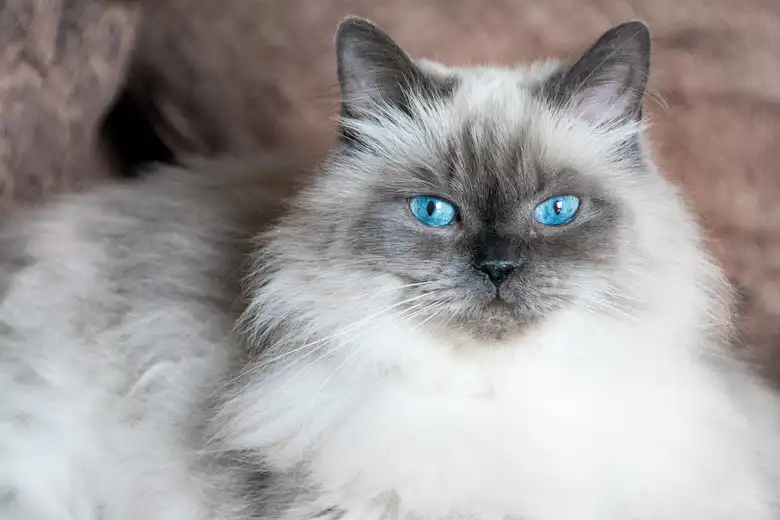
Himalayan Cat Breed Characteristics
CatsCat BreedsHimalayan Cat Breed CharacteristicsByKatherine MaloneUpdated Nov 11, 2022Louis-Michel DESERT/iStock/GettyImages #pfef15ea0346d19bafbc174f14e9cde59, #pfef15ea0346d19bafbc174f14e9cde59 img { aspect-ratio: 5470/3647; height: auto; } In This ArticleHimalayan cat quick factsHimalayan cat historyHimalayan cat personalityHimalayan cat lifespan & health issuesHimalayan cat grooming & careWelcoming a new catHimalayan cat quick factsHimalayan cat quick factsLength: 12 – 16 inchesWeight: 7 – 12 poundsLifespan: 8 – 11 yearsCoat length: LongColoring: All coat colors with a pointed coat pattern and blue eyesMore Like ThisCatsBalinese Cat Breed CharacteristicsCatsBirman Cat Breed CharacteristicsCatsTonkinese Cat Breed CharacteristicsGrooming needs: HighFriendliness: Breed alone is not an accurate predictor of individual cats' personalities. However, Himalayan cats are generally regarded as gentle and sweet.The Himalayan cat is a popular breed and stunning addition to your home with their flat face and round eyes. They come in nearly any color and have a pointed color pattern, which means they have dark-colored points on the ears, tip of the tail, and paws. They are not only beautiful, but they have a calm and gentle personality. They tend to get along with humans and pets alike, but may not be the best choice if you have a rowdy home. Be sure to consider not only the breed's appearance and personality, but also their care requirements before you bring a new Himalayan kitten into your home.Kryssia Campos/Moment/GettyImages #e05f6e4d65e57f0fa093040f6fa690f15, #e05f6e4d65e57f0fa093040f6fa690f15 img { display: block; aspect-ratio: 1.7772511848341Himalayan cat historyHimalayan cat historyHimalayan cats, sometimes referred to as "Himmies," are considered part of the Persian group but are recognized as a separate breed by the International Cat Association. The American Cat Fanciers' Association (CFA), on the other hand, classifies Himmies as a Persian cat. The association considers Himalayans one of the color divisions of the Persian breed along with solids, tabbies, bicolors, and particolors. Persian cats, thought to have originated in Persia, are one of the oldest cat breeds and their history is not fully known.The Himalayan breed was created as a part of the breeding program started in 1931 and run by Virginia Cobb and Dr. Clyde Keeler. The first Himalayan kitten was named Newton's Debutante. Other breeders that contributed to the development of the Himalayan cat breed by crossing Persian and Siamese cats include Marguerita Goforth and Ben Borrett. The Himalayan was bred to have the colorpoint markings of a Siamese cat while still maintaining the appearance of a Persian cat.The cat breed is extremely popular among cat owners and some Himalayan cats even have celebrity status. Mr. Jinx is played by a Himilayan cat in the movie "Meet the Parents" and Sassy was the leading Himalayan cat role in the "Homeward Bound" movies.Himalayan cat personalityHimalayan cat personalityThese long-haired cats are sweet and gentle members of the family. They do best in calm, quiet homes and they tend to be very friendly with people and enjoy lounging with your as you relax or sleep. If you do have a more boisterous environment in your home, the cats will likely adapt to it — with some patience and love.They do, like other Persian cats, continue to have a kitten-like playfulness in short bursts. However, it is not uncommon for them to become quite sedentary, so it is important to have playtime each day with teaser toys, catnip mice, and interactive toys.They have a heavy build and don't tend to climb and jump much. Himalayans tend to be quiet cats and when they do meow, they make a melodious sound.ecuadorplanet/iStock/GettyImages #ef074477ef7f7efc126eb4cffb9a63d7a, #ef074477ef7f7efc126eb4cffb9a63d7a img { display: block; aspect-ratio: 1.5Himalayan cat lifespan and health issuesHimalayan cat lifespan and health issuesHimalayan cats have an expected lifespan of 8 to 11 years. They tend to be quite healthy, but there are some health problems that breeders should test for in Himalayan and Persian cats.polycystic kidney disease (PKD): a condition common in Persians that causes cysts to develop in the kidneys, eventually leading to kidney failure.progressive retinal atrophy: a condition that can eventually cause blindnesshypertrophic cardiomyopathy: a common heart disease in cats that causes the wall of the heart to thicken.Himalayan cat grooming and careHimalayan cat grooming and careThe Himalayan cat's long fur needs daily brushing. Failing to regularly groom these cats can cause the coat to become matted. Once matting occurs, you may need to take your cat to a professional groomer or your veterinarian to safely remove the mats and tangles.In addition to combing out their fur, wipe their eyes daily. Some Himmies have excessive tearing and may develop tear stains on their faces. Trim their nails every two or three weeks and brush their teeth with toothpaste made for cats.Feed high-quality cat food as recommended by your veterinarian and provide fresh water at all times. Consider investing in a water fountain for your cat as this will keep the long hair on their chin and chest drier and make it less likely to stain or tangle.Kim MacKay/Moment/GettyImages #ecb5f45ed0a6614e7c40f584a1d06c662, #ecb5f45ed0a6614e7c40f584a1d06c662 img { display: block; aspect-ratio: 1.5562291603516Welcoming a new cat into your homeWelcoming a new cat into your homeCat-proof your home before you bring the Himalayan kitten or cat into your home. Set up the litter box in a quiet location where your cat can easily access it and feel safe. Make sure to keep the litter box clean. Provide a scratching post and plenty of toys, as well as safe hiding spots for your new cat, such as cardboard boxes.Initially, keep your cat in a separate room away from other pets. Release them from their carrier and sit quietly as they explore the room. It is good to talk to your new cat. Though don't force them to be petted or held until they are ready. Offer treats and toys to help develop a bond with your new cat. Once they are comfortable, you can open up more of the home for them to explore. Use plenty of positive reinforcement and never punish your cat.If you have other pets in the household, introduce them to your new cat through the door or a baby gate first. This keeps both animals safe as they get used to the other animal's smell. Introduce the pets slowly and keep each meeting positive. Make sure to supervise your new cat and other pets until you are confident that they are getting along.Himalayans are sweet cats and loving members of the family, but each cat will adjust to their new surroundings at their own pace. Stay calm and patient and before your know it, your Himalayan cat will warm up to you — and be an active part of the family.ReferencesThe International Cat Association: The Himalayan BreedCat Fanciers' Association: About the Persian

Russian Blue Cat Breed Facts & Information
CatsCat BreedsRussian Blue Cat Breed Facts & InformationBySarah Jeanne TerryUpdated Apr 15, 2022We know when you're looking to adopt a cat, there are so many great breeds to choose from.Ludibarrs/iStock/GettyImages #e2866ad8ef5bb43c83ff06753f039aa1f, #e2866ad8ef5bb43c83ff06753f039aa1f img { display: block; aspect-ratio: 1.504If you're looking for a feline friend that is less likely to tickle your allergies, but still an affectionate and sweet companion, then the Russian blue cat might be perfect for you.These cats are beautiful to look at, lower in the protein that tickles our allergies, and they're shy but sweet in disposition. So if you think you need a cat like that, here are all the facts about the Russian blue that you need to know.Russian blue cat basicsRussian blue cat basicsThe Russian blue is an affectionate but very shy cat. These adorable, silvery, and gray short hairs love being around their people, but they won't be distraught if you need to leave them while at work. They're smart, observant, and curious, so you can expect a playful and occasionally mischievous cat. However, these kitties love routines and will appreciate stability in their life.More Like ThisCatsKorat Cat Breed Facts & InformationCatsSilver Bengal Cat Breed CharacteristicsCatsBengal Cat Breed CharacteristicsRussian blues are overall a healthy, breed but one disease that they have a tendency for is bladder stones. Also, these cats have a voracious appetite, typically, so they can become overweight. So you'll need to manage their food and exercise carefully to keep these cats svelte and healthy.Russian blue cat historyOlezzo/iStock/GettyImages #p3b5ebad5854c44670b4da586d86ffcff, #p3b5ebad5854c44670b4da586d86ffcff img { aspect-ratio: 5616/3744; height: auto; }Russian blue cat historyThese icy blue kitties have something of a storied history. Most evidence suggests that these cats originate just south of the Arctic Circle in the Russian port city of Archangel. These cats were historically popular pets with the Russian Tsars. One of the clearest early records of the Russian blue is in 1875 when a silver-blue cat called the "Archangel Cat" appeared on display at the Crystal Palace in Great Britain. Queen Victoria was charmed by the kitty and even adopted one into her collection.The breed was lumped in with other blue cat breeds for years, but Russian blue became an official breed in 1912.Russian blue cat personalityRussian blue cat personalityRussian blue cats are very affectionate, but they're also shy and relatively independent. They don't mind being left alone while their humans go to work. They tend to shy away when new people come into the home, and they won't be the type of cats to follow their humans from room to room.If you're looking for a good family cat, know that Russian blues tend to be good with older children that know how to be respectful. They also get along well with cat-friendly dogs.Russian blues are somewhat playful and can enjoy a little fetch or feather toy. But because they are so smart, their favorite game is making their humans do what they want. They also love to jump, climb, and they love to try squeezing into tiny spaces. They also love puzzles and challenges, so giving them toys that challenge their brains will keep them occupied for hours.Russian cat appearanceSenchy/Moment/GettyImages #p293696dd835fa02a6275f2544c95e20b, #p293696dd835fa02a6275f2544c95e20b img { aspect-ratio: 4288/2848; height: auto; }Russian cat appearanceRussian blues are a popular breed thanks to their good looks. They have lovely silver-blue short hair and glowing green eyes. Their thick blue coat is relatively easy to maintain with a few simple brushings once or twice a week. It will require more brushing when it sheds seasonally.Many people think the Russian blue is hypoallergenic, and it does produce less of the protein that causes allergies, along with mostly only shedding seasonally. However, it still produces some of the allergic protein, so it can still cause allergies.Russian blue cat essential factsRussian blue cat essential factsPersonality:Affectionate, reserved, smartShedding:Seasonal, somewhat hypoallergenicGrooming:WeeklyGood with Children:YesGood with Other Pets: YesSize: MediumWeight: 5-11 poundsLife Expectancy: 10-15 yearsReferencesCatTime.com: Russian BlueMental Floss: 8 Elegant Facts About Russian Blue Cats
Bombay Cat Breed Characteristics
CatsCat BreedsBombay Cat Breed CharacteristicsByKatherine MaloneUpdated Jan 28, 2023Ed-Ni-Photo/iStock/GettyImages #p0a6821c9882f42a04e8a1973ba13a534, #p0a6821c9882f42a04e8a1973ba13a534 img { aspect-ratio: 3410/2687; height: auto; } In This ArticleBombay cat quick factsBombay cat historyBombay cat personalityBombay lifespan & healthBombay grooming & careWelcoming a new catBombay cat quick factsBombay cat quick factsLength: 12 – 16 inchesWeight: Females: 6 – 8 pounds, males: 8 – 10 poundsLifespan: 15 – 17 yearsCoat length: ShortColoring: Black with copper-colored eyesMore Like ThisCatsEuropean Burmese Cats: Everything You Need to Know About This Affectionate BreedCatsBengal Cat Breed CharacteristicsCatsExotic Cat Breed CharacteristicsGrooming needs: LowFriendliness: Breed alone is not an accurate predictor of individual cats' personalities. However, Bombay cats are generally regarded as loving and intelligent.Cats often have a reputation for being aloof, but the Bombay cat defies this stereotype. This cat breed is known for being people-oriented, friendly, and affectionate, so if you are looking for a companion whether you are cooking in the kitchen or watching a movie before bed, a Bombay kitten or cat may be the right choice for you. They are medium-sized cats with a stocky build and striking copper eyes, sometimes called new penny eyes, that stare out from their rounded head and sleek black coats.photo by Volchanskiy/iStock/GettyImages #e6d2597b97ec9da785dde95c1f85d4c40, #e6d2597b97ec9da785dde95c1f85d4c40 img { display: block; aspect-ratio: 1.5001745200698Bombay cat historyBombay cat historyThe Bombay cat breed was developed by cat breeder Nikki Horner, from Louisville, Kentucky. This cat was bred as a cross between a black American shorthair cat and a Burmese cat. Her goal was to develop a miniature panther or parlor panther — black cats that resembled black panthers with similar-looking coats and eye colors. She was successful in her efforts when she created the Bombay cats, named after the city in India where there are black leopards that inspired the breed.Despite their wild cat appearance, Bombays are domestic cats and the Cat Fanciers' Association (CFA) breed standard for purebred cats has very specific requirements for their appearance. Cats should have a patent leather black coat with no spots or markings. The nose and paw pads must also be black. Any eye color other than copper is a disqualifying trait, including green eyes.Bombay cat personalityBombay cat personalityThere are some personality traits common to most Bombay cats. They are very people oriented and will want to spend time with you when you are in the house. They are affectionate lap cats and will happily lounge with your while you watch TV on the couch, perch on your shoulder as your move around the home, and sprawl on you in bed as you sleep.While they love to cuddle, this doesn't mean that Bombay cats are couch potatoes. They are intelligent and playful and enjoy interactions that stimulate their minds. Provide cat toys, including interactive options like puzzle toys. Make sure they have cat trees and shelves that give them room to run and climb. Bombay cats also enjoy playing with their owners, so invest in teaser toys for your cat. These cats are also quite smart and enjoy learning tricks when encouraged with positive reinforcement. You can also teach them to play fetch or even walk on a leash.Bombay cats need company, so if you work long hours or frequently leave your cat for weekends away, this may not be the best breed for you. Most Bombays get along with both people and pets, so other animals in the home can keep your cat company.©fitopardo/Moment/GettyImages #e6ef6065e404140dd03e8967f82236854, #e6ef6065e404140dd03e8967f82236854 img { display: block; aspect-ratio: 1.5Bombay cat lifespan and health issuesBombay cat lifespan and health issuesBombay cats will typically live into their teens and healthy cats receiving excellent care may even live into their 20s. There are some health problems that the breed faces, but responsible breeders will perform the recommended testing and avoid breeding cats that may pass on genetic health conditions.Hypertrophic cardiomyopathy, a type of heart disease that causes a thickening of the heart that can restrict its ability to pump blood throughout the body, is a genetic condition that affects the breed. The condition is diagnosed with an echocardiogram, not genetic testing.Genetic testing is available for other conditions including Burmese head defect (BHD), gangliosidosis (GM2), which causes a deficiency in enzymes that break down fats, and hypokalemia (HK), which causes low potassium levels. The International Cat Association notes that GM2 and HK do not generally affect American Bombays and, due to responsible breeding, are rarely seen in European and British Bombay cats.Bombay cat grooming and careBombay cat grooming and careBombay cats have short black coats that require little more than a weekly brushing. Baths are optional for these cats, but you can wash them a couple of times each year if necessary. Make sure to check their nails regularly and trim them as needed and provide a scratching post. When you brush your cat, check their ears and clean them as needed. You will also want to brush their teeth regularly using toothpaste specifically designed for cats.Feed high-quality, commercial cat food unless otherwise advised by your veterinarian. Make sure the food is high in protein. Provide clean, fresh water at all times. Get regular check-ups with your veterinarian and keep your cat up to date on their recommended vaccinations.Ed-Ni-Photo/iStock/GettyImages #e403c641daa32342f9d6d72f41376c48b, #e403c641daa32342f9d6d72f41376c48b img { display: block; aspect-ratio: 1.5099715099715Welcoming a new cat into your homeWelcoming a new cat into your homeMoving to a new environment can be a stressful time for any cat or kitten, so it is important to take steps to ensure that the transition is as smooth as possible for your new cat. Before bringing your cat home, make sure you have all the supplies you need and that your home is set up safely. You will need the basics including kitten or cat food, food and water dishes, a litter box and cat litter, and cat trees for your cat to climb, scratch, play, and perch.Walk through your home and remove or hide any items that may harm your cat. This includes toxic plants and electrical cords. Playful kittens may see small items on your shelves as toys, so it is important to kitten-proof your home and safeguard valuable items.Allow your cat to explore and greet you on their own terms. Don't force your cat to enter a new room or hold them down so you can pet them. If you have other pets in the home, introduce them slowly. Begin the introduction through a door or child's gate to make sure both animals are safe. Use positive reinforcement and play to build a relationship and encourage desired behavior.Bombay cats are friendly cats who love to be around people, so with some patience and care, your cat will soon be an active part of the family.ReferencesCat Fanciers' Association: Bombay Breed StandardCat Fanciers' Association: About the BombayThe International Cat Association: Bombay at a Glance
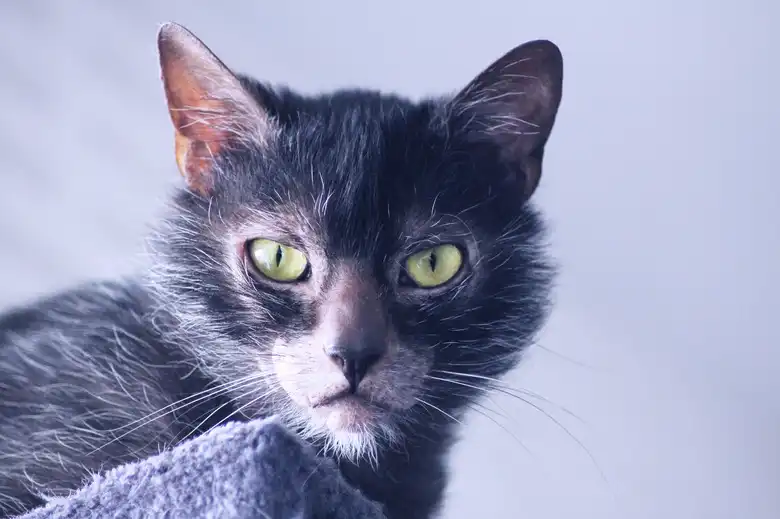
Lykoi Cat Breed Characteristics
CatsCat BreedsLykoi Cat Breed CharacteristicsByKatherine MaloneNov 15, 2022 12:04 pm ESTAngela Emanuelsson / EyeEm/EyeEm/GettyImages #p7a52c21fbe20a10fbf7378843a7c076f, #p7a52c21fbe20a10fbf7378843a7c076f img { aspect-ratio: 4096/2730; height: auto; } In This ArticleLykoi cat quick factsLykoi cat historyLykoi cat personalityLykoi cat lifespan & health issuesLykoi cat grooming & careWelcoming a new catLykoi cat quick factsLykoi cat quick factsLength: 11 to 14 inchesWeight: Females: 6 – 9 pounds, males: 7 – 12 poundsLifespan: 12 – 15 yearsCoat length: Short to mediumColoring: Black roan is the most common, but lykoi cats come in all coat colorsMore Like ThisCatsEgyptian Mau Cat Breed CharacteristicsCatsAmerican Wirehair Cat Breed CharacteristicsCatsBirman Cat Breed CharacteristicsGrooming needs: MediumFriendliness: Breed alone is not an accurate predictor of individual cats' personalities. However, lykoi cats are generally regarded as friendly and outgoing.The lykoi cat breed has a unique appearance that has given them the nickname werewolf cat. In fact, the name comes from the Greek word for wolf. They are partially hairless and have a similar hair growth pattern to an opossum. Keep in mind that although they only have a minimal amount of hair, lykoi cats are not hypoallergenic. They are friendly and intelligent cats. If you choose to bring a lykoi kitten into your home, they will soon be a fun-loving part of the family.Angela Emanuelsson / EyeEm/EyeEm/GettyImages #e24d5e691a9665d19e23c2c79e0dc60f2, #e24d5e691a9665d19e23c2c79e0dc60f2 img { display: block; aspect-ratio: 1.5003663003663Lykoi cat historyLykoi cat historyThe lykoi cat breed was founded in 2011. The cats were found a year prior in Virginia in a feral cat colony and two of those cats were bred to each other to create the first lykoi. The founders of the breed are Johnny Gobble, Brittney Gobble, and Patti Thomas.Initially, there were concerns that the cat's unusual appearance and coat were caused by disease, but genetic testing and breeding showed that the breed's unique hair coat is the result of a naturally occurring mutation. The genetic mutation that causes the wolf cat's unique appearance is caused by a recessive gene. To reduce inbreeding, breeders started breeding lykoi cats with domestic shorthair cats with black hair.The International Cat Association's breed standard only recognizes cats with a black roan coat. However, lykois do come in all colors with a roan coat pattern. They are also the only cat breed with a roan pattern. The roan coat pattern is characterized by black, or other colored, fur with amelanistic, or lack of melanin, with white hairs interspersed throughout the entire coat.The International Cat Association (TICA) accepted the breed for championship status in 2017. The Cat Fanciers' Association (CFA) also recognizes the breed but only allows the cats to show in the non-competitive classes.Lykoi cat personalityLykoi cat personalityLykoi cats are generally friendly and loyal and will bond with your family. They are also intelligent and have a high prey drive. They are energetic and stalk their prey, which may be a toy, other pets, or your leg — before pouncing.It can be beneficial to have multiple lykoi cats so that they can play together. Lykoi cats will also get along well with other cats and dogs in your household. Make sure they have plenty of toys available and take time each day to play with the cats to burn off their excess energy.The cats are sometimes described as dog-like as they will joyfully play fetch. While they may snuggle in your lap for movie night, they are not lap cats. In general, lykois would much rather be playing.GlobalP/iStock/GettyImages #eecc7aca235a7c365860179dbea564597, #eecc7aca235a7c365860179dbea564597 img { display: block; aspect-ratio: 2.1267845003399Lykoi cat lifespan and health issuesLykoi cat lifespan and health issuesAs the lykoi is a fairly new breed, their exact lifespan has not been determined. Though healthy cats generally live well into their teens. The cats tend to be healthy and there are no known genetic health problems affecting the breed.It is important to note that both the international and domestic associations allow outbreeding of domestic shorthair cats. The international association limits breeding to black domestic cats. Breeders should conduct genetic testing to ensure no cats with genetic health problems are introduced into their breeding program.Some cats may suffer from cystic acne or develop blackheads. This can be managed with more frequent bathing but be sure to discuss any concerns with your veterinarian. It is also best to keep the cats indoors. If a lykoi cat is allowed outdoors, they are prone to sunburn due to them not having a thick coat to protect them from the sun.Lykoi cat grooming and careLykoi cat grooming and careThe lykoi cat has a unique and recognizable coat. The cats are partly hairless and do not have any undercoats. They have short or medium-length guard hairs that can range from covering the entire body to just 50 percent of the body. While many cat breeds shed seasonally, the lykoi cat breed molts. After molting, the cats may be nearly hairless which can remind many cat lovers of the sphynx hairless cat breed. Though the lykoi and sphynx cat breeds are not related.Brushing the lykoi cat's sparse guard hairs is not generally necessary. An occasional brushing can be beneficial but take care not to scratch the cat's skin. Although the hairs look rough, they are actually quite soft and don't tend to mat. You will need to regularly bathe the cat. Get the cat used to water when they are young to make this process easier. Be sure to use a shampoo designed for cats that will be gentle on their skin.As with all cats, lykoi cats need their ears cleaned and nails trimmed regularly. Brush their teeth with veterinarian-approved toothpaste. Feed them a high-protein diet, preferably a quality commercial canned cat food, as also recommended by your veterinarian. The cats should have access to fresh drinking water at all times.Since they don't have an undercoat and at times may be nearly hairless, the cats do not adjust well to extreme temperatures and may get cold easily. Make sure they have a warm room and cozy bed available.Angela Emanuelsson / EyeEm/EyeEm/GettyImages #eff1a18510c258867317d14b4e38fe920, #eff1a18510c258867317d14b4e38fe920 img { display: block; aspect-ratio: 1.5003663003663Welcoming a new cat into your homeWelcoming a new cat into your homeBefore you bring a lykoi kitten home, make sure you cat-proof the house. The breed tends to be quite active. Make sure you pick up anything that is unsafe for your kitten to play with. Initially, you will want to keep the cat in a single room until they are comfortable in the new environment. Set up the room with everything your new cat will need including:Cat food and waterLitter boxCat tree and scratching postToysAllow your cat to explore on their own. Spend plenty of time in the room with your new cat, but wait for them to come to you. Don't force them to be held or petted. If you have other pets in the home, introduce them to the new cat slowly to ensure the experience is positive for both animals.Take your time and with a bit of patience and positive reinforcement, your lykoi will soon be an active member of the family.ReferencesCat Fanciers' Association: About the LykoiThe International Cat Association: The Lykoi Breed
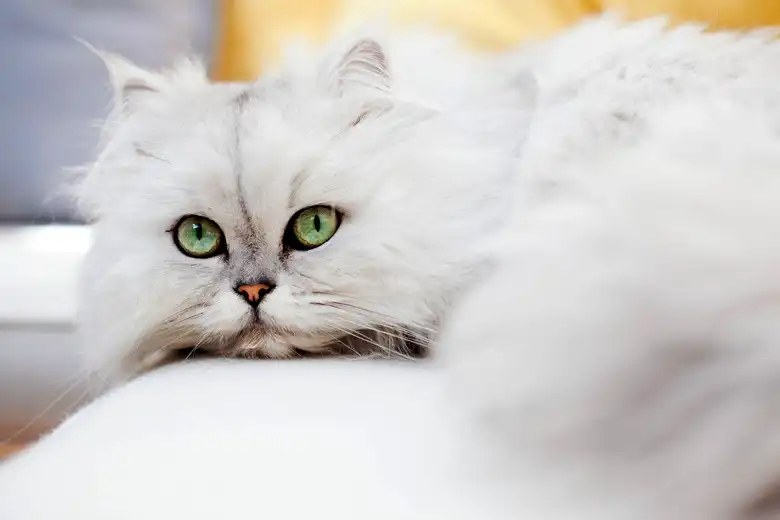
Love Fluffy Cats? These Are 7 Of The Fluffiest Cat Breeds Around
CatsCat BreedsLove Fluffy Cats? These Are 7 Of The Fluffiest Cat Breeds AroundByKylie Ora LobellSep 1, 2021 11:02 am ESTWhile you love cats of all kinds, you're especially partial to fluffy cat breeds. There's just something about these long-haired beauties with bushy tails that you can't get enough of. Now, you're thinking about getting one of the fluffy cat breeds, but you aren't sure how many there are.Ilya Shumilin / 500px/500px/GettyImages #e4b224881d2f5c525f8197b2c728a9c06, #e4b224881d2f5c525f8197b2c728a9c06 img { display: block; aspect-ratio: 1.5Here is a list of fluffy cat breeds so you can make the "purr"fect choice for your new pet.1. PersianDouglas Holder/500px/GettyImages #p2480e9bb02ef8237d792e9cc52f27ff3, #p2480e9bb02ef8237d792e9cc52f27ff3 img { aspect-ratio: 5616/3744; height: auto; }1. PersianMore Like ThisCatsBrachycephalic Cat Breeds: What to Know and How to Care For ThemCatsAbyssinian Cat Breed CharacteristicsCatsCat Breeds That Stay SmallPersian cats come in different colors – not just white. Some are orange and some are grey, while others have mixed colors. Still, the stereotypical Persian cat is white. They are known for having a shorter nose and face and being calm, which makes them good for families.2. Norwegian Forest CatAnna Frignani / EyeEm/EyeEm/GettyImages #pbc34952c912dca839ea4d888ba2b6e6a, #pbc34952c912dca839ea4d888ba2b6e6a img { aspect-ratio: 4288/2848; height: auto; }2. Norwegian Forest CatThe Norwegian Forest Cat has a double coat and will shed in the spring and fall. They will be fully grown at five years of age and are natural athletes that enjoy exploring their cat trees and counters. They can weigh in at 16 pounds, making them one of the larger fluffy cat breeds. They are typically strong and silent but love a good cuddle and bond with more than one person.3. Maine CoonNils Jacobi/iStock/GettyImages #pa06736532b6e8790c31ec54a69ea34a0, #pa06736532b6e8790c31ec54a69ea34a0 img { aspect-ratio: 6000/4000; height: auto; }3. Maine CoonMaine coon cats are typically friendly, and they grow larger than other cats, weighing it at 12 to 15 pounds. They usually like the outdoors and get along well with other pets and children. Maine coon cats are also recognized for their intelligence and gentle manner, and they easily adapt to any situation. While they don't like to go on humans' laps, they do like to be near their owners and follow them around the house.4. Ragdollperedniankina/iStock/GettyImages #p137d7fd0cbd70470d35c0bc5c36520d7, #p137d7fd0cbd70470d35c0bc5c36520d7 img { aspect-ratio: 4385/3318; height: auto; }4. RagdollRagdoll cats are one of the fluffy cat breeds that are known for being sweet, friendly relaxed. They are called ragdoll cats because when you pick them up, they typically limp like a ragdoll (because they are relaxed, not because they're fearful). These felines get along well with kids and make for excellent family pets.5. SiberianАлексей Филатов/iStock/GettyImages #p9affec144d650bdb9dec003b5435a980, #p9affec144d650bdb9dec003b5435a980 img { aspect-ratio: 4126/2751; height: auto; }5. SiberianThe Siberian cat is the native forest cat of Russia. These cats are medium to medium large in size and have a triple coat. It could take five years for one of these cats to be fully grown. They are affectionate and playful, people-oriented, and excellent jumpers – they can leap from one tall bookcase to another. They enjoy playing with toys and are friendly towards children and other pets.6. HimalayanLouis-Michel DESERT/iStock/GettyImages #pff50d43fe92b7ba5c3c0faa50d779323, #pff50d43fe92b7ba5c3c0faa50d779323 img { aspect-ratio: 5470/3647; height: auto; }6. HimalayanAnother fluffy cat breed is the Himalayan, which is a cross between a Persian and Siamese cat. They are calm but playful and not needy. They have shorter faces and sneeze more often than other cats, so it's critical that you keep their nose clear of any obstructions.7. BirmanNico De Pasquale Photography/Moment/GettyImages #p970d4600850b233d631ad9a9cdc57ddc, #p970d4600850b233d631ad9a9cdc57ddc img { aspect-ratio: 7952/5304; height: auto; }7. BirmanThe Birman cat has a long and silky coat and comes in different colors including blue, frost, cinnamon, chocolate, fawn, and lilac. They prefer to cling onto one owner and will become territorial, but not aggressive, if their owner doesn't pay attention to them. The Birman cat has a tendency to become overweight, so exercise is very important for this type of fluffy cat breed. It has a moderate to high tendency to shed.Caring for a fluffy cat breedCaring for a fluffy cat breedFluffy cat breeds shed a lot, especially during the spring and fall when they change their fur. Be prepared to vacuum up a lot of cat hair during these times. It's a good idea to brush their hair every day for 15 minutes when they are relaxed to keep it from matting. You should also introduce the brush early on so your cat gets used to it, and feed your kitty the proper food so they have a healthy coat and skin.Cats usually don't like baths, so only bathe your fluffy cat breed with a cat shampoo when absolutely necessary. You can always ask your groomer for tips on bathing and brushing and determine the best brush to care for your cat.ReferencesPetFinder: Meet the Fluffy Cat BreedsPetFinder: SiberianPetFinder: Maine CoonHill's: Birman Cat Information and Personality TraitsCat's Best: Long haired cats and how to care for their fur
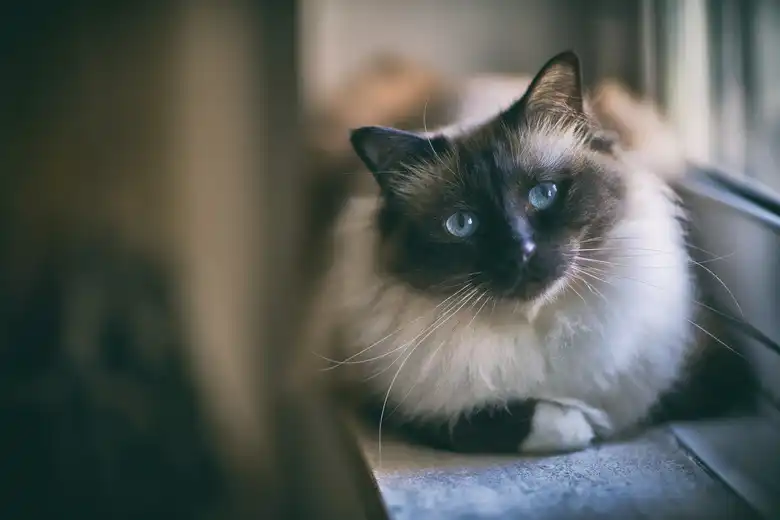
Birman Cat Breed Characteristics
CatsCat BreedsBirman Cat Breed CharacteristicsByKatherine MaloneDec 15, 2022 12:03 pm ESTNico De Pasquale Photography/Moment/GettyImages #p68fa2d44daf9728861a57fa75ab962c2, #p68fa2d44daf9728861a57fa75ab962c2 img { aspect-ratio: 7952/5304; height: auto; } In This ArticleBirman cat quick factsBirman cat historyBirman cat personalityBirman cat lifespan & health issuesBirman cat grooming & careWelcoming a new catBirman cat quick factsBirman cat quick factsLength: 15 – 18 inchesWeight: Females: 6 – 10 pounds, Males: 9 – 15 poundsLifespan: 9 – 15 years or moreCoat length: LongColoring: All pointed colors with white paws and blue eyesMore Like ThisCatsBurmilla Cat Breed CharacteristicsCatsChartreux Cat Breed CharacteristicsCatsHimalayan Cat Breed CharacteristicsGrooming needs: MediumFriendliness: Breed alone is not an accurate predictor of individual cats' personalities. However, Birman cats are generally regarded as loving and loyal.The Birman cat is a stunning breed with a long, silky coat, sapphire blue eyes, and a Roman nose. These cats are not only beautiful, but they are also affectionate companions. Whether you are a single person looking for a companion or you are looking for a family cat to fit in with your children and pets, the Birman cat may be the breed for you. Consider the breed's personality and care requirements before welcoming a Birman kitten into your home.Celine Garcia/iStock/GettyImages #eca2e64fa08c92746e70f93afa8a5cc63, #eca2e64fa08c92746e70f93afa8a5cc63 img { display: block; aspect-ratio: 1.4998553659242Birman cat historyBirman cat historyThe full history Birman cat breed, also referred to as the Sacred Cat of Burma, is not fully known. Legends say that the breed is descended from Burmese temple cats which were raised by Kittah priests. In 1919, Major Gordon Russell and Auguste Pavie assisted the temple of Lao-Tsun and they were given a pair of Birman cats by the priests. The cats were taken to France in the 1920s.The breed nearly went extinct after World War II, but a couple of Birmans survived the war in Europe. Breeders outcrossed the cats with other breeds, possibly Persian cats to rebuild the breed. The cats eventually arrived in America and they were recognized by the Cat Fanciers' Association (CFA) in 1967.The Birman cat has a long coat and a color point pattern in colors including:Seal pointLilac pointChocolate pointBlue pointTabby pointBurmese kittens are born with all-white fur and the color comes in over time. Adult cats keep their white feet. Birman cats may have been one of the cats used to develop the ragdoll cat breed.Birman cat personalityBirman cat personalityThe Birman cat is a sweet, docile, and loving cat. They are friendly and laid back with family as well as strangers. The cats are sociable and will do well with children and other pets. They can be chatty and often reply with a soft meow when you talk to them.The cats are affectionate and love to cuddle. They want your attention and may follow you around the home as you go about your day.Birmans may love being lap cats, but they are also playful, curious, and intelligent. They love to chase toys around the home. They also enjoy playing with interactive toys or participating in a game of fetch.Nico De Pasquale Photography/Moment/GettyImages #e282ee0374f81a5a5f21d033ff8575da3, #e282ee0374f81a5a5f21d033ff8575da3 img { display: block; aspect-ratio: 1.574341714512Birman cat lifespan and health issuesBirman cat lifespan and health issuesBirman cats tend to be a healthy breed that can live for 15 years or more. They don't tend to have genetic health problems that breeders need to be concerned with, although some Birman cats have developed:polycystic kidney disease (PKD): A condition that causes cysts to form in the kidneyshypertrophic cardiomyopathy: A condition that causes the wall of the heart to thickenhypotrichosis and short life expectancy: This condition causes loss of hair and a shortened life span of approximately eight months.These conditions are not common in the breed. Though responsible breeders will avoid breeding any cats that are known carriers of the genes that cause these health problems.However, the Birman cat breed is prone to obesity, which can increase the risk of developing other health problems such as diabetes.Birman cat grooming and careBirman cat grooming and careBirman cats are long-haired cats but they don't have an undercoat. Brush their single coat at least once per week to keep it free of tangles and matting. You may need to brush them more often when they are shedding in the spring. Other grooming tasks include:checking the cat's ears and cleaning them as neededchecking the nail and trimming them as neededBrushing the cat's teeth with toothpaste that is veterinarian approved for use in cats.Feed the cat a high-quality commercial cat food in the amount recommended by your veterinarian and make sure there is fresh drinking water available at all times. Avoid free feeding the cats as they can easily become overweight and obese. Limit the number of treats you feed the cat each day. Make sure to play with your cat daily to keep them active and to maintain a healthy weight.Schedule regular annual appointments with your veterinarian for an examination and recommended vaccinations.Nico De Pasquale Photography/Moment/GettyImages #e8ce83f5e3fb5cf9dc81d3ef5df9f7710, #e8ce83f5e3fb5cf9dc81d3ef5df9f7710 img { display: block; aspect-ratio: 1.499245852187Welcoming a new cat into your homeWelcoming a new cat into your homeBringing home a new Birman kitten or cat is an exciting day. To make the move as easy as possible for your new cat, take a few steps to prepare for their arrival. Set up a quiet room where the cat can get acclimated to the new environment. Make sure it has everything your cat may need including:Food and water dishesLitter boxCat toysScratching postCat treeIn addition, take the time to catproof the room and your entire home. Check all of your houseplants to make sure they are safe for pets. Discard or give away any that may be toxic to your new cat. Put cleaning supplies in a cabinet, and ensure your cat can't access them. Keep harmful foods, such as chocolate, in the pantry rather than out on the counter.When your cat first arrives, allow them to explore the room at their own pace. It may be tempting to pick up the cat for cuddles right away. But it is best to wait and allow your cat to come to you when they are ready. It can be helpful to sit and talk to your cat. Offer to play with a toy or teaser wand and use plenty of positive reinforcement.If you have other pets or small children, introduce them slowly. Monitor their interactions to make sure everyone stays safe and has a good experience. Once your cat is comfortable, you can open the door and allow them to explore the house. Before you know it, the loyal and affectionate Birman cat will be helping you around the house and lounging in your lap.ReferencesInternational Cat Care: BirmanThe International Cat Association: The Birman BreedAll About Cats: Birman Cat
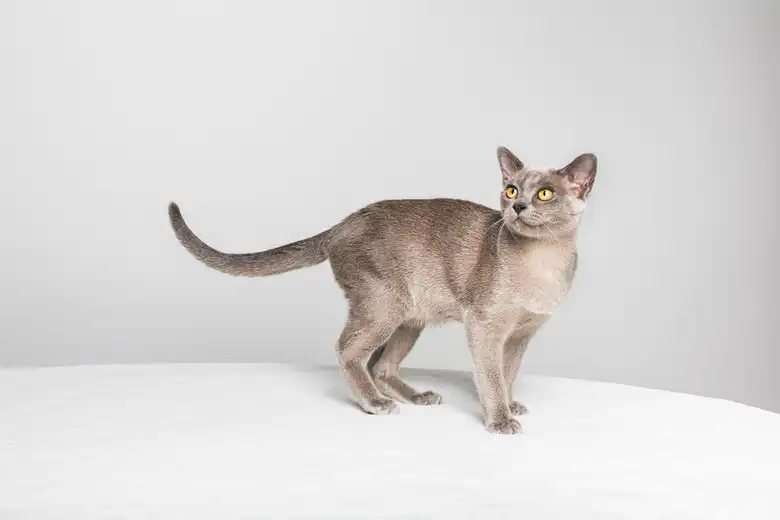
European Burmese Cat Breed Characteristics
CatsCat BreedsEuropean Burmese Cat Breed CharacteristicsByKatherine MaloneMar 2, 2023 12:03 pm ESTAngela Kotsell/iStock/GettyImages #p1ece171fa0f2b9aebb775f0a605f9a72, #p1ece171fa0f2b9aebb775f0a605f9a72 img { aspect-ratio: 6720/4480; height: auto; } In This ArticleEuropean Burmese cat quick factsEuropean Burmese cat historyEuropean Burmese cat personalityEuropean Burmese cat lifespan & health issuesEuropean Burmese cat grooming & careWelcoming a new catEuropean Burmese cat quick factsEuropean Burmese cat quick factsLength: 12 – 16 inchesWeight: Females: 7 – 10 pounds, Males: 10 – 14 poundsLifespan: 10 – 15 yearsCoat length: ShortColoring: Blue, brown, chocolate, cream, lilac, apricot red, and tortoiseshell with amber or yellow-gold eye colorMore Like ThisCatsBurmilla Cat Breed CharacteristicsCatsBurmese Cat Breed CharacteristicsCatsTonkinese Cat Breed CharacteristicsGrooming needs: LowFriendliness: Breed alone is not an accurate predictor of individual cats' personalities. However, European Burmese cats are generally regarded as loyal, affectionate, and intelligent.The European Burmese cat shares many similarities with the Burmese cat breed. In fact, many cat registries, including the International Cat Association (TICA) and the Governing Council of the Cat Fancy (GCCF), do not consider them to be different breeds. There are many similarities between the two breeds and if you are looking for a loving, social, and affectionate cat to join your family, the European Burmese may be a good choice.Mikael Tigerström/Moment/GettyImages #e1add380ea476da3f7909f3f9a41d7985, #e1add380ea476da3f7909f3f9a41d7985 img { display: block; aspect-ratio: 1.504European Burmese cat historyEuropean Burmese cat historyThe Burmese cat breed originated near the border of Thailand and Burma. In 1930, a chocolate Burmese cat named Wong Mau was brought to the United States and given to Dr. Joseph Thompson. Many people believed that Wong Mau was a Siamese cat, but Dr. Thompson believed she was a different breed. He started a breeding program and bred Wong Mau with a seal point Siamese cat.The resulting litter had both solid and pointed kittens. The solid dark brown kittens were used to continue developing the Burmese breed. Some Burmese cats were brought to the United Kingdom where breeders continued developing the breed by outcrossing Burmese cats with Siamese cats. These cats became the European Burmese cat breed that was then recognized by the Cat Fanciers' Association (CFA).One of the differences between the European and American Burmese breeds is the accepted coat colors. The CFA's breed standard for the Burmese cat only allows four colors: blue, champaign, platinum, and sable. The European Burmese breed standard allows for a greater variety of colors. Recognized colors include:bluebrownchocolatelilacredcreambrown-tortiechocolate-tortieblue-tortielilac-tortieThere are other physical differences recognized in the breed standard as well. The European Burmese tends to have a more gently rounded and elegant build compared to the American Burmese cat's rounded and compact body shape. European Burmese cat's eyes are not as rounded as the American Burmese cat and the top line of the eye slants towards the cat's nose.European Burmese cat personalityEuropean Burmese cat personalityEuropean Burmese cats are very social and have wonderful personalities. They enjoy your company and will gladly snuggle and embrace the joy of being a lap cat when you are relaxing at the end of the day. If you have multiple members in the household, your European Burmese may pick a favorite, but they will interact with the whole family.The cats are not couch potatoes, though, and will gladly take part in any activities around the home. Even adult cats remain quite playful.If you live alone and work long hours, this may not be the best breed for you as these cats prefer to have company. The cats do tend to get along well with other cats and dogs who can keep your cat company.SKA/Image Source/GettyImages #ee41272b06334a7feafa1300ff25ee833, #ee41272b06334a7feafa1300ff25ee833 img { display: block; aspect-ratio: 1.5055040556199European Burmese cat lifespan and health issuesEuropean Burmese cat lifespan and health issuesA healthy European Burmese cat can live to be 16 years or older. The breed tends to be healthy, but there are some health problems that may affect some cats including:hypokalemia, or low blood potassiumdiabetes mellituseye problems such as glaucomahypertrophic cardiomyopathy, which is a heart disease that causes the wall of the heart to thickenIn rare cases, Burmese cats may suffer from a neurological condition called feline orofacial pain syndrome. Cats will lick and paw at their face in response to the perceived pain although there is no real injury.Responsible breeders will test for genetic health conditions when testing is available and stop breeding any cat that is affected by or a carrier of a genetic health condition. Be sure to discuss the health of the breeding cats and kittens before purchasing a purebred European Burmese kitten.European Burmese cat grooming and careEuropean Burmese cat grooming and careThe European Burmese is a shorthair cat that is very easy to groom. You can keep their short coat healthy and manage shedding by brushing the cat weekly with a rubber brush. These cats don't need to be bathed, but keep up with other pet care tasks including trimming their nails and brushing their teeth with a toothpaste that is veterinarian-approved for cats.Feed your cat high-quality commercial cat food as recommended by your veterinarian and make sure they have access to fresh water at all times. The European Burmese should be kept as an indoor cat, so it is important to provide a scratching post so that they can honor their scratching instincts without harming your furniture and rugs.Make sure to have daily play sessions with your cat. This ensures your cat gets the physical exercise and mental stimulation they need to stay healthy and happy. Take your cat to the veterinarian for regular check-ups and make sure they receive any recommended vaccinationsMikael Tigerström/Moment/GettyImages #e1f54678afb7479441a9d458c6db45bbf, #e1f54678afb7479441a9d458c6db45bbf img { display: block; aspect-ratio: 1.504Welcoming a new cat into your homeWelcoming a new cat into your homeBefore you welcome your new European Burmese kitten into your home, take the time to cat-proof the house to make sure it is safe for your new feline companion. This includes removing any toxic plants and securing toxic foods and cleaning supplies in a place where the cat can't reach them. Don't forget to check the higher shelves and the tops of any bookshelves and the refrigerator. While your kitten may initially stay close to the ground, they grow quickly and will soon be jumping and climbing.Set up a safe room where you can introduce the cat to the new home. Make sure it has everything your kitten or cat may need including:food and waterlitter boxcat treescratching posttoysWhen your cat arrives, allow them to explore the space at their own pace. Spend plenty of time with your new cat, but avoid the temptation to force them to be held or petted. Offer plenty of positive reinforcement and your patience will soon pay off as you develop a loving and trusting relationship.ReferencesCatbreedslist.com: European BurmeseCat Fanciers' Association: European Burmese Breed StandardInternational Cat Care: BurmeseThe Cat Fanciers' Association: The European Burmese
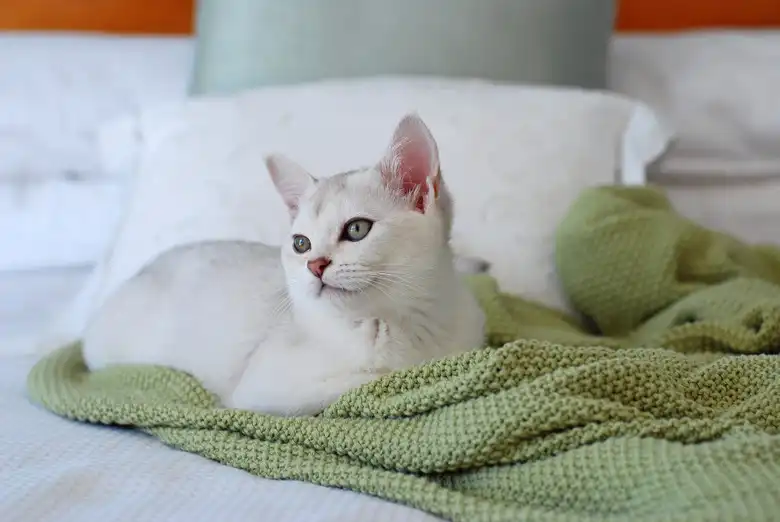
Burmilla Cat Breed Characteristics
CatsCat BreedsBurmilla Cat Breed CharacteristicsByKatherine MaloneFeb 9, 2023 12:03 pm ESTjennybonner/iStock/GettyImages #p25818cdf62b494b7fc1193e5579f4864, #p25818cdf62b494b7fc1193e5579f4864 img { aspect-ratio: 3872/2592; height: auto; } In This ArticleBurmilla cat quick factsBurmilla cat historyBurmilla cat personalityBurmilla cat lifespan & health issuesBurmilla cat grooming & careWelcoming a new catBurmilla cat quick factsBurmilla cat quick factsLength: 12 – 16 inchesWeight: Females: 9 – 11 pounds, Males: 11 – 13 poundsLifespan: 10 – 16 yearsCoat length: Short or longColoring: Silver white ground color with a shaded or tipped color pattern and any shade of green eyesMore Like ThisCatsEuropean Burmese Cats: Everything You Need to Know About This Affectionate BreedCatsBirman Cat Breed CharacteristicsCatsSnowshoe Cat Breed CharacteristicsGrooming needs: Low to mediumFriendliness: Breed alone is not an accurate predictor of individual cats' personalities. However, burmilla cats are generally regarded as fun-loving and affectionate.The burmilla cat is a playful and easygoing, medium-sized cat. The breed is a cross between Burmese and Persian cats and they boast a stunning shaded or tipped silver-white coat. The breed has both longhair and shorthair cats, but whichever you choose, know that the breed has only minimal grooming needs. Burmillas are not common in the United States. Be prepared to search for a reputable breeder and patiently wait for kittens to become available. These affectionate cats are worth the wait.jennybonner/iStock/GettyImages #e611c02ef5b27f1722ac9ea1a05568345, #e611c02ef5b27f1722ac9ea1a05568345 img { display: block; aspect-ratio: 1.4938271604938Burmilla cat historyBurmilla cat historyThe burmilla cat breed was developed as a cross between Persian and Burmese cats. The first litter of burmilla kittens was born in the United Kingdom in 1981. The initial breeding was unintentional and occurred when a chinchilla Persian male cat, Jemari Sanquist, owned by baroness Miranda Von Kirchberg, mated with a lilac Burmese female, Bambino Lilac Fabergé. The resulting litter of four female kittens displayed a stunning shaded silver color. A breeding program was then started to develop the breed.Although the breed was started in the UK, the burmilla cat is sometimes considered an Asian breed as both the Persian and Burmese cats originated in Asia. Burmillas are a new breed with the Cat Fanciers' Association (CFA) and they are still quite rare in the United States.The burmilla coat may be long or short. Longhaired burmillas have feathering on their belly, britches, bib, and tail plume. The undercoat is usually pure white, but some colors have a beige or ivory undercoat. The breed standard recognizes shaded or tipped colors including:blackbluecaramelchocolatelilacseal sepiaThe cats have green eyes and dark rims that give the cats the appearance of wearing eyeliner. It is important to note that kittens may have yellow or gold eye coloring, but their eyes should turn green as the cat matures.Burmilla cat personalityBurmilla cat personalityBurmillas are a laid-back breed with a sweet and affectionate nature. They tend to be social and want to be with the family. Most cats of the breed will enjoy the company of children and other pets. If you live alone, make sure you have plenty of time to spend with your cat. This breed doesn't like to be alone for long periods of time. If you work long hours or travel frequently, this may not be the best breed for your lifestyle.The cats are also curious, playful, and intelligent. They enjoy playtime with interactive toys and climbing and jumping to high locations throughout the house. You can also teach them tricks using plenty of positive reinforcement.Andrew Linscott/iStock/GettyImages #ed6f0825e37a32a3daaf3d22a1fbff389, #ed6f0825e37a32a3daaf3d22a1fbff389 img { display: block; aspect-ratio: 1.5512713048338Burmilla cat lifespan and health issuesBurmilla cat lifespan and health issuesA healthy burmilla cat receiving proper care can live well into their teens. While they are generally a healthy breed, some cats may be susceptible to allergies or kidney diseases such as polycystic kidney disease, which causes cysts to build up on the kidneys and decreases kidney function.Reputable breeders will screen their cats for health problems and avoid breeding any cat that is suffering from or shown to be a carrier of a hereditary disease.The CFA still allows breeders to outcross burmillas to European Burmese cats and Persian cats in the silver and golden divisions. Breeders should also make sure these cats have been thoroughly screened so that new hereditary problems aren't introduced to the burmilla breed. Some health problems that may affect the Burmese breed, for example, include:diabetes mellitushypokalaemic polymyopathyfeline orofacial pain syndromeBurmilla cat grooming and careBurmilla cat grooming and careBurmilla cats are generally low maintenance and require only minimal grooming. Weekly brushing is all that is needed for your shorthaired burmilla. Even longhair burmillas rarely have trouble with matting due to their semi-longhair, silky coat. Though more frequent brushing may be needed to keep the hair free of tangles.In addition, make sure to complete other regular care and grooming which includes:brushing the cat's teeth with a veterinarian-approved toothpastechecking and trimming the cat's nailschecking and cleaning the cat's earsFeed your cat high-quality commercial cat food as recommended by your veterinarian and make sure they always have access to clean drinking water. Obesity can be a concern, especially as the cats become less active in their senior years. Make sure to encourage regular playtime. Take your cat in for regular veterinary checkups to make sure they are healthy and up-to-date on all of the recommended vaccinations.Tomás Ryant / EyeEm/EyeEm/GettyImages #eb727544f2535fbb0007ae71aa7f93abc, #eb727544f2535fbb0007ae71aa7f93abc img { display: block; aspect-ratio: 1.5Welcoming a new cat into your homeWelcoming a new cat into your homeBringing home your new burmilla kitten is an exciting event. Make sure you are ready by taking the time to cat-proof the home before the kitten's arrival. Keep in mind that burmillas love to climb and jump. Don't forget to check the higher shelves and the tops of the bookshelves and refrigerator.Set up a room where your new cat can safely adjust to their new environment. Supply the room with everything your new cat may need including:food and waterlitter boxcat treescratching postcat toysSpend plenty of time with your new cat when they arrive, but avoid pressuring them to be petted or explore before they are ready. Allow them to move at their own pace and approach you when they are ready to interact. If you have children and other pets, introduce them to the new cat. Supervise their interactions so it is a positive experience — for everyone.Once your cat is comfortable in the new environment, you can open the door and allow the cat access to more of the home. Before you know it, the social and affectionate burmilla will be an active part of your family.ReferencesAll About Cats: Burmilla CatThe Cat Fanciers' Association: About the Burmilla
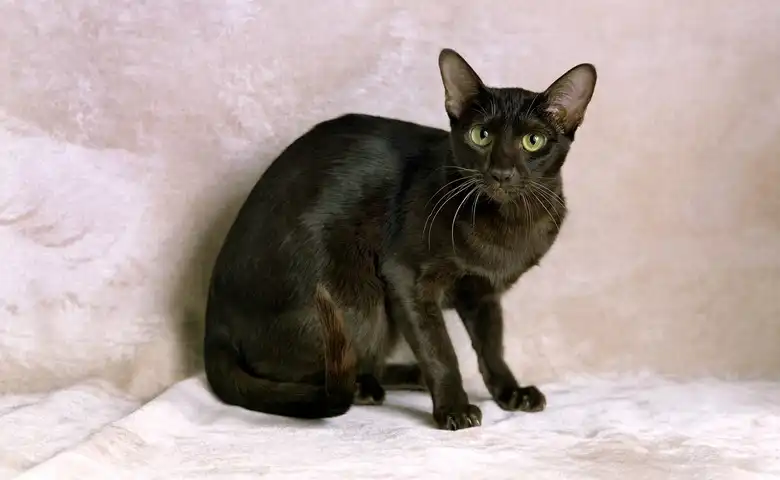
Havana Brown Cat Breed Characteristics
CatsCat BreedsHavana Brown Cat Breed CharacteristicsByKatherine MaloneMar 3, 2023 12:03 pm ESTslowmotiongli/iStock/GettyImages #p7f60da100c70bea91e19da4f2c7fea60, #p7f60da100c70bea91e19da4f2c7fea60 img { aspect-ratio: 5560/3425; height: auto; } In This ArticleHavana brown cat quick factsHavana brown cat historyHavana brown cat personalityHavana brown cat lifespan & health issuesHavana brown cat grooming & careWelcoming a new catHavana brown cat quick factsHavana brown cat quick factsLength: 12 – 16 inchesWeight: Females: 6 – 8 pounds, Males: 8 – 10 poundsLifespan: 8 – 13 years or moreCoat length: ShortColoring: Brown with green eyesMore Like ThisCatsTonkinese Cat Breed CharacteristicsCatsSnowshoe Cat Breed CharacteristicsCatsEgyptian Mau Cat Breed CharacteristicsGrooming needs: LowFriendliness: Breed alone is not an accurate predictor of individual cats' personalities. However, Havana brown cats are generally regarded as intelligent, inquisitive, and affectionate.The Havana brown breed of cat, sometimes referred to as chocolate delight, is a stunning and unique cat. This shorthair cat has a brown coat color and green eyes. The Havana brown may have been named after the Havana rabbit breed of the same color, or perhaps after Havana cigars from Cuba. Regardless of where they got their name, this medium-sized cat has a delightful personality. They are likely to charm every member of your household. Consider the breed's personality and care requirements before deciding if the Havana brown is right for you.Cavan Images/Cavan/GettyImages #ec94766f61a89fec2eb06bd06deaa4931, #ec94766f61a89fec2eb06bd06deaa4931 img { display: block; aspect-ratio: 1.2945178071228Havana brown cat historyHavana brown cat historyRecords from the late 19th century show that brown cats, sometimes called Swiss mountain cats, were shown at cat shows in England. Unfortunately, the British Siamese Cat Club stopped allowing the beautiful brown cats to compete in cat shows.The Havana brown cat breed that is known today originated in England as a cross between domestic black cats and seal point and chocolate point Siamese cats. There was also some outcrossing with Russian blue cats to create the self-chocolate or self-brown cats. The first cat to be registered as a Havana cat was a cat named Elmtower Bronze Idol.In 1958, the Governing Council of the Cat Fancy (GCCF) recognized the new Havana cat breed, which at the time was called chestnut foreign shorthair. In the 1950s, the first Havana cats were brought to North America, where cat breeders continued to develop the breed.In 1964, the Cat Fanciers' Association (CFA) granted the Havana brown breed championship status. The International Cat Association (TICA) also recognizes the Havana cat. However, the international association also allows the lilac color in addition to brown.In England, the Havana cat breed is built more like the Oriental shorthair or Siamese cat breed. North American Havana brown cats have a different appearance that is more similar to the foundation cats first brought over from England. They have large ears and a head shape that is longer than it is wide. Besides the brown coat, the breed standard calls for brown whiskers and brown, rosy-toned nose leather.Havana brown cat personalityHavana brown cat personalityHavana brown cats are outgoing and affectionate. They enjoy interacting with you. Whether that be playing with a teaser toy or napping while you enjoy a book or a movie. This is not a good breed if you live alone and are rarely home. Fortunately, the Havana brown loves spending time with human family members. They also tend to get along well with other cats and dogs in the household.The breed has a moderate energy level, and it isn't uncommon for a Havana brown to zoom around the house. Of course, they also love to relax and nap, preferably close to you. The cats are very intelligent and, with a bit of patience and positive reinforcement, you can teach them tricks. Interactive toys, such as puzzle toys, can help to satisfy their inquisitive nature.As with their Siamese ancestors, Havana brown cats can be vocal at times, although they have a softer meow. They aren't usually too demanding and are just as likely to reach out and touch you with their paw to get your attention.slowmotiongli/iStock/GettyImages #ef5bc259258173d4b49b6cea1a6a9a807, #ef5bc259258173d4b49b6cea1a6a9a807 img { display: block; aspect-ratio: 1.2274569402229Havana brown cat lifespan and health issuesHavana brown cat lifespan and health issuesA healthy Havana brown cat can live 13 years or more with excellent care. The breed rarely suffers from genetic health problems, but there are some conditions that may affect the breed. In rare cases, kittens will be born with hemophilia, a condition that prevents blood from clotting properly. Be sure to discuss the health of your kitten and their parents with the breeder.In addition, some Havana brown cats are more prone to developing respiratory and urinary tract infections. Of course, these are conditions that can affect cats of any breed.Havana brown cat grooming and careHavana brown cat grooming and careHavana brown cats are easy to groom. They have a silky, short coat, and tangles and matting are not generally a concern. Brush the coat weekly with a soft rubber brush to remove any loose fur. Then, run a cloth made of silk or soft chamois over the cat to bring out the shine in their coat. Bathing isn't necessary, but make sure you take time to:clean the cat's earscheck and trim their nailsbrush the cat's teeth with a toothpaste that is veterinarian-approved for catsFeed high-quality cat food as recommended by your veterinarian and provide fresh water at all times. Take your cat for regular veterinary check-ups and make sure they get all the recommended vaccinations.Nynke van Holten /iStock/GettyImages #e9d85527996d05fb77e2942e2075ce6f1, #e9d85527996d05fb77e2942e2075ce6f1 img { display: block; aspect-ratio: 1.3333333333333Welcoming a new cat into your homeWelcoming a new cat into your homeBefore bringing your new Havana brown kitten or cat into your home, take some time to cat-proof the home to make sure the environment is safe. Initially, it is best to keep your cat in a single room where they can adapt to the new environment. Set up the room with everything your new cat may need including:litter boxcat food and waterscratching postcat treetoysSpend plenty of time with your new cat. The breed tends to be outgoing and people-oriented, so they'll likely warm up to you pretty quickly. Be patient, as some cats may take longer than others to adjust. Use plenty of positive reinforcement and allow the cat to come to you when they are ready. Don't force them to be held or petted before they are comfortable.This is also a good time to introduce your new cat to any other pets in the household. This ensures the experience is positive for everyone and your cat can retreat to the safe room if they get overwhelmed.Once your cat is comfortable, you can open up the door and allow them access to more of the house. Before you know it, your Havana brown will be a loving companion and an active participant in your daily life.ReferencesCat Fanciers' Association: About the Havana BrownThe International Cat Association: Havana at a GlanceCats: Havana Brown Cat Breed
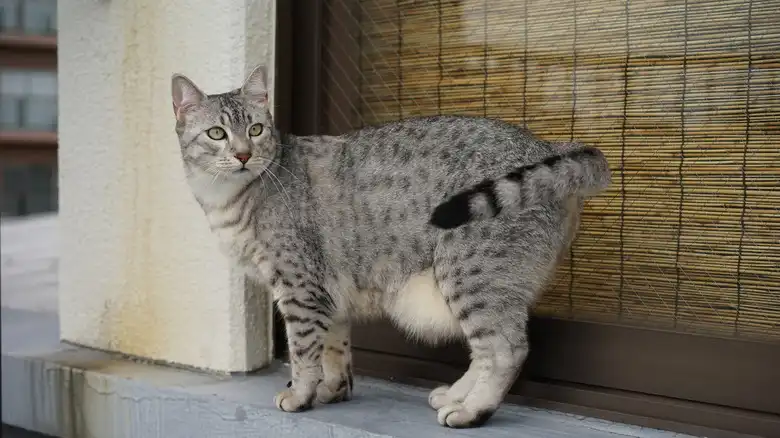
This Is The Fastest Domestic Cat Breed In The World
CatsCat BreedsThis Is The Fastest Domestic Cat Breed In The WorldByPaige MountainOct. 3, 2024 1:25 pm ESTNature Picture/Getty ImagesWhile your cat might seem like the fastest in the world when zipping around at night, one type of feline reigns supreme in the speed department. The Egyptian mau is the fastest domestic cat breed, with the ability to run up to 30 miles per hour. Not only are they good runners, but they are also remarkable jumpers, capable of leaping up to 6 feet in the air. A rare variety, they are also one of the oldest domesticated cat breeds.Ancient Egyptian art showcases cats with similar features to the Egyptian mau, and this modern breed could have descended from those ancient felines. Egyptian maus may share this ancestor with a type of African wild cat, which could help explain their impressive speed. In the United States, the Cat Fanciers Association recognized the Egyptian mau as an official breed in 1968, although its population suffered from genetic disorders due to the rarity of the species in the country at that time. It's still not commonly seen in the U.S.The Egyptian mau's striking appearanceHeidi Bollich/ShutterstockThe Egyptian mau has unique features and markings. Muscular cats with a lean, athletic build, they typically weigh anywhere from 8 to 12 pounds. Their back legs are a little longer than their front, allowing them to reach such extraordinary speeds. One of the most distinguishable features of this breed is their spotted coat. These cats come in six different colors: The most common colors are silver, smoke, and bronze, while the others (black, blue, and caramel) are pretty rare.Along with their spotted coats, this breed has a dorsal stripe that runs down the length of their body to their tail, as well as an "M" style marking on their face. Alternatively, this marking may look like a scarab, known in Egypt as a holy beetle. Piercing green eyes are also a notable characteristic of this breed.How to care for an Egyptian maunaturepicture_rika/ShutterstockEgyptian maus are very active cats. Unlike other cat breeds that might be content to curl up and sleep all day, these felines need a lot of exercise to keep them happy. They enjoy climbing, running, and jumping, and love to play with their humans. Cat exercise wheels are one of the best forms of exercise for an active breed like the Egyptian mau, and you can even put these felines in a harness and leash train them to join you on your daily walks.When it comes to their families, Egyptian maus often connect deeply with a specific person, but that doesn't mean they don't love the rest of their pack as well. While they tend to be a little shy around strangers, this isn't a quiet breed, making a variety of different sounds.Egyptian maus typically make for good family pets as they get along well with most children, in addition to other animals. While these cats usually do fine solo for short bursts, they love spending time with their families, and can occasionally deal with separation anxiety if constantly left alone for longer periods of time. If you are someone who has the time to give this breed the active lifestyle they need, these little speedsters make for very loyal and loving companions.
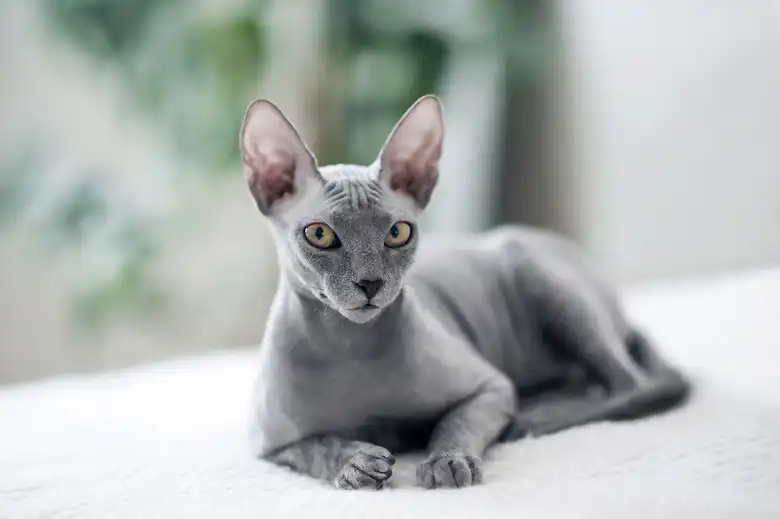
Sphynx Cat Breed Facts & Information
CatsCat BreedsSphynx Cat Breed Facts & InformationByKatherine MaloneUpdated Apr 19, 2022Nelly Senko/iStock/GettyImages #p37d2f90d214f9b87e5f3056965d74813, #p37d2f90d214f9b87e5f3056965d74813 img { aspect-ratio: 4138/2754; height: auto; }The cat breed sphynx is easily recognizable for their hairless appearance. They are a popular option for people who are allergic to cats. While the sphynx isn't actually hypoallergenic and still produces the protein that causes allergies, their lack of hair and shedding means that the allergens are less likely to be floating around the room. Some sphynx cats serve as therapy animals, a role for which they are well suited thanks to their affectionate and outgoing personality.Sphynx cat appearanceSphynx cat appearanceMany believe that there is no such thing as a haired sphynx cat, but actually, all cats of the breed have hair. It is not the normal fur that other breeds have but rather a fine, downy hair that may not be visible, but you will feel it when you pet the cat. The skin is loose and wrinkled. There are many sphynx cat colors and patterns.More Like ThisCatsList of Hairless Cat Breeds for Your Next Bald & Beautiful Cat FriendCatsTurkish Angora Cat Breed Facts & InformationCatsRagdoll Cat Breed CharacteristicsThe sphynx is a medium-size cat, with females weighing 7 to 10 pounds and males weighing 8 to 14 pounds. The cats are muscular with a full belly. They have wide, open eyes and large, hairless ears.History of the cat breed sphynxHistory of the cat breed sphynxWhat is a sphynx? The sphynx breed can be traced back to Ontario, Canada in 1966 when a hairless kitten was born as a result of inheriting a recessive trait from both parents. This cat was used to breed more hairless cats and develop the breed. The cats were originally called Canadian hairless cats but were often referred to as sphynx due to their resemblance to the Egyptian sphynx sculpture.Sphynx cat personality and temperamentSerKucher/iStock/GettyImages #pd9be4b91e432378f91004c572a29db34, #pd9be4b91e432378f91004c572a29db34 img { aspect-ratio: 3152/2455; height: auto; }Sphynx cat personality and temperamentWhile breed is not a reliable indicator of temperament, the personality of sphynx cats can be described as affectionate and outgoing. They are loyal to their owners and make excellent companions. They are also friendly and outgoing with visitors as well and may serve as a welcoming committee for your guests. The cats are alert and intelligent.Sphynx cats are very active, which can be quite entertaining for cat owners, but don't be surprised if they get into trouble knocking things off shelves and opening cabinet drawers.Sphynx care and healthSphynx care and healthThe life expectancy for a sphynx cat is 15 years or more. They are generally healthy, but the genetic condition hypertrophic cardiomyopathy is a concern in this breed. Responsible breeders should test their breeding cats and the resulting kittens for this condition. However, it may not show up in young cats, so sphynx cat owners should have their veterinarian pay close attention to the heart health of their cat.Sphynx cats don't need to be brushed, but they do need the occasional bath when their skin gets oily. Be sure to use a gentle shampoo. Since they don't have hair, extra care is needed to protect these cats. Wipe their eyes each week and clean the ears weekly to clear out the buildup of wax. Check their nails weekly and trim them as needed.Seregraff/iStock/GettyImages #e2e467084376526065410714adff0ed3f, #e2e467084376526065410714adff0ed3f img { display: block; aspect-ratio: 1.5If allowed outdoors, they are at risk of sunburn. They are also more likely to get cold since they don't have fur to insulate and warm them. Shirts or sweaters for your cat can help offer that protection. Sphynx cats tend to have strong appetites and a naturally round belly, so it is important to monitor their weight to keep them at a healthy weight.ReferencesThe Cat Fanciers' Association: CFA Breed/Color Designation ChartsThe International Cat Association: The Sphynx BreedThe Cat Fanciers' Association: About the Sphynx
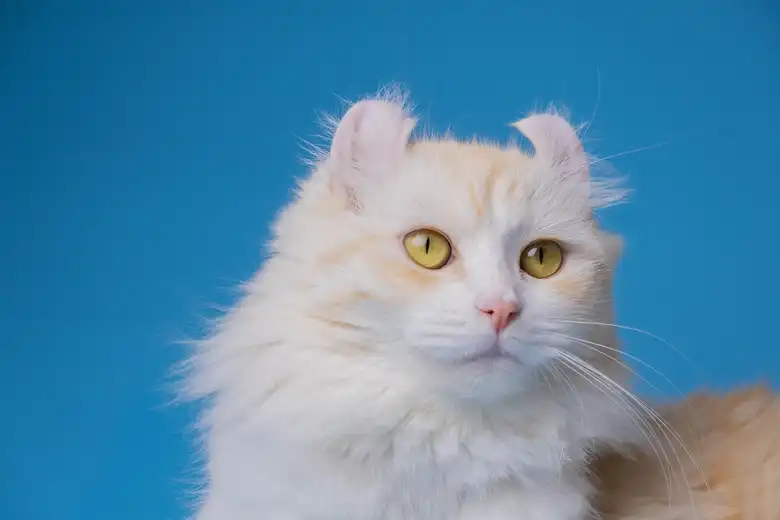
American Curl Cat Breed Characteristics
CatsCat BreedsAmerican Curl Cat Breed CharacteristicsByKatherine MaloneJan 26, 2023 12:03 pm ESTNoi_Pattanan/iStock/GettyImages #pb3d9f8edf8e43007836ed3479bd017fb, #pb3d9f8edf8e43007836ed3479bd017fb img { aspect-ratio: 6240/4160; height: auto; } In This ArticleAmerican curl cat quick factsAmerican curl cat historyAmerican curl cat personalityAmerican curl cat lifespan & health issuesAmerican curl cat grooming & careWelcoming a new catAmerican curl cat quick factsAmerican curl cat quick factsLength: 12 – 16 inchesWeight: Females: 5 – 8 pounds, Males: 7 – 10 poundsLifespan: 11 – 15 years or moreCoat length: Shorthair and longhairColoring: All coat colors and patterns including tabby, tortoiseshell, bicolor, and calicoMore Like ThisCatsAmerican Wirehair Cat Breed CharacteristicsCatsBritish Shorthair Cat Breed CharacteristicsCatsBirman Cat Breed CharacteristicsGrooming needs: Low to mediumFriendliness: Breed alone is not an accurate predictor of individual cats' personalities. However, American curl cats are generally regarded as intelligent, social, and playful.The American curl cat is a small to medium-sized cat with a big personality. They have been nicknamed "Peter Pan" because they continue to be playful and kitten-like into adulthood. These domestic cats come in both long and short hair. They also come in all colors and patterns including tabby, tortoiseshell, bicolor, and calico.If you are looking for a beautiful cat with a unique appearance and a sociable and playful personality, the American curl may be the breed of cat for you. Carefully consider the breed's care requirements and personality before selecting a kitten to bring home to your family.White_bcgrd/iStock/GettyImages #e02a86fd09d3ab7074332c0e54f5d4924, #e02a86fd09d3ab7074332c0e54f5d4924 img { display: block; aspect-ratio: 1.4980079681275American curl cat historyAmerican curl cat historyThe American curl is a fairly new breed. It was first bred by a black kitten who was found by Joe and Grace Ruga in Lakewood, California, in 1981. The kitten had long hair and curled ears and was named Shulamith. When she grew up, she had a litter of four kittens. Half of the litter had curled ears. Breeders started selective breeding in 1983 to develop what would become the American curl cat breed. This breed of cat is recognized by the Cat Fanciers' Association (CFA)and the International Cat Association (TICA).Geneticists studied the cats to determine how the curly ears were passed on. Feline geneticist Roy Robinson determined that the trait is autosomal dominant, which means that a kitten must have at least one copy of the dominant gene.The American curl's ears have firm cartilage at the base of the ear that extends up at least 1/3 of the ear. The top of the ear is thin and flexible and curls back. The breed standard requires that the curled-back ears form an arc that is at least 90 but no more than 180 degrees. The backward curl is one factor that distinguishes the cats from the Scottish fold, whose ears fold forward.American curl kittens have straight ears when they are born. Within a few days, the ears develop a tight curl. From the age of 6 weeks to 4 months, the ears slowly uncurl.American curl cat personalityAmerican curl cat personalityThe American curl cat is known for their kitten-like behavior. They love your company and will likely be waiting for you to wake up. and accompanying you around the home as you go about your day. They are curious and intelligent. They enjoy exploring and will likely examine any purchases you bring into your home. Be aware that this breed has a somewhat uncanny ability to open doors.They love to play games of fetch but they can also entertain themselves with available toys. The cats also jump and climb and you may often find them on high perches.They love to play but they are also very affectionate. They tend to vocalize with a cooing sound, but they aren't overly loud cats. They may greet you with a head bump and wake you up by licking your hair. American curls tend to get along well with other pets.eugenesergeev/iStock/GettyImages #e941d63536e5979e022d0cb6bfc4e8286, #e941d63536e5979e022d0cb6bfc4e8286 img { display: block; aspect-ratio: 1.4659557013946American curl cat lifespan and health issuesAmerican curl cat lifespan and health issuesA healthy American curl cat can live into their mid-teens or longer. Fortunately, this tends to be a very healthy breed and there aren't any known genetic health problems that affect the cats.However, due to their unique ear shape, cats are prone to developing ear infections. Watch for symptoms of an infection that may include:head shakingear scratchingred and inflamed earsyellow or black ear dischargefoul odor from the earsIf you see symptoms of an ear infection, take your cat to a veterinarian. They can diagnose the cause of the infection and prescribe an effective medication to treat your cat.American curl cat grooming and careAmerican curl cat grooming and careThe American curl cat comes in both long and shorthair varieties. The cats have little in the way of an undercoat and do not shed very much. Shorthaired cats should be brushed occasionally to remove loose hair. Longhaired cats need more frequent brushing to prevent tangles and matting. Grooming a couple of times per week is usually sufficient.Be sure to check and clean the cat's ears when you brush them. This keeps the ears clean and helps to prevent infection. Use a soft cotton and an ear-cleaning solution designed for cats and recommended by a veterinarian.Other care requirements include:checking the cat's nails and trimming them as neededfeeding a high-quality commercial cat food as recommended by your veterinarianproviding fresh drinking water that is available for your cat at all timestaking your cat in for regular veterinary examinationsstaying up-to-date with recommended vaccinationsNitiphonphat/iStock/GettyImages #e4ebacbc826e8fdaaff9cf6fa974a37f3, #e4ebacbc826e8fdaaff9cf6fa974a37f3 img { display: block; aspect-ratio: 1.7777777777778Welcoming a new cat into your homeWelcoming a new cat into your homeBringing a new American curl kitten or cat into your home is an exciting time. The playful energy of the cat is sure to bring joy into the home. Before you welcome your cat, make sure to cat-proof your home. Put away anything that may be harmful to your new cat. Remember the American curl has a tendency to open doors and cabinets. Consider using child-proof latches on cabinets that contain harmful materials such as cleaning supplies.Set up a safe room where you can welcome your new kitten. Make sure they have everything they need including:food and waterlitter boxcat treescratching postcat toysAllow your cat to explore the room at their own pace. You don't want to push them to be held or explore areas they don't want to be in. Instead, sit and offer to play with them. Giving them plenty of positive reinforcement is a good way to start developing a loving and trusting relationship.Introduce your new cat to any other pets and children you have in the household. Once your new cat is comfortable, you can open up the door so they access more of the home. It shouldn't take long for these curious and adaptable cats to become comfortable — but don't rush them. Before you know it, your American curl will be an integral part of family life.ReferencesThe International Cat Association: The American Curl BreedCat Fanciers' Association: About the American Curl
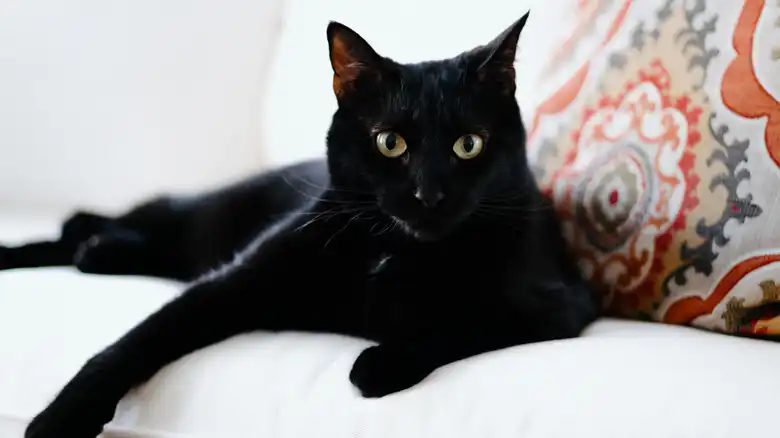
10 Facts About Black Cats You Probably Didn't Know
CatsCat Breeds10 Facts About Black Cats You Probably Didn't KnowBySanaphay RattanavongOct. 12, 2024 11:25 am ESTGrace Cary/Getty ImagesMany people think of black cats as unlucky or associate them with witches and Halloween — images less rooted in fact than superstition and cultural bias. Black cats, despite their association with bad luck in some cultures, are actually considered lucky in certain parts of the world. You may already be aware that the ancient Egyptians revered cats of all colors, including black ones, as sacred animals with mystical powers. Indeed, their status ascended to that of symbols of the divine, offering protection and companionship even beyond this earthly existence and into the next life.Black cats continue to fascinate and bedevil (in the best ways) us to this day. For example, did you know that their fur has a unique ability related to light absorption and reflection due to excess melanin? These felines have many fascinating characteristics, some of which go beyond fur-deep, that might surprise you. Curious to learn more? Here are some surprising facts about black cats you probably didn't know.1. Only one cat breed is always blackShukriaakhtar/ShutterstockWhile there are 22 recognized cat breeds that can have solid black coats, the Bombay stands out as the only breed that is always black. This unique characteristic sets the Bombay apart from other black-coated felines and makes it distinctive and beloved.The origins of the Bombay can be traced back to the 1950s. It was created through a carefully planned breeding program by Nikki Horner, a Kentucky-based cat breeder. Horner aimed to combine the sleek, muscular body of the American shorthair with the striking black coat of the sable Burmese. The first successful crossbreed of the Bombay occurred in 1966, and the Cat Fanciers' Association officially recognized the breed in 1970.The Bombay's appearance is reminiscent of a miniature black panther. It has a sleek, compact body with well-developed muscles and a rounded head. Its most distinctive feature is its glossy and dense jet-black coat. The breed's coat is so dark that it appears to absorb light, giving it an almost mystical aura. In addition to its striking appearance, the Bombay breed is known for its unique characteristics, including its affectionate and outgoing personality. These cats are incredibly social and crave human interaction. They are often described as "Velcro cats" due to their love of being held and cuddled. Bombays are also highly intelligent and curious, making them excellent companion animals for people of all ages.2. Their coats can change coloralexgo.photography/ShutterstockIt might come as a surprise, but a black cat's fur can change color from sitting in the sun. This happens because the sun's UV rays break down the pigment, eumelanin, which gives the fur its black color. As the eumelanin degrades, the fur loses its ability to absorb light efficiently, causing it to lighten into a reddish-brown hue. The extent of this rusting effect varies depending on the cat's genetics, health, and the duration of sun exposure. In some cases, the fading occurs gradually; in others, it can happen more quickly, especially if the cat spends long periods in direct sunlight.Beyond sun exposure, another reason for a black cat's fur changing color is a deficiency in tyrosine, an amino acid needed to produce eumelanin. If a black cat's diet lacks enough tyrosine, its fur can fade. Adjusting the cat's diet or providing tyrosine supplements can help restore the dark color.While these factors are the most common causes of fur fading, significant changes in coat color can sometimes signal underlying health problems, such as liver or thyroid issues. If your cat's fur changes dramatically, it's wise to consult a veterinarian. It's also important for cat owners to be mindful of sun exposure since overexposure to UV rays can pose health risks, including skin cancer. Providing shaded areas and limiting time in direct sunlight, especially during peak hours, is key to keeping cats safe and healthy.3. Not all black cats have yellow eyesEyeem Mobile Gmbh/Getty ImagesThere is a common misconception that all black cats sport yellow peepers. However, the same pigment responsible for their black fur, eumelanin, also influences their eye color. As such, black cats can have a range of eye colors, including yellow, gold, orange, copper, or green.High levels of eumelanin in black cats typically result in both black fur and warm-toned eyes like yellow or orange. The gene responsible for black fur is dominant, so if a cat inherits it, the black coat is likely to be paired with these eye colors. While rare, some black cats can have blue eyes, a trait seen in the breed ojos azules (Spanish for "blue eyes").4. Black cats are not evil or unluckyMM_vision/ShutterstockThroughout history and across cultures, black cats have been seen as both lucky and unlucky, with negative perceptions largely based on fear rather than fact. In medieval Europe, they became linked to witchcraft. Black cats were thought to be witches' familiars or even witches in disguise, leading to their persecution. Some theorize this contributed to the spread of the bubonic plague, as killing cats reduced rodent control.In contrast, black cats were seen positively in other contexts. British sailors believed black cats brought good luck on ships, helping ensure safe voyages by keeping rodents in check. Fishermen's wives also kept black house cats, believing they would protect their husbands at sea. In Japan, black cats are considered lucky, especially in love, as they are thought to attract suitors to single women. Similarly, Scottish folklore views a black cat on the doorstep as a sign of prosperity, while in France, black cats are called "money cats" and are associated with financial fortune.5. Black cats are less likely to be adoptedBuddhika Weerasinghe/Getty ImagesBlack cats, long shrouded in superstition and myth, continue to be associated with bad luck, witchcraft, and misfortune. Sadly, spurious alignment has had a profound impact on their adoption rates in shelters, according to a 2020 study. Compared to cats of other colors, black cats tend to linger in shelters, waiting longer for their forever homes. Unfortunately, the stigma against black cats is real and persistent. This unfair bias makes it harder for black cats to find their human families, despite the fact that their fur color has no bearing on their personalities or behavior.Animal welfare organizations, such as the American Society for the Prevention of Cruelty to Animals, are working to combat these negative stereotypes through education and awareness campaigns that promote the adoption of black cats. By challenging these myths, they aim to give black cats an equal chance at being adopted and loved. One place actively changing this perception is Nekobiyaka Cat Cafe in Himeji, Japan, the world's first and only cafe dedicated exclusively to black cats. Since opening in 2013, Nekobiyaka has helped black cats find forever homes, offering them a second chance and helping to break the stigma. Even during the struggles of the COVID-19 pandemic, the cafe continued its mission with the help of donations. Inside the cafe, each black cat wears a colorful bandana, allowing guests to tell them apart while watching them explore their thoughtfully designed environment.6. Some black cats have hidden 'ghost markings' that come to lightMany black cats conceal subtle tabby patterns beneath their dark coats, a phenomenon known as "ghost markings." These faint stripes or spots become visible under certain lighting conditions, such as bright sunlight. This occurs because the gene responsible for black fur doesn't always completely suppress the tabby pattern gene, allowing these hidden patterns to emerge.Understanding these markings provides insight into feline genetics and the complex interplay between coat color and pattern expression. Genetically, all cats carry the tabby pattern, but in black cats, the expression of this pattern is often subdued or completely masked. These markings come in four main varieties: ticked, mackerel, blotched, and spotted. They are typically more noticeable in kittens and may fade as the cat matures, though some adult black cats retain them throughout their lives.7. The gene that makes cats black may also make them more resistant to infectionsDondykRiga/ShutterstockBlack cats possess genetic traits that could offer valuable insights into disease resistance, particularly through the lens of CCR5, a gene crucial to immune responses. The melanism gene, responsible for their striking black fur, has been linked to enhanced immunity. Studies suggest that this gene provides resistance to diseases, such as feline immunodeficiency virus (FIV), echoing evolutionary patterns of pathogen resistance observed in other species.Further research underscores CCR5's pivotal role in regulating immune responses. This gene facilitates macrophage recruitment, a key process in fighting infections and maintaining immune balance. CCR5 also influences the migration of memory CD8+ T cells, which are essential for long-term immune defense. These functions illustrate CCR5's importance in protecting against diseases, not just in humans but potentially in other species, including black cats.The therapeutic potential of CCR5 further enhances its possible scientific significance. Advances in gene editing, particularly CRISPR/Cas9 technologies, have demonstrated CCR5's value in treating diseases such as HIV. These developments pave the way for exploring how similar interventions could be applied to felines, further illuminating novel interventions in humans and offering possibilities for cross-species studies into immunity and disease resistance.8. A fairy creature takes the form of a black cat in Celtic mythologyMICHAEL HATZALAM/ShutterstockIn Celtic mythology black cats are often linked to the enigmatic figure of the Cat Sìth (or Cait Sidhe in Irish). This supernatural creature is typically depicted as a large black feline with a white spot on its chest. Legends describe the Cat Sìth as a fairy or, in some versions, a witch who could transform into a cat nine times — possibly giving rise to the popular belief that cats have nine lives.The Cat Sìth is central to many superstitions, blending protective and ominous qualities. In Scottish folklore, it was feared as a soul-stealer, capable of claiming a person's soul by passing over their corpse before burial. To guard against this, communities would hold the Fèill Fhadalach, or "late wake," a vigil kept around the clock to ensure the Cat Sìth would not approach the deceased.On a more benevolent note, the Cat Sìth played a role in Samhain traditions, a Celtic festival marking the precursor to Halloween. It was believed that the Cat Sìth would bless households that left out a saucer of milk, which in turn ensured that the family's cows continued to produce. However, those who failed to offer this gesture risked being cursed, with their livestock's milk drying up.9. Black cats have long served as literary and political symbolsAlberto Cassani/Getty ImagesBlack cats are a source of fascination in literature, representing themes of mystery, magic, and rebellion. In Edgar Allan Poe's "The Black Cat," Pluto serves as both victim and avenger, embodying guilt and karmic justice in a tale of psychological unraveling. Eiko Kadono's "Kiki's Delivery Service" features Jiji, a witty, talking black cat whose role as Kiki's confidant highlights the balance between independence and companionship in a magical coming-of-age story. Similarly, T.S. Eliot's "Old Possum's Book of Practical Cats" introduces Demeter, an elegant and clever black-and-gold feline who unmasks the notorious Macavity, reflecting the charm and mischief often associated with black cats.One of literature's most memorable black cats is Behemoth from Mikhail Bulgakov's "The Master and Margarita." A demonic feline with a taste for chaos and gatling guns, Behemoth walks on two legs, speaks, and transforms into a human. His love for mischief, vodka, and satire makes him both a humorous and fearsome figure, embodying unpredictability and mayhem. His layered identity, referencing both the Biblical monster Behemoth and the Russian word "begemot" (hippopotamus), underscores the complex cultural resonance of black cats in literature.Beyond fiction, black cats carry political symbolism, particularly in anarcho-syndicalism, a branch of anarchism focused on labor organizing. In the early 20th century, the black cat became an emblem of rebellion and resilience, tying the feline's independence and resourcefulness to collective struggles for justice. This political association adds depth to the mystique of black cats, linking them to themes of defiance and solidarity.10. Black cats are particularly hard to photographWestend61/Getty ImagesPhotographing black cats can be challenging due to their dark fur, which absorbs light and obscures fine details. This often confuses a camera's auto-exposure settings, leading to underexposed or washed-out images. Despite these challenges, employing the right techniques can reveal the unique beauty and personality of black cats.Lighting is a key factor in achieving compelling photographs. Soft, diffuse light, such as natural daylight or illumination from a lamp, minimizes harsh shadows and stark contrasts. Shooting during the golden hour, just before sunset, provides ideal lighting conditions for photographing black cats. Adjusting camera settings can also enhance your results; underexposing the shot slightly helps maintain the richness of black fur. Additionally, avoiding flash is important to prevent unnatural reflections or the dreaded "green eye" effect, which can detract from the natural appearance of your furry subject.Careful attention to composition ups the quality of black cat photography. Clean, clutter-free backgrounds help the cat remain the focal point, while mid-toned settings, such as grass or curtains, provide effective contrast. Alternatively, black-on-black compositions can create striking artistic effects, emphasizing the fur's texture. To highlight the cat's facial features, especially the eyes, positioning them to face a natural light source is essential. Rim lighting, created by placing a light source behind and slightly to the side of the subject, can add depth by outlining the fur's edges. Finally, subtle photo editing adjustments to highlights, shadows, and contrast can enhance the overall image without overwriting that authentic, fur-some look.
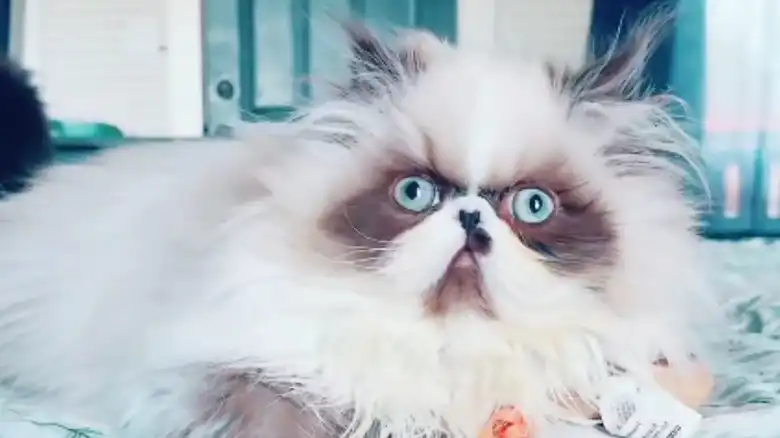
Heart-Nosed Persian Kitten's Unique Fur Pattern Is Stealing Hearts
CatsCat BreedsHeart-Nosed Persian Kitten's Unique Fur Pattern Is Stealing HeartsByCynthia AnayaJan. 10, 2026 9:25 am ESTpetsofthesouth.com / TikTokPersian cats are known for their fluffy coats, grumpy faces, and smushed muzzles that make their noses look like tiny round buttons right between their eyes. They're a popular breed with cat lovers, and they're among the most expensive; expect to pay $1,000 to $5,000 to buy one, unless you're lucky enough to adopt one for less from a shelter. One Persian cat, in particular, named Coconut, is collecting views and likes on TikTok for her looks after a December 2025 post, but not for the typical traits associated with the breed.This bicolor seal point, blue-eyed cat with a heart-shaped nose made her first TikTok appearance in September 2025, along with her littermates. The dark fur around her eyes and below her nose makes her look more like a raccoon than a cat, and fans are loving it. In the clip above, Coconut's breeder holds her in her hands to show her off. Despite being moved around from side to side, the "fluffy little munchkin" doesn't move a muscle; she cooperates so well, you could easily mistake her for a stuffed animal.In less than a month, more than 49,000 viewers have already liked the post, and more than 1,200 have left comments. One person compared her to Master Shifu from Kung Fu Panda, which more than 13,000 viewers agreed is a spot-on comparison. Another described her as "a collection of angry dryer lint." A third fan joked that Coconut "looks like she wants to speak with the manager."Where is Coconut the Persian cat now?petsofthesouth.com / TikTokThe woman in the video, Kaleena, breeds Shih Tzus and Persian cats in Louisiana, and Coconut and her siblings were born in her home. Her website boasts of her "holistically raised, friendly, adorable Shih Tzus and Persians," so many of the pets featured on her social media accounts don't stay in her care for long. As for Coconut. Kaleena couldn't resist her cuteness, so she kept her! The fluffy feline now shares a home with a pair of Shih Tzus named Lemon and Fred, a pair of Persians named Midnight and Agnes, and other cats.Coconut gets her bicolor and color point mix from her Himalayan genetics, and like all other pointed kittens, her fur has darkened with age, as Kaleena explains on her website. When she's not posing for social media videos, she spends her days lounging with her housemates and strengthening her love-hate relationship with her brush. Later this year, Coconut will have a litter of her own, producing even more bicolor and color point kittens. Until then, fans can expect more posts of this charming, smoosh-faced kitty as a solo bundle of joy.Interested in learning more about Persian cats, including how to breed them? Check out how to mate a Persian cat and how to identify a Persian cat.
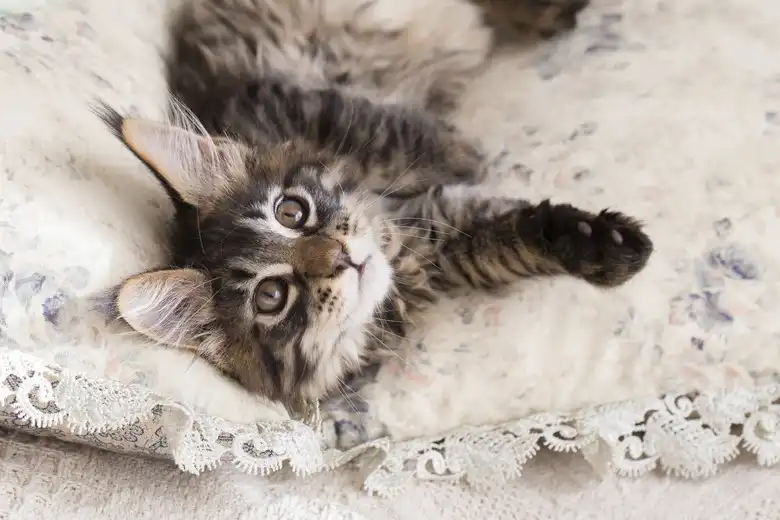
How To Identify A Maine Coon
CatsCat BreedsHow To Identify A Maine CoonByKatherine MaloneUpdated Apr 22, 2022marilook/iStock/Getty Images #p45e8861c8fdb7e00d026b402ce422732, #p45e8861c8fdb7e00d026b402ce422732 img { aspect-ratio: 2122/1415; height: auto; }The Maine coon cat is not only the state cat of Maine but also one of the oldest North American cat breeds. There are some common Maine coon traits that will help you identify these cats, including their size, coat, and personality. It is possible that the cats got their name from the myth that the breed originated from a cross between a domestic cat and a raccoon. This is not biologically possible, but it does give you a good idea of what many of these beautiful cats look like.Maine coon cat characteristicsMaine coon cat characteristicsMaine coons are large, muscular cats with a long, rectangular body covered in long hair. Maine coon cats are slow to mature to their full size but should finish maturing by the age of 4. Male Maine coons weigh 18 to 22 pounds, while females of the breed weigh 12 to 15 pounds. They are a rugged breed and should be built to survive a Maine winter.Their legs are wide-set and their feet are large, tufted, and round. The cat's face features a square muzzle, high cheekbones, and wide-set, oval eyes. Eyes may be green, gold, green-gold, or copper in color, although white cats may have blue eyes. Their tufted ears have a wide base. The tail is long and fluffy and tapers toward the end.Maine coon cats should have five toes in the front and four toes in the back. However, there is a mutation that caused Maine coon cats to have an extra toe on their feet. The International Cat Association classifies these cats separately as Maine coon polydactyls.Maine coon cat colorsNatalya Vilman/iStock/GettyImages #pe53c37df09a3adc36c2013f4140fca64, #pe53c37df09a3adc36c2013f4140fca64 img { aspect-ratio: 3020/2000; height: auto; }Maine coon cat colorsThere are many colors of Maine coon cat accepted under the breed standard. In fact, no color is prohibited. The cats come in solid colors, including white, black, red, cream, and blue. Cream and white cats should have a pink nose and paw pads. Black cats should have a black or brown nose and pads. Red and blue cats should have brick red and blue noses and pads, respectively.Tabby patterning is common in the breed, and the most common coloring is a brown tabby. Bicolored cats are white combined with cream, blue, red, or black. Other coloring and patterns include tortoiseshell and calico, or they may have one of these color patterns combined with a white undercoat.The coat is described as heavy and shaggy, but the hair is silky. The hair is shorter on the shoulders and longer around the back. They have a frontal ruff and full belly fur. The frontal ruff may not be as apparent in younger cats but will continue to develop as the cats age.Maine coon cat personalityMaine coon cat personalityWhile breed is not a reliable indicator of temperament, Maine coon cats are generally described as gentle, friendly, and intelligent. In fact, their gentleness is sometimes a surprise due to their large size. They aren't generally lap cats, but they do prefer the company of their owners.They stay playful throughout their life, and unlike many other cat breeds, most enjoy the water. The cats are excellent swimmers, and the long hair of the Maine coon is water-resistant.Purple Collar Pet Photography/Moment/GettyImages #e8328fae1e96d430ae7f13ecf2125b757, #e8328fae1e96d430ae7f13ecf2125b757 img { display: block; aspect-ratio: 1.5002632964718Maine coon cats communicate vocally with their owners and when spotting prey. Rather than the meow you may expect from a cat, the Maine coon will often chirp or trill instead.ReferencesThe Cat Fanciers' Association: Maine Coon Cat Breed StandardThe International Cat Association: Maine Coon Polydactyl BreedThe International Cat Association: Maine Coon Cat Breed PresentationThe International Cat Association: The Maine Coon Breed
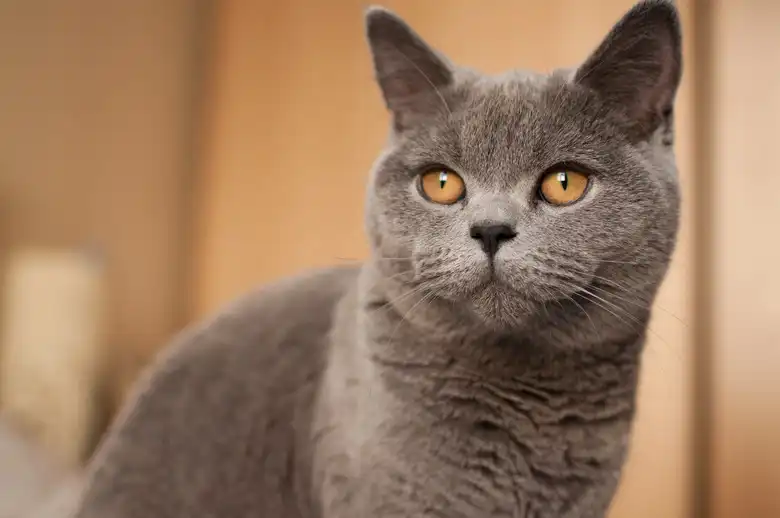
British Shorthair Cat Breed Characteristics
CatsCat BreedsBritish Shorthair Cat Breed CharacteristicsByKatherine MaloneJan 10, 2023 12:03 pm ESTCarlos G. Lopez/Moment/GettyImages #pd1397d03ba03b0b2c97fd5d5f4e1d9d2, #pd1397d03ba03b0b2c97fd5d5f4e1d9d2 img { aspect-ratio: 4288/2848; height: auto; } In This ArticleBritish shorthair quick factsBritish shorthair cat historyBritish shorthair cat personalityBritish shorthair cat lifespan & health issuesBritish shorthair cat grooming & careWelcoming a new catBritish shorthair quick factsBritish shorthair quick factsLength: 12 – 16 inchesWeight: Females: 7 to 12 pounds, Males: 9 to 17 poundsLifespan: 12 to 20 yearsCoat length: ShortColoring: Blue is the most common coat color but the breed comes in many colors and patternsMore Like ThisCatsSilver Bengal Cat Breed CharacteristicsCatsRagamuffin Cat Breed CharacteristicsCatsEgyptian Mau Cat Breed CharacteristicsGrooming needs: LowFriendliness: Breed alone is not an accurate predictor of individual cats' personalities. However, British shorthair cats are generally regarded as affectionate and calm.The British shorthair is an easygoing and affectionate cat. They are medium to large cats with plush, dense coats. These cats have compact bodies, broad chests, and round eyes staring out of a round head with chubby cheeks. It is no wonder British shorthair cats are sometimes described as resembling teddy bears. You may also recognize them from Lewis Carroll's "Alice in Wonderland" as it is believed the breed was an inspiration for the Cheshire cat character.They are not lap cats nor are they high energy or high maintenance. These independent and intelligent cats enjoy lounging next to you and tend to get along with all members of the family. Before you commit to bringing a British shorthair kitten home, carefully consider the breed's personality and care requirements. Make sure they are a good fit for your household.Tomasz Bobrzynski tomanthony/Moment/GettyImages #e48d9836211d3d2e4fe84ea9e4e3d9e7c, #e48d9836211d3d2e4fe84ea9e4e3d9e7c img { display: block; aspect-ratio: 1.5British shorthair cat historyBritish shorthair cat historyThe British shorthair cat is believed to have originated from the cats that the Romans brought with them when they invaded Britain in the first century. These domestic street cats were bred with wildcats local to the area. Today's British shorthair cats retain the thick coat and stocky build that made their ancestors able to hunt and withstand the elements.In the 19th century, cat breeder, Harrison Weir, began breeding cats. The breeding resulted in the blue color which explains its prevalence even today. Though the breed was nearly lost after both World War I and World War II. Fortunately, breeders were able to save the British shorthair breed by outcrossing to Persian, Russian blue, and Chartreux cats. The British longhair breed came from the crossing of British shorthair cats to Persians.The breed was originally registered as British blue with the American Cat Association. While the blue coat color is still the most common, British shorthair cats come in a variety of colors and patterns including:bi-colorcalicotabbytortoiseshellThe British shorthair breed was accepted by the International Cat Association (TICA) in 1979 and by the Cat Fanciers' Association (CFA) in 1980.British shorthair cat personalityBritish shorthair cat personalityIf you are looking for an intelligent and laid-back family cat to join your family, the British shorthair may be the cat for you. Males tend to be more outgoing than female cats. The breed tends to be very adaptable to different situations and most cats get along well with other pets.The breed is quite affectionate and they enjoy your company. Yet they are also quite independent and seldom demand attention. They don't generally enjoy being carried or sitting in your lap. If you have small children, make sure to teach them not to pick up the cat and how to interact with the cat safely.British shorthairs also don't have a high activity level, but they do enjoy playing and jumping. However, they are not as athletic or acrobatic as some other breeds. At times they can even be called clumsy.Kseniya Ovchinnikova/Moment/GettyImages #e5da47fc28ce7003f08ebb4931f0c8c86, #e5da47fc28ce7003f08ebb4931f0c8c86 img { display: block; aspect-ratio: 1.5British shorthair cat lifespan and health issuesBritish shorthair cat lifespan and health issuesThe British shorthair cat breed is generally very healthy with few genetic health problems. Healthy cats can live well into their teens. Obesity can be a problem later in life as these easygoing cats don't tend to be as active. If you notice your cat gaining weight, work with your veterinarian to adjust their diet. Make it a point to spend time playing with the cat each day to make sure they are getting some exercise.As with many other cats, the breed is at risk of hypertrophic cardiomyopathy, a type of heart disease that causes a thickening of the heart wall. Responsible breeders will screen their pedigreed cats with an echocardiogram for the disease before breeding them. Unfortunately, this condition does not always appear early in life. Therefore, it is important for your cat to have regular veterinary examinations.British shorthair cat grooming and careBritish shorthair cat grooming and careThe British shorthair's coat is fairly low maintenance and easy to groom. They have a thick coat but generally, you only need to brush them once or twice per week. The cats do tend to shed a lot, especially in the spring months. More frequent brushing can help reduce the amount of loose hair you find on your floors and furniture. In addition to regular brushing:check and trim the cat's nails about twice per monthbrush the cat's teeth with a veterinarian-approved pet toothpasteclean the cat's earsFeed the cats high-quality commercial cat food, preferably wet food, twice per day. Make sure they have fresh drinking water available at all times. Schedule regular check-ups with the veterinarian and make sure the cat is up-to-date on their recommended vaccinations.Valeriy_G/iStock/GettyImages #e59e6afc20c74b84b41be4bcb4e47a24e, #e59e6afc20c74b84b41be4bcb4e47a24e img { display: block; aspect-ratio: 1.5002143163309Welcoming a new cat into your homeWelcoming a new cat into your homeWelcoming a new kitten into your home is an exciting event. Make sure everything goes smoothly by preparing the house before your cat arrives. Cat-proof the home by removing poisonous plants and anything else that may be harmful to your cat. Then, set up a single room with everything your new cat may need including:food and waterlitter boxcat toyscat treescratching postWhen your new British shorthair kitten first arrives, confine them to that single room. That way, they have a calm place to adjust to the new environment. Allow the cat to explore at their own pace. It is a good idea to sit and talk to them so that they can get to know you.Keep in mind that British shorthair cats don't like being carried. Allow the cat to come to you when they are ready and offer plenty of positive reinforcement. If you have children or other pets in the household, this is a good time to make introductions. When your new cat is comfortable, you can open up the room so that they can explore the rest of the house and join your family.ReferencesAll About Cats: British Shorthair CatCat Fanciers' Association: About the British Shorthair
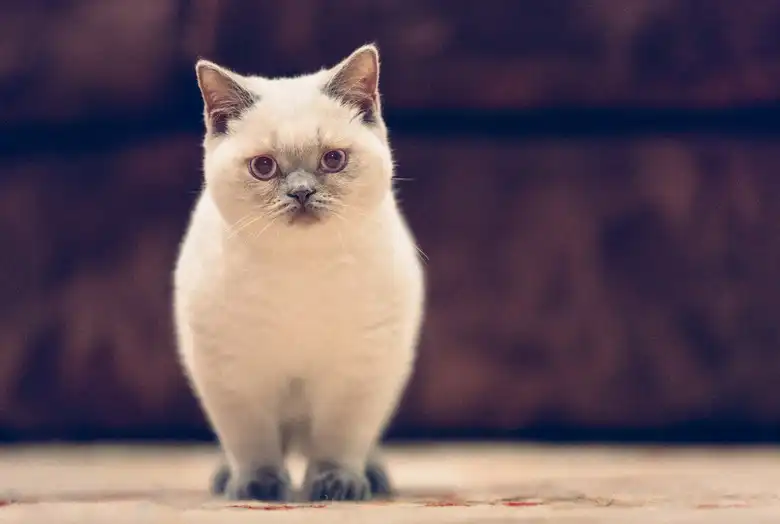
Types Of Short-Haired Gray Cats
CatsCat BreedsTypes Of Short-Haired Gray CatsByJane MeggittUpdated Sep 24, 2018Feng Wei Photography/Moment/GettyImages #pdbe5de8ae8ab9a7cde7e208e684166be, #pdbe5de8ae8ab9a7cde7e208e684166be img { aspect-ratio: 5376/3617; height: auto; }No matter their breed, cats resemble living works of art. The finest human dancer can't compete with the natural grace and agility of the feline. It's not coincidental that many of the great artists have also been cat aficionados. Artists are often seen as independent and non-conformist, and that description certainly doesn't apply to dogs.While cats appear in a palette of colors, there's something special about a gray feline. Of course, gray is just a generic term when it comes to cat color. Many gray cats boast coats of blue and silver. Purebred short-haired gray cats often have a coat more dense than that of a randomly bred gray feline.Russian blueRussian bluePerhaps the best-known of the short-haired gray cat breeds, the Russian blue combines a muscular frame with true elegance. Cattime refers to the breed as "the Doberman pinscher of cats." His dense, dark gray coat requires a good combing at least twice weekly. The Russian blue is generally sensitive and shy, not fond of strangers but devoted to his person.The KoratThe KoratThe Korat originally hails from Thailand, where it was considered a symbol of luck. At maturity, they are relatively small, weighing between 8-and-10 pounds. Along with their single gray coats, the Korat sports a distinctive heart-shaped head. Their bodies are powerful and muscular.Korats love their people. If you are looking for a "Velcro" cat, a Korat is a top choice. They are smart and active and need lots of attention. Korats like the company of other Korats, but if there are other felines in the house, expect the gray cat from Thailand to rule the roost.The ChartreuxThe ChartreuxAlthough the breed's name is French, this cat dates back to the Persian Empire. Knights returning from the Crusades brought these cats to Europe, and many of these felines ended up in French monasteries as rodent patrol. As Catster notes, today the Chartreux is the national cat of France. Along with a lovely blue coat, the breed is known for the permanent "smile" affixed to the face.The Chartreux is a large cat, weighing up to 16 pounds when full-grown. The muscular body is somewhat out of proportion with the breed's relatively thin legs. They bond quickly with their people, follow them around, and are born lap cats. Although the cat's hair is short, it is double-coated, so regular grooming is a must.The NebelungThe NebelungStrictly speaking, the Nebelung is a medium-coated rather than short-haired breed but makes a good choice for someone who wants a striking gray cat whose coat doesn't require the type of upkeep necessary for long-haired animals. It's a relatively new breed, in existence only since the 1980s. The Russian blue is the foundation for the Nebelung breed. Many Nebelungs look and behave much like their Russian blue ancestors.While the Nebelung is medium-sized, its body is exceptionally long. The tips of their bluish hairs are silver, giving them a luminosity and mystical quality. Playful and active, the Nebelung quickly becomes a member of the family, although the breed is not usually fond of strangers. While good with older children, the Nebelung is likely to hide when little kids are around.The British shorthairThe British shorthairWhile the British shorthair is available in various shades, gray is the most common color. World War II greatly affected the purebred breeding program, so post-war cat fanciers bred Russian blue with domestic shorthairs to help recreate the British shorthair. The result is a medium-to-large cat with dense, soft fur. The British shorthair boasts a strong, compact body, and weighs up to 18 pounds when full-grown.Not the most active of cats, the calm British shorthair makes an excellent companion. They make good family pets, as they are fine with well-behaved children and dogs. Their body type and relatively sedentary natures mean they can easily become fat, so it's important to ensure they don't overeat.ReferencesCattime: Russian BlueCatster: Get to Know the Chartreux: A Smart Cat With a Fixed SmileInternational Cat Association: Meet Our Fabulous Felines
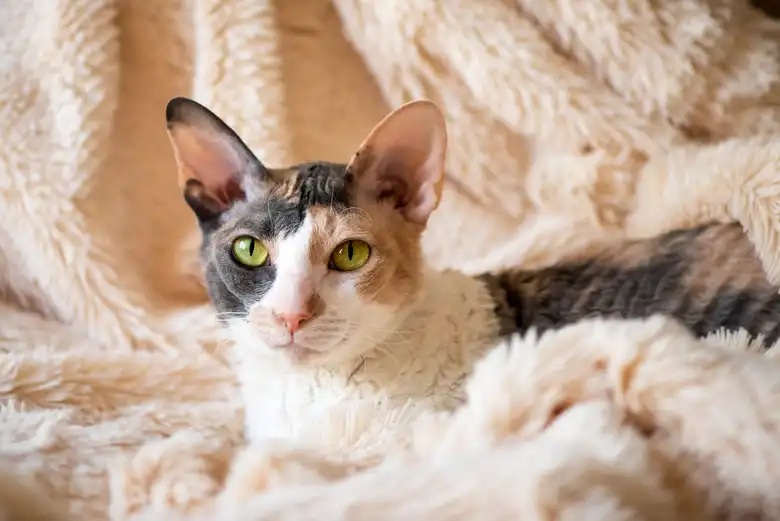
Cornish Rex Cat Breed Characteristics
CatsCat BreedsCornish Rex Cat Breed CharacteristicsByKatherine MaloneFeb 16, 2023 12:03 pm ESTrozmarina/iStock/GettyImages #pa5a0e1c742b9096e1c9c08bfd87b8ab3, #pa5a0e1c742b9096e1c9c08bfd87b8ab3 img { aspect-ratio: 7369/4925; height: auto; } In This ArticleCornish rex cat quick factsCornish rex cat historyCornish rex cat personalityCornish rex cat lifespan & health issuesCornish rex cat grooming & careWelcoming a new catCornish rex cat quick factsCornish rex cat quick factsLength: 12 – 16 inchesWeight: Females: 5 – 7 pounds, Males: 6 – 9 poundsLifespan: 9 – 13 years or moreCoat length: ShortColoring: All coat colors and patternsMore Like ThisCatsHimalayan Cat Breed CharacteristicsCatsBurmilla Cat Breed CharacteristicsCatsExotic Cat Breed CharacteristicsGrooming needs: LowFriendliness: Breed alone is not an accurate predictor of individual cats' personalities. However, Cornish rex cats are generally regarded as affectionate and active.The Cornish rex cat, also nicknamed the "feline version of a whippet" and "feline invaders from outer space," are fun, active cats with a unique and elegant appearance. These medium-sized cats are known for their playful antics and they love being an active part of the family. While some think these curly-coated cats are hypoallergenic due to their short, fine fur, this is unfortunately not the case. They do shed less than other breeds, but their short coat means they must be kept as indoor cats. Consider the breed's personality and care requirements to make sure the Cornish rex will be a good fit for your family.Sicha69/iStock/GettyImages #e4e8550a2d9784e3bb96121b4594ec9c9, #e4e8550a2d9784e3bb96121b4594ec9c9 img { display: block; aspect-ratio: 1.5Cornish rex cat historyCornish rex cat historyThe Cornish rex breed originated in Cornwall, England in 1950 when a tortoiseshell barn cat named Serena gave birth to a litter of kittens, one of which had a curly coat. This was the first Cornish rex kitten and he was named Kallibunker. As Kallibunker matured, more differences became apparent, including his large ears, egg-shaped head, long legs, and thin bone structure.The pet parent, Nina Ennismore, later bred Kallibunker back to his mother and the resulting litter contained some curly-coated kittens. Geneticists determined that the curly coat is a recessive trait, so both feline parents must have at least one copy of the recessive gene. They later determined that the gene for the new breed is different than the one that causes the curly or wavy coat in the Devon rex cat breed.The first Cornish rex cats were outbred to increase the gene pool and give the breed a strong foundation. Some cat breeds that were used include:American shorthairsBritish shorthairsHavana brownsRussian bluesSiameseCornish rex cats were brought to the United States in 1957 and the breed was accepted into the Cat Fanciers' Association (CFA) in 1964.Cornish rex cat personalityCornish rex cat personalityCornish rex cats are incredibly active and social. The breed is quite athletic despite the appearance of their long, thin legs, and they enjoy running, jumping, and playing. The cats love a game of fetch or may entertain themselves by tossing toys into the air.They enjoy people and prefer to spend their time with the family. This is not a good breed to have if you live alone and spend long hours working and traveling. The Cornish rex cats will do well with children and with any other pets you may have in the household.Angela Emanuelsson / EyeEm/EyeEm/GettyImages #e09fe3be7d5c31f50cf338a365296ab33, #e09fe3be7d5c31f50cf338a365296ab33 img { display: block; aspect-ratio: 1.5003663003663Cornish rex cat lifespan and health issuesCornish rex cat lifespan and health issuesA healthy Cornish rex cat receiving proper care can have a long lifespan and live well into their teens, reaching an age of 13 years or more. They are generally a very healthy breed, but they do have a few health problems to be aware of.The primary concern for Cornish rex cats is due to their very short coat. The Cornish rex coat has dawn and awn hairs but does not have guard hairs, which means they have little protection against cold and wet. It also leaves them susceptible to dermatological problems such as sunburn. These cats should be kept indoors. If you do allow them out on an enclosed patio, be aware of the risk of sunburn.There are also some genetic health problems that affect this breed of cat. Cats may develop a heart disease called hypertrophic cardiomyopathy. Some cats are also more prone to patellar luxation, a condition that causes the kneecaps to move out of position. Deafness is a concern in pure white Cornish rex cats. Responsible breeders will have their cats examined regularly to check for these conditions and will stop breeding cats found to carry hereditary diseases.Cornish rex cat grooming and careCornish rex cat grooming and careThe short, soft, curly coat is one of the distinguishing features of the Cornish rex cat breed. They do shed, although not as much as many other breeds. Brushing isn't generally necessary; however, you will want to bathe the cat occasionally. This is because their short coat isn't able to absorb all of the oil produced by the skin. Use a gentle shampoo formulated for cats.Other regular grooming tasks include:cleaning the cat's earstrimming the cat's nailsbrushing the cat's teeth with a veterinarian-approved toothpasteFeed high-quality, commercial cat food in the amount recommended by your veterinarian. Many Cornish rex cats may overeat, so avoid free feeding. Provide fresh drinking water at all times. Cornish rex cats should be kept indoors as their coat does not provide the needed protection to survive outdoors. Take your cat to see the veterinarian for regular check-ups and keep them up-to-date on all of the recommended vaccinations.Luiz Probst / EyeEm/EyeEm/GettyImages #e4f5c983cd44f0bbc89ed8fc43506b598, #e4f5c983cd44f0bbc89ed8fc43506b598 img { display: block; aspect-ratio: 1.5Welcoming a new cat into your homeWelcoming a new cat into your homeBefore you bring a Cornish rex kitten or cat into your home, make sure the environment is safe for your new feline friend. The Cornish rex is an intelligent and active breed, so take the time to cat-proof the home. Remove or secure any dangerous items, such as toxic plants. Make sure you have plenty of cat toys, a cat tree, and a scratching post so that the cat can be active without damaging your furniture. Consider a window seat and wall-mounted cat furniture to give your cat more entertainment opportunities.When you introduce your new cat to their new home, start by keeping them in a single room. This gives them an opportunity to get used to the new sights and smells. Set up the room with everything your cat will need including:cat food and waterlitter boxplenty of toysSpend plenty of time with your new cat and introduce toys and offer to play. The Cornish rex breed tends to be quite social, so your new cat will likely warm up to you quickly. Don't rush the process though. Allow your new cat to explore at their own pace and let them decide when they are ready to be petted or start playing.If you have children or other pets in the home, make sure to introduce them to the new cat. This ensures the animals have a positive experience and your cat has a safe room to relax if they get overwhelmed. Once your cat is comfortable, you can open up the door and allow them access to more of the house. Before you know it, your Cornish rex cat will be an active and playful member of the family.ReferencesThe International Cat Association: Cornish Rex at a GlanceNational Library of Medicine: To the Root of the Curl: A Signature of a Recent Selective Sweep Identifies a Mutation That Defines the Cornish Rex Cat BreedThe Cat Fanciers' Association: About the Cornish Rex
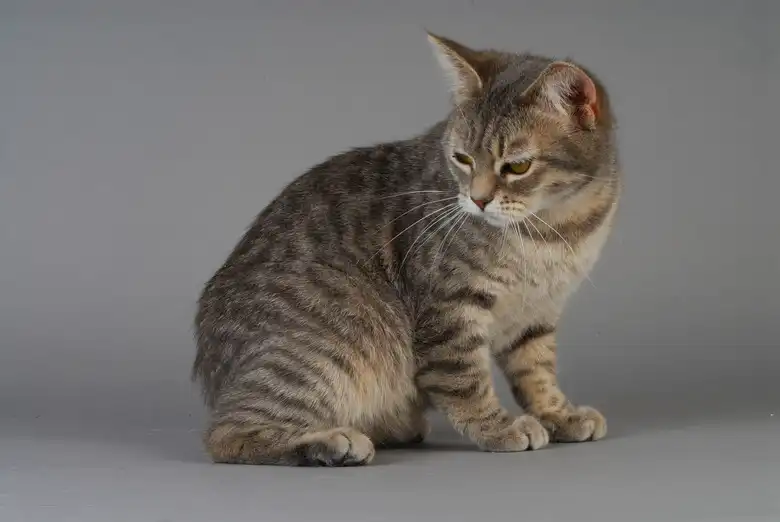
Manx Cat Breed Characteristics
CatsCat BreedsManx Cat Breed CharacteristicsByKatherine MaloneUpdated Nov 11, 2022Michel VIARD/iStock/GettyImages #p1b53918ac438315b74befacfe28fb6a5, #p1b53918ac438315b74befacfe28fb6a5 img { aspect-ratio: 3872/2592; height: auto; } In This ArticleManx cat quick factsManx cat historyManx cat personalityManx cat lifespan and health issuesManx cat grooming and careWelcoming a new catManx cat quick factsManx cat quick factsLength: 14 – 16 inchesWeight: Female 8 – 10 pounds, males 10 – 12 poundsLifespan: 12 – 16 years or moreCoat length: ShortColoring: All coat colors and coat patternsMore Like ThisCatsBurmese Cat Breed CharacteristicsCatsEgyptian Mau Cat Breed CharacteristicsCatsSnowshoe Cat Breed CharacteristicsGrooming needs: LowFriendliness: Breed alone is not an accurate predictor of individual cats' personalities. However, Manx cats are generally regarded as playful and loyal.Manx cats are easily recognizable by their lack of a tail. You will see Manx cats in every color and pattern including calico, tortoiseshell, and tabby. These adorable cats have a round shape, from their round, tailless body to their round head and round eyes.But the best thing about this breed is their personality. These medium-sized cats tend to be affectionate and loyal to their owner and they love to play, giving cat owners plenty of opportunities to laugh at their antics.slowmotiongli/iStock/GettyImages #efa3c67330cc789bdca2d00bfc08bddf8, #efa3c67330cc789bdca2d00bfc08bddf8 img { display: block; aspect-ratio: 1.5248287671233Manx cat historyManx cat historyThe Manx cat breed is believed to have originated in the Isle of Man, although they may also have come from parts of Great Britain such as England or Wales. The first image of these tailless cats dates back to 1810, although the breed is believed to be even older.Some may share tales that the Manx cat lost their cat tails when it was cut off by Noah closing the door to the ark on a cat's tail. However, the reality is that the cats have a genetic mutation that prevents the development of the vertebrae in a normal-length tail. The trait persisted as the breeding population on the island was limited and inbreeding was common.While taillessness is common for the Manx breed, it is important to note that some Manx cats do have a short, stub tail or even a full-length tail. Manx cats have different nicknames based on their tail length. For example, those who are completely tailless are called a rumpy or rumpy riser tail; those with a partial tail are called stump; ones with a short tail are called stubby; those with a long tail are called longy.There is also a type of Manx with longhair. A long-haired Manx is called Cymric. The International Cat Association (TICA) recognizes the separate breed, and it has the same standard as the Manx cat. The Cat Fanciers' Association (CFA) considers Cymric to be a part of the Manx breed.Manx cat personalityManx cat personalityManx cats love people and tend to be very affectionate. They want to be in your company, so if you frequently need to leave your cat alone for long weekends — this may not be the best breed for you. The cats also get along with children and pets. Manx cats can make a wonderful and memorable family pet.Manx cats are calm and even-tempered, but that doesn't mean they don't like to play. They can be quite active and some describe the cats as clownlike. They are athletic and can turn quickly as they race through the house. They are also very intelligent. You may find your Manx cat opening doors and investigating the highest shelves.Manx cats also have some dog-like behaviors. It is not uncommon for a Manx to play fetch. Some cats who have access to a garden will even bury their toys. While many Manx cats will share affection with all of your family members, it is not uncommon for a cat to bond more strongly with a single family member.Angie Selman / EyeEm/EyeEm/GettyImages #ec984c9a9f1661c3b281e2bd19d83bd6a, #ec984c9a9f1661c3b281e2bd19d83bd6a img { display: block; aspect-ratio: 1.3333333333333Manx cat lifespan and health issuesManx cat lifespan and health issuesManx cats that are in good health and receive excellent care can live for 16 years or more. They tend to be very healthy cats; however, there are some health problems to be aware of with this breed. The main issues are related to the complications of being a tailless cat. The tailless gene is a dominant gene, so a Manx cat only needs one copy to be a tailless Manx. Unfortunately, kittens with two copies of the gene do not survive.One major concern is Manx syndrome, which is a type of spina bifida caused by the malformed or severely shortened vertebrae in the spine. Symptoms can vary depending on the type and severity of the spinal abnormality. Symptoms can include:urinary issues such as incontinence and other problems.abnormal limb function of a cat's hind legs can become either partially paralyzed or have abnormal gaitrectal issues stemming from a megacolon and rectal prolapseUnfortunately, there is no cure for Manx syndrome. However, you can offer supportive care to cats suffering from the syndrome.Manx cat grooming and careManx cat grooming and careManx are shorthair cats with a double coat. The thick coat contributes to the rounded look of the breed and is very easy to care for. Simply brush the cat a couple of times per week to remove the loose fur. Cymric cats need more frequent brushing to keep their long coat free of tangles and mats. It is important to take care when grooming around the hind end — there may be exposed nerves where the vertebrae end.As with all cats, be sure to trim their nails regularly and brush their teeth with veterinarian-approved toothpaste. It is recommended to feed Manx cats canned cat food twice per day to help keep them hydrated. Be sure to always give them clean drinking water as well.Aletakae/iStock/GettyImages #e047e86831fb6f8edd7ff9cfb65769b20, #e047e86831fb6f8edd7ff9cfb65769b20 img { display: block; aspect-ratio: 1.5Welcoming a new cat into your homeWelcoming a new cat into your homeManx cats may have an even temperament, but it is still important to cat-proof your home. Put away anything that may harm your cat, including plants that may be dangerous to pets. While a kitten may not be able to reach a toxic plant on a high shelf, it won't be long before your Manx will develop the strength to reach high places.Keep your cat confined to a single room when you first bring them home. As they grow more comfortable, you can open doors and allow them to access more of the home. Spend time with your new cat but don't force your cat to play or be petted. Instead, talk to them, offer to play with toys, and pet them only when they approach you. Always use positive reinforcement when training. Consider teaching them tricks to stimulate their mind and keep them focused on you.Of course, you want to cuddle with your new pet. Though having patience will pay off as you develop a trusting relationship with your cat. If you have other pets in the home, introduce them slowly to make sure it is a positive experience for all.ReferencesVeterinary Partner: Manx Syndrome in CatsInternational Cat Association: Manx At A GlanceCat Fanciers' Association: The Manx Cat – Cymric (Longhair Manx)
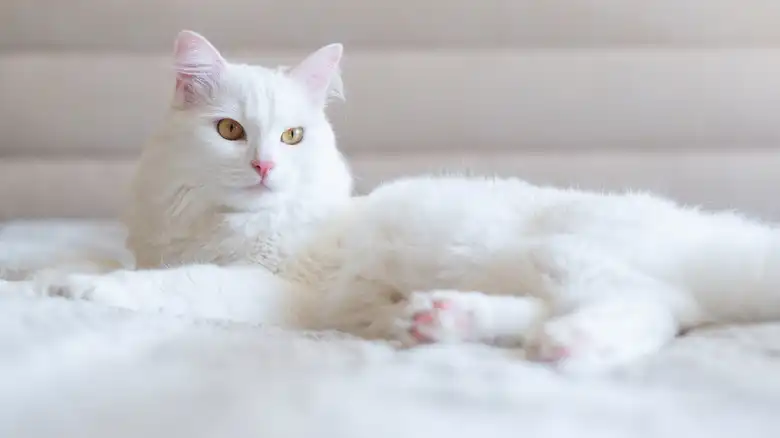
A Breed Nicknamed The 'Swimming Cat' Is An Energetic Feline That Loves The Water
CatsCat BreedsA Breed Nicknamed The 'Swimming Cat' Is An Energetic Feline That Loves The WaterByCori ChapmanUpdated: Feb. 19, 2025 12:20 pm ESTFox_Ana/ShutterstockAt a pool party, you probably wouldn't expect to see felines in the water — that is, unless they happen to be a Turkish Van. Unlike many cats, which have an intense hatred for water, this rare and highly energetic breed doesn't mind getting wet; in fact, as their name implies (inspired by a lake in their country of origin), they loves to swim. The Turkish Van likes water so much that owners may struggle to shower alone if they leave the bathroom door even slightly ajar.What about this breed allows them tolerate water in ways their fellow felines can't? It's all in their fur. Normally, when a cat gets wet, their coat grows heavy and weighs them down. This isn't the case with Turkish Vans, which have silky fur that causes water to slip right off of them. They also don't have an undercoat; without this thick layer to soak up water, these cats dry off at lightning speeds even after prolonged exposure.Unfortunately, the purebred Turkish Van is so rare that you may not see one without traveling to their home country. It's estimated that fewer than 200 are born in the United States annually. If you are lucky enough to keep a Turkish Van as a pet, you'll find this active cat makes for a loving and playful companion.The Turkish Van cat doesn't mind having funEmily "Moon" Combs/Static MediaAlthough it's great to know that a Turkish Van doesn't mind taking baths, be forewarned that their love of water may cause some trouble. While bathing yourself, it is probably best to leave the door closed unless you want your Turkish Van to join you. However, no water source is safe from their playful paws. Faucets and toilets will also appeal to the Turkish Van's nature. These cats are so clever that they more often than not learn to turn on the faucet themselves.Additionally, having a mop handy is essential because this cat loves to splash and play in their water dish. Because of this, they would greatly benefit from a drinking vessel like a fountain with constantly flowing water to attract their attention. While this could be annoying, these splash-fests make the breed the perfect playmate for an older child who will reciprocate that energy.Though Turkish vans are known for being highly energetic and playful, they still appreciate their space and aren't known for being very snuggly. For this reason, they may not be the best option for families with infants or small children, though this could vary from cat to cat. Older children may be fine to handle the feline, but parents should make sure to teach their children to respect their space to ensure they feel comfortable.
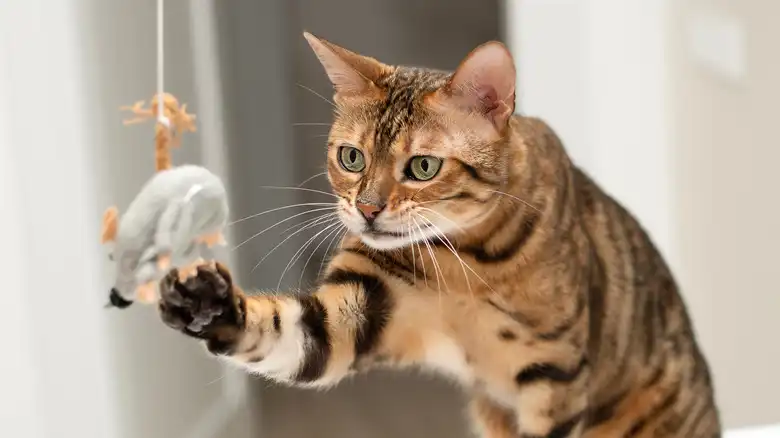
Bengals Are An Energetic Cat Breed Even Dog People Will Love
CatsCat BreedsBengals Are An Energetic Cat Breed Even Dog People Will LoveByCori ChapmanFeb. 25, 2025 9:25 am ESTketlit/ShutterstockWe may receive a commission on purchases made from links.The independent and chill manner of a cat may not appeal to dog people who prefer a pet with more energy, but Bengal rival the energy of a typical canine. Bengal cats are known for their leopard print-like appearance that stands out against the more common striped tabby pattern. Their personalities are also slightly more outgoing — with this breed enjoying play, cuddling, and even a game of fetch, making them one of the best cat breeds for dog lovers.Bengal cats are described as a confident breed with oodles of personality to share. They require more consistent stimulation than your average housecat; otherwise, they can develop behavioral issues. They get bored more easily, which can activate the mischief in them if left with no source of entertainment for too long. Additionally, they are incredibly intelligent, easily picking up on tricks. However, this intelligence and energy may make it impossible to deter them from getting into anything that is "off limits." Luckily, you can entertain your Bengal with a few toys and lots of love.How to keep your Bengal happySvetlana Rey/ShutterstockSince dog lovers typically want a more energetic pet, they may be a bit more equipped to handle a Bengal in the household as opposed to a cat person who mostly wants to cuddle with their fur baby. However, Bengals do get lonely, so when the humans are at work, it may be best to consider having another cat around so that your Bengal can have a consistent playmate. If you work from home, having plenty of toys on hand, such as Giociv's Interactive Cat Ball Toy, can keep them entertained between tasks.While Bengal cats need to be physically stimulated, they also require a lot of mental stimulation. Try out different "mind games" to enrich your cat's environment and keep them preoccupied. These games are typically treat-motivated. For example, leaving toys hidden around the house filled with tasty snacks can encourage foraging. There are also various cat puzzle toys available to buy, like the Catit Senses 2.0 Interactive Slow Feeder, that can keep them busy.When deciding on a pet to adopt, energy level and lifestyle are crucial to consider. If you want a more lowkey household, then a Bengal cat may not be the best choice. However, Bengals are ideal for those who prefer a more dog-like cat with plenty of energy to spare.
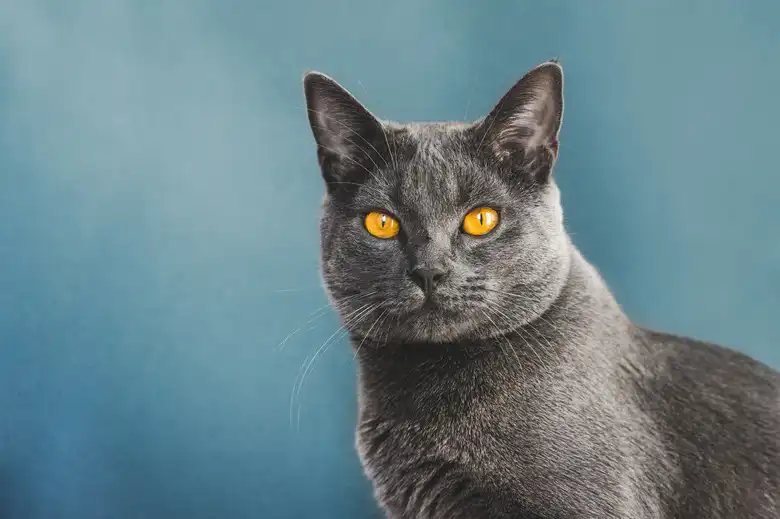
Chartreux Cat Breed Characteristics
CatsCat BreedsChartreux Cat Breed CharacteristicsByKatherine MaloneJan 8, 2023 12:03 pm ESTcunfek/E+/GettyImages #p789b1cf3bb2db74b3f687ffd570fef42, #p789b1cf3bb2db74b3f687ffd570fef42 img { aspect-ratio: 4864/3238; height: auto; } In This ArticleChartreux cat quick factsChartreux cat historyChartreux cat personalityChartreux cat lifespan & health issuesChartreux cat grooming & careWelcoming a new catChartreux cat quick factsChartreux cat quick factsLength: 15 – 18 inchesWeight: Females: 6 – 9 pounds, Males: 10 – 17 poundsLifespan: 12 – 15 yearsCoat length: ShortColoring: Varying shades of blue-gray with pumpkin-colored eyesMore Like ThisCatsBirman Cat Breed CharacteristicsCatsHimalayan Cat Breed CharacteristicsCatsSnowshoe Cat Breed CharacteristicsGrooming needs: MediumFriendliness: Breed alone is not an accurate predictor of individual cats' personalities. However, Chartreux cats are generally regarded as easygoing and loyal.The Chartreux is the national cat of France. This type of cat is a fairly rare, but wonderful breed. If you are only looking at their coloring, you may mistake them for a Russian blue cat. However, there are many differences that quickly become apparent. Chartreux cats have a stocky build and thin legs earning them the nickname the cats "a potato on toothpicks." They have a thick, plush coat that can make them look even bigger.If you are looking for a friendly, affectionate, and laid-back companion, a Chartreux kitten may be right for you. This cat breed is also quick and playful. Carefully consider the breed's personality and care requirements before bringing one into your home.Malgorzata Naskretska / EyeEm/EyeEm/GettyImages #e2875dab8f4c28d1208c411c297bc70c3, #e2875dab8f4c28d1208c411c297bc70c3 img { display: block; aspect-ratio: 1.5058823529412Chartreux cat historyChartreux cat historyThe Chartreux cat breed is an ancient blue cat that has been referenced in literature as far back as the 16th century in France. Linnaeus and Buffon, two 18th-century naturalists, named the Chartreux as one of the four cat breeds known to them.The origins of the breed are unknown, but there are a few theories and legends. One is that the cats were kept as companions in monasteries by the Carthusian monks, although there is no solid evidence of this. Some believe that the cats were brought to the French monasteries from Syria after the Crusades. While the cats are considered to be a French cat breed, some believe the breed got its name from a type of Spanish wool.Much of the breed's population was lost during World War II, and Chartreux breeders revived the breed by outcrossing with other breeds, including blue Persians and British shorthair cats. General Charles de Gaulle, a French army officer during World War II, had a Chartreux cat.The first Chartreux cats were imported into the United States in 1970 and in 1987, the breed was accepted into the Cat Fanciers' Association (CFA). Breeders in France and North America follow a unique naming convention for Chartreux kittens. All of the kittens born in a given year receive names that start with a given letter that is specific to the year. The letters K, Q, W, X, Y, and Z are not used.Chartreux cat personalityChartreux cat personalityThese cats are best described as gentle and affectionate. They are calm and quiet and rarely vocalize and meow. They enjoy your company and make excellent companions. You can even travel with the cats as they tend to be quite adaptable to new situations. The breed may be a good choice if you have other pets or young children in the household.They may have a laid-back attitude, but that doesn't mean they are lazy. They have muscular bodies and fast reflexes which makes them excellent mousers. They also greatly enjoy playtime and they love to climb and jump.Chartreux cats are intelligent and can be described as dog-like in many ways. They enjoy interactive toys and will joyfully chase and jump in pursuit of a teaser toy. You can teach them to play fetch and come when called. Some cats have even learned to turn on lights and open doors.Elmaz Selyametova / EyeEm/EyeEm/GettyImages #e069d774dfacf6362672588179c96f4f0, #e069d774dfacf6362672588179c96f4f0 img { display: block; aspect-ratio: 1.6Chartreux cat lifespan and health issuesChartreux cat lifespan and health issuesChartreux cats tend to be a very healthy breed that lives well into their teens. There are a few health problems that some cats may experience. These include:polycystic kidney disease: A condition that causes cysts in the kidneys and may eventually lead to kidney failure.patellar luxation: A condition in which the kneecap moves out of its normal position.bladder stones: A painful condition in which stones made of minerals form in the bladder causing irritation and potentially blocking the urethra.Speak with the breeder about any health testing results prior to purchasing a Chartreux kitten.Chartreux cat grooming and careChartreux cat grooming and careChartreux cats may have short coats, but they require more grooming than some other shorthaired cat breeds. This is because they have a double coat with a thick undercoat.At least once per week, make sure you comb all the way through the undercoat. It is easy to miss tangles near the skin that can eventually turn into matted fur. If matting does occur, do your best to gently pull apart and comb out the fur. If the matting is severe, take the cat to a veterinarian or professional groomer to have the mats removed.Other regular grooming requirements include:checking and trimming the cat's nailscleaning the cat's earsbrushing the cat's teeth with a toothpaste that is veterinarian-approved for petsFeed high-quality commercial cat food in the amount recommended by your veterinarian. Weight gain and obesity are concerns for some adult cats, so avoid free feeding. Make sure the cat always has fresh drinking water available. Take the cat in for regular check-ups with your veterinarian and stay up-to-day with the recommended vaccinations.C 2011 Eriko SUGIKI VOLAT/Moment/GettyImages #ea5b734f96958388ca7641ba23b424549, #ea5b734f96958388ca7641ba23b424549 img { display: block; aspect-ratio: 1.5Welcoming a new cat into your homeWelcoming a new cat into your homeBefore bringing a new Chartreux kitten or cat into your home, make sure you cat-proof the house to make it safe for the new cat. Remove any poisonous plants and put away any small breakable items that the cat may knock over when playing. The Chateaux cat loves to jump, so don't forget to cat-proof shelves and the top of the refrigerator and bookshelves.Set up a single room where you can welcome your new cat and where they have a safe and quiet place to adapt to their new surroundings. Equip the room with everything your cat needs including:food and water disheslitter boxcat toysscratching postAllow your new cat to explore at their own pace. Don't force them into certain areas of the room or hold them to be petted before they are ready. Instead, use plenty of positive reinforcement. Allow the cat to come to you when they are ready. If you have other pets in the home, make introductions slowly. That way, both animals are safe and have a positive experience.The Chartreux cat breed is known to be quite adaptable. With a bit of patience, your new cat will be an active member of the family — and a loving, affectionate companion.ReferencesVCA Hospitals: ChartreuxThe Cat Fanciers' Association: About the Chartreux
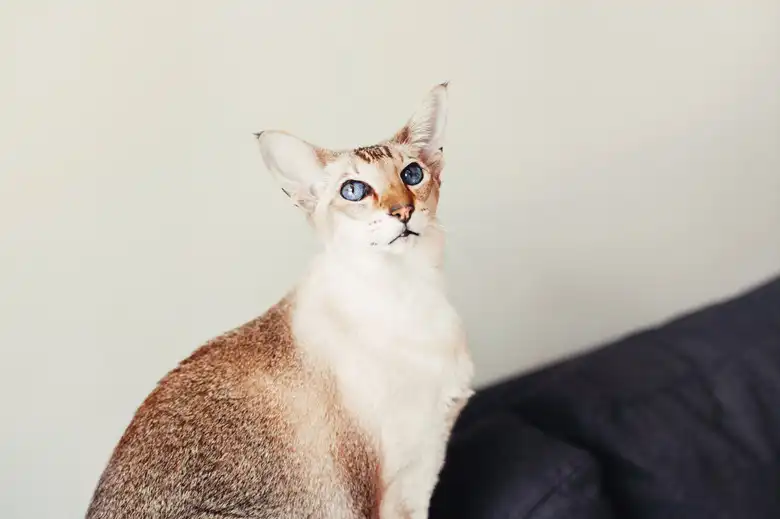
Colorpoint Shorthair Cat Breed Characteristics
CatsCat BreedsColorpoint Shorthair Cat Breed CharacteristicsByKatherine MaloneFeb 22, 2023 12:03 pm ESTAnna Kraynova / EyeEm/EyeEm/GettyImages #pffd7c79e246b8fdd86e287102afb370b, #pffd7c79e246b8fdd86e287102afb370b img { aspect-ratio: 4955/3303; height: auto; } In This ArticleColorpoint shorthair quick factsColorpoint shorthair cat historyColorpoint shorthair cat personalityColorpoint shorthair cat lifespan & health issuesColorpoint shorthair cat grooming & careWelcoming a new catColorpoint shorthair quick factsColorpoint shorthair quick factsLength: 12 – 16 inchesWeight: Females: 5 – 8 pounds, Males 8 – 12 poundsLifespan: 12 – 16 yearsCoat length: ShortColoring: Colorpoint coat pattern with blue eyesMore Like ThisCatsEuropean Burmese Cats: Everything You Need to Know About This Affectionate BreedCatsKhao Manee Cat Breed CharacteristicsCatsBirman Cat Breed CharacteristicsGrooming needs: LowFriendliness: Breed alone is not an accurate predictor of individual cats' personalities. However, colorpoint shorthair cats are generally regarded as affectionate and loyal.The colorpoint shorthair is only distinguishable from the Siamese cat by their coloring. The breed comes in 16 different colors and patterns including lynx point and parti-color point. If you are looking for a beautiful, talkative cat that is both social and affectionate, the colorpoint shorthair may be a perfect choice. Be prepared to wait for a kitten, though, especially if you have your heart set on a certain coat color. Carefully consider the breed's care requirements and personality before committing to bringing a colorpoint shorthair into your home.~UserGI15613517/iStock/GettyImages #e59e87eb8c1c9bd89ead92c28ae0093e6, #e59e87eb8c1c9bd89ead92c28ae0093e6 img { display: block; aspect-ratio: 1.5Colorpoint shorthair cat historyColorpoint shorthair cat historyThe colorpoint shorthair cat breed was developed by breeding seal point Siamese with a red tabby American shorthair cat. The intention was to create a Siamese cat with red coloring. The match was successful and the Cat Fanciers' Association (CFA) granted championship status to red and cream points colorpoint shorthairs.While the Siamese cat comes in four basic colors, including seal point, chocolate point, blue point, or lilac point, there are 16 different colors and patterns currently recognized by the Association for the colorpoint shorthair breed. These include:solid point colors: cream point and red pointlynx point colors: blue, chocolate, cream, lilac, red, seal, blue cream, chocolate-tortoiseshell, lilac-cream, and seal-tortieparti-color point colors: seal-tortie point, chocolate-tortie point, blue-cream point, and lilac-cream pointThe ways different cat registries classify these cats vary. The Cat Fanciers' Association recognizes the colorpoint shorthair as a separate breed. Other registries, such as the International Cat Association (TICA), group these cats into the Siamese breed of cat.Due to their close relationship with Siamese cats, colorpoint shorthairs share much of the cat breed information. The cats have the same physical characteristics as the Siamese including a muscular body, wedge-shaped head, and almond-shaped eyes.Colorpoint shorthair cat personalityColorpoint shorthair cat personalityThe colorpoint shorthair shares some personality traits with their Siamese cousins. The breed tends to be talkative. They often meow and tend to have a voice that is a bit raspy. The cats are devoted to their family and may follow you around the home. They may even settle on your lap or by your side.They also enjoy playing and can easily be enticed into a game of fetch. The cats are also very intelligent and can be trained to do tricks or walk on a leash. Colorpoint shorthair cats enjoy warm environments and when they aren't snuggling up to you, they can often be found basking in the sun.The breed enjoys company and is very loyal. Therefore they shouldn't be left alone for long periods of time. If you live alone, work long hours, or travel frequently, this may not be the best breed of cat for you.Anna Kraynova / EyeEm/EyeEm/GettyImages #e2b54f21971c10508199fed8c9bc76ea9, #e2b54f21971c10508199fed8c9bc76ea9 img { display: block; aspect-ratio: 1.5Colorpoint shorthair cat lifespan and health issuesColorpoint shorthair cat lifespan and health issuesA healthy colorpoint shorthair has a long expected lifespan and can live 12 to 16 years. There are some genetic health problems that affect the breed. Like Siamese cats, colorpoint shorthairs may have crossed eyes or develop other types of eye disease such as progressive retinal atrophy or feline glaucoma.Some other hereditary conditions include:amyloidosisasthmacongenital heart defectsdental problemsResponsible cat breeders will have their cats tested and examined regularly and avoid breeding cats with health problems that may be passed on to their kittens.Colorpoint shorthair cat grooming and careColorpoint shorthair cat grooming and careColorpoint shorthair cats have short coats that are very low maintenance. They don't shed much, so weekly brushing is generally plenty to keep their coat healthy. While these cats shed less than some other breeds, they are not hypoallergenic.Make sure to also check and clean their eyes and ears and trim their nails regularly. As the breed may be more susceptible to dental problems, it is important to brush their teeth regularly with veterinarian-approved toothpaste.Feed them high-quality commercial cat food as recommended by your veterinarian. Obesity is a concern for colorpoint shorthair cats. Avoid free feeding and take time to play with your cat each day to keep them active. Provide fresh drinking water at all times.Take your cat in for regular veterinary checkups. These are important to make sure your cat isn't suffering from any undiagnosed health conditions and that they are maintaining a healthy weight. Make sure they get their recommended vaccinations as well.~UserGI15613517/iStock/GettyImages #ef07df174bca4c27526aff6200e5bd1a6, #ef07df174bca4c27526aff6200e5bd1a6 img { display: block; aspect-ratio: 1.5Welcoming a new cat into your homeWelcoming a new cat into your homeWhen bringing home a new colorpoint shorthair kitten or adult cat, it is important to take some time to set up your home to make sure it is safe for your new pet. Some cat-proofing steps include:removing any toxic plantslocking up mothballs and any toxic cleaning suppliessecuring fragile items that a curious cat may breakSet up a room where you can welcome your cat when they first arrive. The smaller space gives your cat the opportunity to adjust to the new environment. Set up the room with everything they need including food, water, and a litterbox. Make sure there is also a cat tree and scratching post so that they can scratch and climb without damaging your furniture.Colorpoint shorthairs are a social breed, so spend plenty of time in the room with your new cat. Don't rush them into exploring or bonding with you. Instead, offer to play, allow them to come to you when they are ready, and use plenty of positive reinforcement.This is a good time to introduce the new cat to children and any other pets you have in the household. Supervise the interactions and take a break if your cat becomes overwhelmed. When your cat is comfortable, you can open the door and allow your cat to have access to the rest of the house. With a bit of patience, your new colorpoint shorthair will be following you around the home — and telling you about their day.ReferencesAll About Cats: Colorpoint Shorthair CatCat Fanciers' Association: The Colorpoint Shorthair
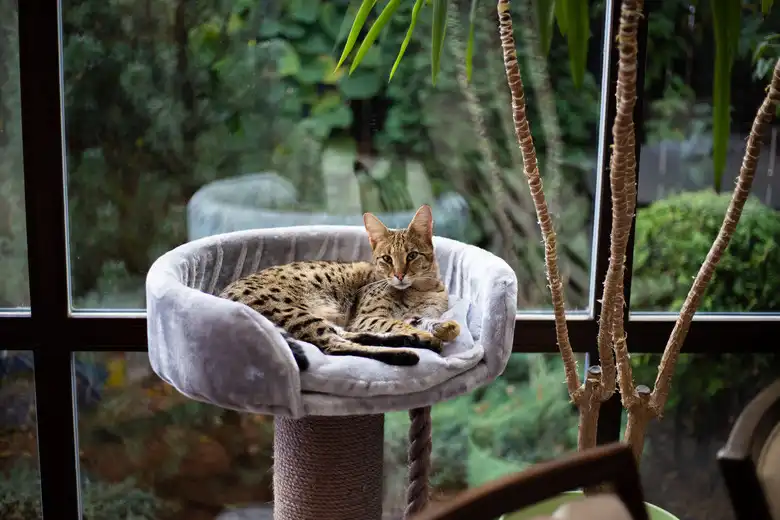
Savannah Cat Breed Characteristics
CatsCat BreedsSavannah Cat Breed CharacteristicsByKatherine MaloneDec 9, 2022 12:03 pm ESTGennadiy Naumov/iStock/GettyImages #p60eff0824eca6313b1f9efeefbe84658, #p60eff0824eca6313b1f9efeefbe84658 img { aspect-ratio: 5317/3545; height: auto; } In This ArticleSavannah cat quick factsSavannah cat historySavannah cat personalitySavannah cat lifespan & health issuesSavannah cat grooming & careWelcoming a new catSavannah cat quick factsSavannah cat quick factsLength: 20 – 22 inchesWeight: 15 – 28 pounds. Females tend to be smaller than males. (See Savannah cat history)Lifespan: 12 – 15 years or moreCoat length: ShortColoring: Brown spotted tabby, silver spotted tabby, black, and black smokeMore Like ThisCatsWhat Is a Savannah Cat?CatsOcicat Cat Breed Characteristics & InformationCatsSomali Cat Breed CharacteristicsGrooming needs: LowFriendliness: Breed alone is not an accurate predictor of individual cats' personalities. However, Savannah cats are generally regarded as confident, outgoing, and loyal.The Savannah cats still resemble their African serval ancestor. They are large cats with a striking, wild cat appearance. Plus, they are friendly, so they may be a good choice for anyone wishing they had a wild cat — while still enjoying the affection of a house cat. Consider carefully before committing to purchasing a Savannah kitten or cat. They may be a domestic breed, but they are not lap cats. They have a lot of energy that they need to burn off each day. If you enjoy an active cat and can give them the attention they need, then you could be a perfect match.ajr_images/iStock/GettyImages #e8246c0b2c643d057fc419665150fe639, #e8246c0b2c643d057fc419665150fe639 img { display: block; aspect-ratio: 1.5Savannah cat historySavannah cat historyThe Cat Fanciers' Association does not recognize the breed and there are some locations within the United States where it is illegal to own this breed as they are still seen as wild cats, despite being classified as domestic animals. Georgia bans the breed completely while Texas requires cat owners to obtain a permit to own the animal. Check your state and local laws before purchasing a Savannah kitten.Savannah cats are a cross between an African serval and a domestic cat. The African serval is a wild animal native to the continent and is sometimes sold as a cheetah on the black market due to their spotted coat color.Savannah cats are a fairly new breed with the first Savannah kitten being born on April 7, 1986. This kitten is in the first generation of cats, (also referred to as the F1 Savannah cat) and is one generation away from the wild cat. Savannah cats tend to be the largest with females weighing 13 to 19 pounds, and males weighing 17 to 25 pounds. F1 cats typically grow 16 to 18 inches tall.The next generations of Savannah are the F2 Savannah generation. They are two generations away from their wild serval ancestor and tend to be a bit smaller. F2 females typically weigh 12 to 16 pounds and male cats weigh between 16 and 25 pounds. They grow 15 to 18 inches tall.Later generations are referred to as F3, F4, and so on. F3 cats tend to grow 14 to 17 inches tall with females weighing 10 to 13 pounds and males weighing 14 to 20 pounds. F4 and F5 Savannah cats grow 14 to 16 inches tall. Females typically weigh 10 to 13 pounds and males weigh 14 to 20 pounds. The cats tend to be smaller with each generation, but it is possible to see an F5 Savannah cat that is just as large as an F1 Savannah.The Savannah cat breed is now a domestic cat and has been recognized by the International Cat Association (TICA) since the breed standard, prepared by Patrick Kelly and Joyce Sroufe, was accepted in 2001. TICA granted the breed championship status in 2012.Savannah cat personalitySavannah cat personalitySavannah cats tend to be friendly, loyal, and love company. However, they are not lap cats and tend to have a high energy level. F1 Savannah cats generally do not tolerate being held and will generally only bond with one or two individuals. F3 Savannah cats and later generations tend to be more sociable and more likely to bond with the family and enjoy being petted.They are curious and playful and need entertainment and exercise to stay physically and mentally healthy. They have many dog-like tendencies including their desire to be in the same room with family and their enjoyment of walks and games of fetch. Some even enjoy playing in the water. They can also become destructive when they are bored. A Savannah may scratch inappropriately or knock your knick-knacks off of the shelf.Make sure to have regular playtimes with your cat and consider taking them for walks or taking the time to teach them tricks. In addition, provide entertainment for when you aren't around. This includes options like cat trees and tall areas where they can perch and interactive toys. If you work long hours or are gone for long periods of time for other reasons, consider a second pet to keep the Savannah cat company or opt for a lower-energy breed.ajr_images/iStock/GettyImages #eb18b43db27a84f5a4a455ca2235a2e9e, #eb18b43db27a84f5a4a455ca2235a2e9e img { display: block; aspect-ratio: 1.5Savannah cat lifespan and health issuesSavannah cat lifespan and health issuesThe Savannah cat can live into their mid-teens or even more. As with all breeds, there are some health problems that these cats are prone to. Responsible breeders will test for these conditions whenever possible and stop breeding cats affected with or carrying the genes for these conditions.Two common health concerns include pyruvate kinase deficiency, a blood disease that causes the breakdown of red blood cells. They can also contract progressive retinal atrophy, a disease that can lead to blindness. Some Savannahs also suffer from hypertrophic cardiomyopathy, a heart condition that causes a thickening of the heart wall. There is not currently a genetic test for this heart disease.Savannah cat grooming and careSavannah cat grooming and careSavannah cats need only occasional brushing. They are shorthair cats but they do have a thick undercoat, so brushing loose fur is necessary, especially when the cat is shedding. As with all cats, make sure you check and clean the cat's ears and trim their nails regularly. Brush their teeth with pet toothpaste.Feed high-quality cat food as recommended by your veterinarian. Most Savannah cats are extremely active and will need more food than less active cats. Make sure fresh water is available for the cat at all times.ajr_images/iStock/GettyImages #e42bfcbe9778a925c6141047a19d10208, #e42bfcbe9778a925c6141047a19d10208 img { display: block; aspect-ratio: 1.5Welcoming a new cat into your homeWelcoming a new cat into your homeDue to their high energy and inquisitive nature, it is very important that you kitten-proof or cat-proof your home. Remove any small, breakables from your shelves. Make sure that all the houseplants in your home are non-toxic. Over time, these cats may even learn to open doors, so add appropriate locks or latches on certain rooms and cabinets if necessary. Set up cat trees, window perches, and toys to help your new cat feel at home. Initially, set up your new kitten in a single room with food, water, and a litter box.Allow your cat to explore on their own terms and approach you when they are ready. Feel free to speak to the cat and offer to play with a teaser toy, but don't force that cat to come to you or be petted against their will. Use positive reinforcement at all times and don't punish your cat if they get into something they shouldn't or behave rambunctiously.If you have other pets, make the initial introductions through the door. Then, when you allow the animals to be together, supervise the interactions until you are certain they are getting along. Savannah cats are curious and outgoing, so it won't be long before your new cat is an active member of the family.ReferencesSavannah Cat Association: States That Allow Savannah CatsThe International Cat Association: The Savannah BreedAfrican Wildlife Foundation: ServalSelect Exotics: Which Cat is Right for You?
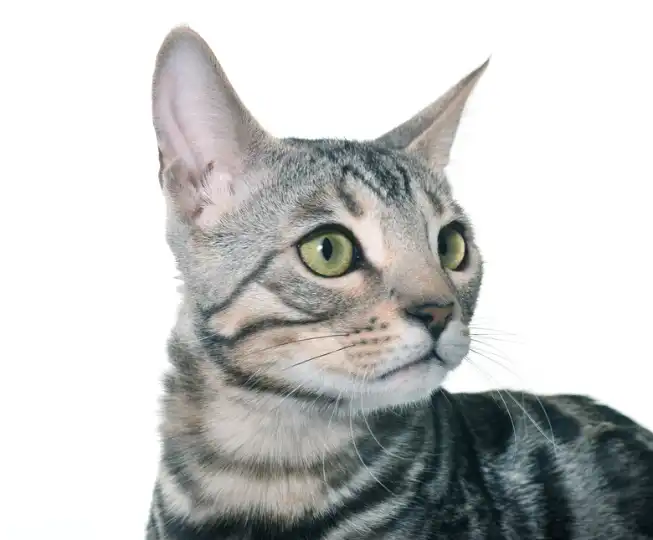
Silver Bengal Cat Breed Characteristics
CatsCat BreedsSilver Bengal Cat Breed CharacteristicsByKatherine MaloneJan 13, 2023 12:03 pm ESTcynoclub/iStock/GettyImages #pc3219eb50d82340f3c666323f6151748, #pc3219eb50d82340f3c666323f6151748 img { aspect-ratio: 5000/4136; height: auto; } In This ArticleSilver Bengal quick factsSilver Bengal cat historySilver Bengal cat personalitySilver Bengal cat lifespan & health issuesSilver Bengal cat grooming & careWelcoming a new catSilver Bengal quick factsSilver Bengal quick factsLength: 16 – 22 inchesWeight: Females: 6 – 12 pounds, Males: 9 – 15 poundsLifespan: 12 – 20 yearsCoat length: ShortColoring: Silver with a spotted, marble, or tabby coat patternMore Like ThisCatsBengal Cat Breed CharacteristicsCatsOcicat Cat Breed Characteristics & InformationCatsEgyptian Mau Cat Breed CharacteristicsGrooming needs: LowFriendliness: Breed alone is not an accurate predictor of individual cats' personalities. However, Silver Bengal cats are generally regarded as playful and intelligentThe Bengal cat breed is one of the most recognizable breeds as they often look like wild cats. A brown Bengal cat with a rosette or marble pattern is often what comes to mind when thinking of the breed, but Bengal cats come in a variety of colors, including silver. Silver Bengals may not be their own breed, but they are a treasure if you are able to find a breeder with silver Bengal kittens available.Bengals are a playful and active breed and the silver Bengal is no exception. Carefully consider the cat's personality and care requirements to make sure they will be a good fit for your family and lifestyle.andreaskrappweis/iStock/GettyImages #e2131c42d425a32f4b63cca17b41d0139, #e2131c42d425a32f4b63cca17b41d0139 img { display: block; aspect-ratio: 1.5Silver Bengal cat historySilver Bengal cat historyJean Mill started the Bengal breed as a cross between a domestic cat and a wild Asian leopard cat. Her goal was to obtain the looks of the wild cat while retaining much of the personality of a house cat. The original hybrid cats were used as a foundation for the Bengal breed of cats. Today's Bengals are easily recognizable as they have the striking appearance of a wild cat. Though the breed is fully domestic and no longer crossed with wild cats.The silver Bengal is not a separate breed. Rather, it is one of the Bengal cat colors. The silver gene does not create a silver or grey color but it prevents the development of color pigment. This is located at the base of the fur which is white in color. The silver color came from outcrosses to Egyptian Mau cats and was furthered by outcrosses to American shorthair cats.The Cat Fanciers' Association (CFA) Bengal breed standard recognizes several silver coat colors and patterns including:black silver tabby with any eye color except for blueblue silver lynx point with blue eyesblue silver mink tabby with aqua eyessilver seal lynx point with blue eyesseal silver mink tabby with aqua eyesseal silver sepia tabby with gold to green eyesSilver snows may be silver lynx, silver mink, or silver sepia in color. The snows have black tail tips rather than brown. You may also encounter a silver smoke color. These cats have the silver gene which makes the base of the fur white or silver. The outer part of the fur is melanistic, or jet black. The International Cat Association (TICA) also recognizes several silver coat colors and patterns.Silver Bengal cat personalitySilver Bengal cat personalityBengal cats are an active and intelligent breed. They love to climb, leap, and explore. If you don't see the Bengal at first glance around the room, try looking up. The cats love to perch from high locations such as from the top of bookshelves. Bengals are a cat breed that loves water and they may be drawn to the running faucet in your kitchen or bathroom.Regular playtime is important to help the cats burn off excess energy and keep them mentally and emotionally happy. These cats prefer company and can get bored when they are left alone for too long. They do well with other cats or dogs.You can also train this intelligent breed to walk on a leash or play fetch. They respond well to positive reinforcement and clicker training. The cats can be quite affectionate as well, particularly at nap time when they may seem to transform into lap cats.andreaskrappweis/iStock/GettyImages #e011a5e9ed630090de5f345092ffc0251, #e011a5e9ed630090de5f345092ffc0251 img { display: block; aspect-ratio: 1.5Silver Bengal cat lifespan and health issuesSilver Bengal cat lifespan and health issuesA healthy silver Bengal cat can live well into their teens and may even reach 20 years of age. There are a few genetic health problems that may affect some cats. These include:hypertrophic cardiomyopathy: a type of heart disease that causes part of the heart wall to thickenprogressive retinal atrophy: a condition that can eventually lead to blindnesspyruvate kinase deficiency: a condition that can cause the red blood cells to dieReputable breeders will conduct genetic testing on their cats and stop breeding any cat that carries a genetic health condition.Silver Bengal cat grooming and careSilver Bengal cat grooming and careBengal cats are not hypoallergenic, but they have short coats and don't shed much, which makes them a bit less likely to trigger allergies. The breed requires only minimal grooming. Simply brush the cat occasionally to remove any loose fur.As with most breeds, they do shed their winter coat in the spring, so it is a good idea to brush them more frequently during that time. Also, be sure to check and trim the cat's nails, clean their ears, and brush their teeth with a pet toothpaste that is veterinarian approved.The cats need a high-quality, high-protein diet to stay healthy. In fact, some cats may suffer symptoms of intestinal bowel disease and even be misdiagnosed with the condition. In many cases, parasite treatment and a change to a high-protein cat food can resolve symptoms. Always consult your veterinarian if you notice any signs of illness so you can get a proper diagnosis and treatment.topics/iStock/GettyImages #ef6179ca5474afbc8872c3b82574d35ab, #ef6179ca5474afbc8872c3b82574d35ab img { display: block; aspect-ratio: 1.5Welcoming a new cat into your homeWelcoming a new cat into your homeBefore bringing home a new silver Bengal kitten, make sure you cat-proof the home first. Remember these curious cats love to climb and explore, so don't neglect cat-proofing shelves and other nooks and crannies.Set up a safe room where you can welcome your new cat. Make sure it has everything your cat may need including:food and waterlitter boxcat treecat toysWhen your cat arrives, allow them to explore the room at their own pace. Bengals tend to prefer company, so spend plenty of time with the cat, but don't push them to do anything that makes them uncomfortable. Instead, be patient, offer to play, and give plenty of positive reinforcement.If you have other pets, this is a good time to make introductions. Once your new cat is comfortable, you can open the door and allow them access to more of the house. Before you know it, your new Bengal will be an active member of the family enjoying every part of your home.ReferencesIndian Creek Bengals: Silver Bengal CatThe International Cat Association: Bengal Breed at A GlanceCat Fanciers' Association: Bengal Breed Standard
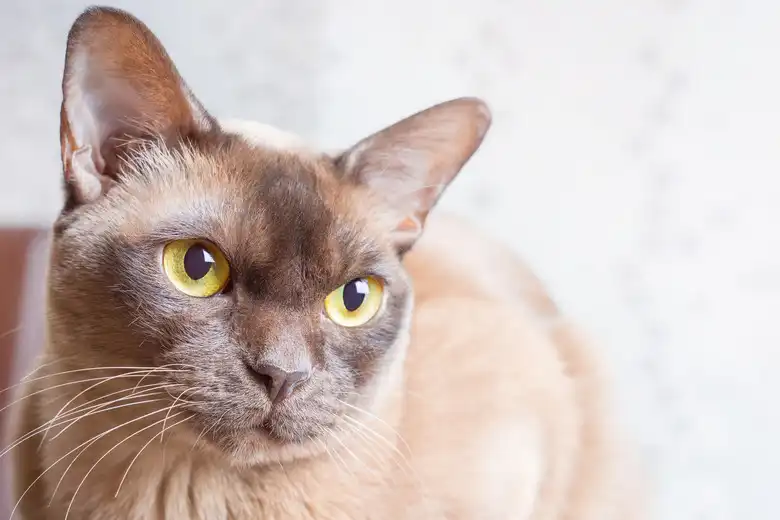
Burmese Cat Breed Characteristics
CatsCat BreedsBurmese Cat Breed CharacteristicsByKatherine MaloneNov 27, 2022 12:03 pm ESTElena Kabenkina/iStock/GettyImages #p26448d700d607fb71d0d0d742e1eee5c, #p26448d700d607fb71d0d0d742e1eee5c img { aspect-ratio: 6000/4000; height: auto; } In This ArticleBurmese cat quick factsBurmese cat historyBurmese cat personalityBurmese cat lifespan & health issuesBurmese cat grooming & careWelcoming a new catBurmese cat quick factsBurmese cat quick factsLength: 12 – 16 inchesWeight: 8 – 12 pounds, males tend to be larger than femalesLifespan: 12 – 16 yearsCoat length: ShortColoring: Sable, champaign, blue, or platinum with yellow or gold eyesMore Like ThisCatsEuropean Burmese Cats: Everything You Need to Know About This Affectionate BreedCatsTonkinese Cat Breed CharacteristicsCatsBirman Cat Breed CharacteristicsGrooming needs: LowFriendliness: Breed alone is not an accurate predictor of individual cats' personalities. However, Burmese cats are generally regarded as friendly, people-oriented cats.Burmese cats are arguably one of the best family cats around. They love people and enjoy the attention. They also do well even in households with children. They have a unique appearance with a compact body structure. Their short muzzle gives them a distinctive profile. Before bringing a purebred Burmese into your home, consider their personality and care needs to make sure it is a good match — both for you and your new cat.Annetka/iStock/GettyImages #e64fa0b8254152253f48ab362085b1440, #e64fa0b8254152253f48ab362085b1440 img { display: block; aspect-ratio: 1.5098939929329Burmese cat historyBurmese cat historyThe Burmese cat breed originated in Burma near the Thailand border. A dark brown cat named Wong Mau was brought to San Francisco and given to Dr. Joseph Thompson. When Dr. Thompson first saw the cat, he did not believe her to be a Siamese cat as many of his colleagues did. He then started a breeding program, where Wong Mau became the first cat bred to a seal point Siamese male named Tai Mau.Through the breeding program, Burmese breeders sought to bring out the traits that define the modern Burmese breed today. This included a medium-sized, compact body, rounded, wide-set eyes, and a short muzzle. Originally, all cats in the breed were sable in color. However, other colors emerged and were accepted by different breed registries over time.Breeders in Great Britain also contributed to the development of the breed and it was there that the first blue Burmese kitten was produced. The Cat Fanciers' Association (CFA) only recognizes four coat colors: blue, champaign, platinum, and sable. The International Cat Association (TICA), on the other hand, recognizes a wider range of solid and tortoiseshell pattern colors including lilac and chocolate.Burmese cat personalityBurmese cat personalityThe Burmese cat breed loves people. If you are looking for a cat that will truly be a loving part of the family, look no further. Burmese cats get along with children of all ages. These sociable cats frequently speak with a soft meow and are true lap cats who enjoy cuddling with any member of the family.The breed is very intelligent and they even have some dog-like traits in that they enjoy playing fetch. They can readily learn tricks from attentive family members. Burmese cats need plenty of attention. While they don't tend to be demanding, they may not be an ideal choice for a single person who works long hours.scaliger/iStock/GettyImages #e681451339002cfb43639fbef724569f1, #e681451339002cfb43639fbef724569f1 img { display: block; aspect-ratio: 1.5508684863524Burmese cat lifespan & health issuesBurmese cat lifespan & health issuesThis breed tends to have few health problems and generally lives 12 years or more. The breed is at risk for hypertrophic cardiomyopathy, a type of heart disease. Responsible breeders should screen their cats for the disease regularly. The test for the condition is a heart ultrasound. Therefore it may not catch the disease in the cat's early years of life.Some other health conditions that may affect the breed include diabetes mellitus and hypokalaemic polymyopathy, or low potassium levels that cause muscle weakness. In addition, some American Burmese kittens suffer from deformities of the brain and head.Although it is not common, feline orofacial pain syndrome can affect the breed. Cats with this condition lick and chew to express their discomfort. They may also rub or paw at their face. However, the pain is not constant. It is a neurological condition in which the nerves that communicate pain to the brain start misfiring.Burmese cat grooming & careBurmese cat grooming & careThe Burmese cat is a shorthair breed that needs very little grooming. Use a rubber brush about once per week to remove loose fur. Rub a soft cloth over their short coat to bring out the shine. As with all cats, be sure to check and trim their nails regularly and provide a cat tree and scratching post. Check and clean the cat's ears regularly and brush their teeth with toothpaste approved for use on pets.Feed the cat high-quality cat food as recommended by your veterinarian and provide fresh drinking water throughout the day. Be sure to clean the litter box each day and change out the cat litter regularly. Burmese cats should be kept indoors — their fearless and friendly personality can get them into trouble if they are outdoor cats.RichLegg/iStock/GettyImages #e3722bf9a8e4521a72fb0ea7d5a53cbce, #e3722bf9a8e4521a72fb0ea7d5a53cbce img { display: block; aspect-ratio: 1.3333333333333Welcoming a new cat into your homeWelcoming a new cat into your homeBurmese kittens are extremely playful. Adult cats tend to retain this quality, although the males tend to be more laidback than the female cats. In order to keep your new kitten safe, be sure to cat-proof the home. Set up a single room to introduce the cat to their new home. Make sure there is a litter box, food and water, toys, and a scratching post. Close off any potential hiding spots where the cat may get stuck or injured.Allow your cat to explore their home at their own pace. Spend plenty of time in the room, but don't force them to be petted or held. Let them come to you when they are ready for play or affection. Always use positive reinforcement with your new cat. Positive reinforcement helps them learn faster and builds stronger relationships.If you have other pets, make introductions through the door first. Ensure that all of the initial meetings are positive experiences for both pets. If you have children, teach them how to pet and hold the new cat. Make sure both the cat and the child are safe and happy in each other's company.Once your cat is comfortable in the new space, you can give them the freedom to explore more of the house. For these people-loving cats, it shouldn't take long — they will surely want to follow you around.ReferencesInternational Cat Care: BurmeseThe Cat Fanciers' Association: The BurmeseThe International Cat Association: Burmese Cat at a Glance
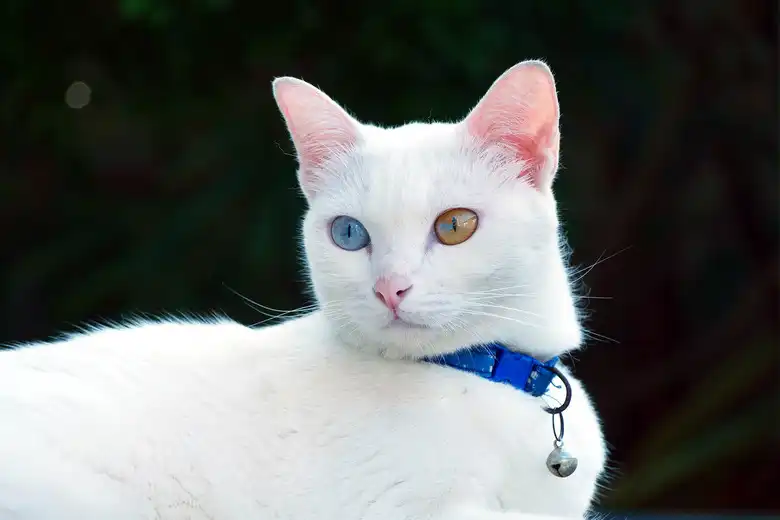
Khao Manee Cat Breed Characteristics
CatsCat BreedsKhao Manee Cat Breed CharacteristicsByKatherine MaloneFeb 4, 2023 12:03 pm ESTApisitWilaijit/iStock/GettyImages #pe830f432b5d6649416ce239772c982ba, #pe830f432b5d6649416ce239772c982ba img { aspect-ratio: 5184/3456; height: auto; } In This ArticleKhao manee quick factsKhao manee cat historyKhao manee cat personalityKhao manee cat lifespan & health issuesKhao manee cat grooming & careWelcoming a new catKhao manee quick factsKhao manee quick factsLength: 10 – 12 inchesWeight: Females: 5.5 – 8 pounds, Males: 8 – 10 poundsLifespan: 10 – 12 yearsCoat length: ShortColoring: White with any eye color including different color eyes.More Like ThisCatsBurmilla Cat Breed CharacteristicsCatsJapanese Bobtail Cat: Everything You Need to Know About This Playful Cat BreedCatsColorpoint Shorthair Cat Breed CharacteristicsGrooming needs: LowFriendliness: Breed alone is not an accurate predictor of individual cats' personalities. However, khao manee cats are generally regarded as playful and curious.The khao manee cat breed originated in Thailand and the name translates to "white gem." These stunning cats have white fur and bright, almond-shaped eyes that earned them the nickname diamond eye cat. The cat is said to bring good luck to the families the cat lives with. The cats are athletic with muscular bodies and they love to play. If you are looking for a sociable cat who also loves to lounge on your lap, the khao manee breed may be a good choice for your family. Consider whether the cat's personality and care requirements are a good fit for you and your family.ApisitWilaijit/iStock/GettyImages #e51335708310c4c334c4644bb7f889338, #e51335708310c4c334c4644bb7f889338 img { display: block; aspect-ratio: 1.5Khao manee cat historyKhao manee cat historyThe khao manee is an ancient breed that originated in Thailand. They are a rare breed, especially compared with the other Thai cat breeds including the Siamese cat, Korat cat, and Burmese cat. The breed is referenced in the 14th-century Thai book of cat poems called "Tamra Maew." The cat was first called khao plort, but the breed is now known as khao manee.The shorthair breed has a pure white coat and any eye color is accepted as long as they are vivid. Yet blue, green, and gold are the most common eye color. These cats may even have eyes with one blue eye and one gold or green eye.While the breed may have a long and largely unknown history, they are a new breed in the cat show world.The first khao manee cat was imported to the United States in 1999 by Colleen Freymouth.In 2018, the Cat Fanciers' Association (CFA) accepted the breed into the miscellaneous class. The breed has not yet received championship status.The International Cat Association (TICA) started accepting registrations for the breed in 2009TICA granted the breed championship status in 2015.Khao manee cat personalityKhao manee cat personalityThese cats are very sociable and don't like to be left alone. If you live alone and work long hours, this may not be a good match for you. Fortunately, they tend to get along with all family members, including children and pets — who can keep them company. They enjoy spending time with the family and are quite vocal. They will often have a conversation with you filled with meows and other vocalizations.The cats are both athletic and intelligent. Their curiosity will have them exploring every corner of the home. They love playing games with you and you can entice them into a game of fetch or play with a teaser toy. Despite their playful nature, they are also affectionate and will gladly curl up on your lap to nap.PaaTon/iStock/GettyImages #e80335679fce8b3cd355768946e34bbfd, #e80335679fce8b3cd355768946e34bbfd img { display: block; aspect-ratio: 1.5096602265157Khao manee cat lifespan and health issuesKhao manee cat lifespan and health issuesA healthy khao manee has a life expectancy of 10 to 12 years. They are generally a healthy breed, but there is one health problem that affects the breed. As with other white cats with blue eyes, the khao manee is at a higher risk of deafness. The dominant W gene that causes the white coat color also has a genetic link to blue eye color and deafness. However, not all cats with the dominant W gene will be deaf or have blue eyes.Breeders will not know if a khao manee kitten is deaf until they are about 3 to 4 weeks old. However, diagnosis can be challenging as the kitten can take visual cues from their littermates. Once a kitten is separated, breeders and cat owners can observe the kitten to see if they respond to sounds.Some cats may be deaf in only one ear. Unless you have special veterinary testing, you may not be able to detect this partial deafness.Khao manee cat grooming and careKhao manee cat grooming and careThe khao manee is a low-maintenance cat breed since they do not have an undercoat. Their short coat only needs weekly brushing to remove any loose fur. Other things to incorporate into your grooming routine include:checking and trimming the cat's nailscleaning the cat's earsbrushing the cat's teeth with a veterinarian-approved pet toothpaste.Feed the cat high-quality commercial cat food as recommended by your veterinarian. Make sure the cat has access to fresh drinking water at all times. Take your cat in for regular veterinary check-ups and keep them up-to-date on all of the recommended vaccinations.kimberrywood/iStock/GettyImages #e59ae2701522205eb75916e1c37a3e47b, #e59ae2701522205eb75916e1c37a3e47b img { display: block; aspect-ratio: 1.5Welcoming a new cat into your homeWelcoming a new cat into your homeOnce you choose a khao manee kitten to bring into your home, the wait can seem endless. Take the time to prepare by cat-proofing the house which includes removing any poisonous plants and clearing counters and shelves of anything that may harm your cat including things like cleaning chemicals. Be sure to look for spaces where your cat could get stuck or injured such as holes in the mattress or boxspring and small gaps between heavy pieces of furniture.Set up all of the needed cat supplies in a designated room to create a safe space where your cat or kitten can adjust to their new environment. This includes:food and waterlitter boxscratching postcat tree and shelvescat toysAllow your new cat to explore the room at their own pace. The breed tends to be naturally curious but some cats may need longer to adjust than others. Spend plenty of time in the room and offer to play with the cat. Avoid holding the cat to be petted before they are ready and use plenty of positive reinforcement.If you have other pets or small children, introduce them to the new cat. Monitor the interactions so you can ensure everyone is safe and has a positive experience. Once your cat is comfortable, you can open the door and allow them access to more of the house. Before you know it, your khao manee cat will be an active member of the family.ReferencesThe International Cat Association: Khaomanee at a GlanceCat Fanciers' Association: Cat Fanciers' Association Welcomes New Breeds